Transit Action Network (TAN)

Advocates for Improved and Expanded Transit in the Kansas City Region.

Archive for the ‘Rail’ Category

All transit relevant to rail

TAN Support for Downtown Streetcar and Streetcar Neighbors

Posted by Transit Action Network on August 18, 2011


Transit Action Network recently sent this letter to the Downtown Corridor Alternatives Analysis Project Team.

Residents of the Greater Downtown Kansas City area are passionate about improving the state of transit downtown. Evidence for the importance of transit to Downtown residents, and their desire to improve it, is seen in their consistent support for transit ballot initiatives. Transit is also a critical part of realizing the goals of the Greater Downtown Area Plan and extending the benefit of investments already made.

As transit plans have come and gone, disunity between interest groups has weakened previous proposals to the extent that Kansas City continues to sit on the sidelines of the modern transit revolution. However, the latest proposal for a Downtown Streetcar represents a tremendous opportunity to make a significant improvement for Downtown and a lasting contribution to the city’s transit culture.

A group of downtown residents have recently come together to found Streetcar Neighbors to support the deployment of a downtown streetcar.

The downtown streetcar is the most realistic opportunity yet to bring rail transit to Kansas City. TAN would therefore like to express our support for the streetcar project and for the work of Streetcar Neighbors in bringing it about. It is our belief that this plan is feasible, economically sensible and, most importantly, achievable. We would encourage the project team to be innovative and consider any local funding options that can help make the project a reality and to do so as quickly as is prudent, setting aggressive timelines to begin realizing the benefits of this system as soon as possible.

We also endorse the following recommendations of Streetcar Neighbors and downtown neighborhood associations and other downtown organizations:

·         The system should utilize modern streetcar technology, capable of delivering a rider experience comparable to light rail in its speed and comfort.

·         To reduce rider confusion, the route should utilize a single street for both directions of travel, with considerations made for the best solution for the ends of the route.

·         The route should serve the River Market neighborhood on the north and adequately serve Crown Center and Union Station on the south.

Summary:_______________________________

             1. Modern streetcar
            2. Single street
            3. River Market terminus
            4. Include Crown Center / Union Station
            5. Open to local funding options
            6. Support aggressive timeline

Mark McDowell

Chair, TAN Downtown Streetcar Working Group

Posted in Local Transit Issues, Rail | Tagged: | Leave a Comment »

Consultants Face Big Challenge Studying Regional Rapid Rail

Posted by Transit Action Network on August 16, 2011


Parsons Brinckerhoff  (PB), a highly-respected transit consulting firm, has begun work on the $1.2 million Jackson County Commuter Corridors Alternatives Analysis. This analysis will evaluate two corridors from the Regional Rapid Rail (RRR) concept — one through Blue Springs using the Kansas City Southern line, and one through Lee’s Summit using the old Rock Island line — and compare commuter rail to alternatives such as express buses.

 The RRR concept, widely presented around the region last year, proposed six commuter rail corridors using underutilized and abandoned rail lines to provide a rail system from the suburbs into Union Station. After preliminary review of the concept in MARC’s Smart Moves Transit Implementation Plan Phase II: Commuter Corridors Study, it was determined that only two of the corridors warranted further study in the near term. Studying the other corridors was postponed due either to insufficient ridership or being too costly given the projected ridership.

 The two corridors now being studied provide plenty of issues to resolve. Perhaps the biggest unresolved issue is the so-called “Common Line,” which the two routes would share. There is no underutilized track for the 7 miles between Leeds Junction (just west of the Truman Sports Complex)  and Union Station. Nor is there readily usable right of way for the 2 miles immediately east of Union Station.  Therefore, several alternatives are being considered. These include running on city streets (e.g., Truman Road) at a maximum speed of 25 mph, or perhaps along the I-70 right-of-way. The former requires moving or hardening utilities, while the later requires modifications to bridges and exit and entrance ramps. TAN doubts that projected ridership can justify the cost entailed in any of these alternatives.

 The Common Line is critical to the feasibility of the RRR system. If a cost effective solution to the Common Line remains elusive, or if a potential solution undermines operating speed, then the whole RRR concept falls apart.

 There have been two previous studies of commuter rail in the I-70 corridor through Blue Springs using existing rail. In both cases ridership was insufficient to justify the cost of using existing rail into downtown Kansas City.  The RRR concept and the most recent study take that conclusion — plus the freight railroads’ assertion that they will not allow commuter rail on existing tracks into Union Station — and propose a Common Line on new rail as the solution. 

 There are several other outstanding concerns from the Phase II study, and there have been lively and skeptical discussions within the MARC Transit Committee. TAN has been vocal in expressing our skepticism. Cost estimates, travel times, and the absence of credible ridership projections have generated great concern too. All of these issues remain today for PB to resolve.

 An Alternatives Analysis involves consideration of multiple modes. There are new technologies and innovative ways to make Bus Rapid Transit (BRT) and/or express buses compare favorably with rail.  Buses are efficient, cost-effective and can be used to effectively combat congestion. The fact that they can offer greater flexibility and a higher level of service for riders means that rail is not the only possible solution to our transit needs. Nor is rail necessarily more environmentally sustainable than modern buses, particularly where ridership is relatively low. 

 TAN has maintained a consistent position regarding transit service in commuter corridors. If rail is shown to be cost effective, to function well enough to attract additional commuters, and to qualify for FTA funding, then it should be implemented, along with the necessary local bus routes to support it. However, if rail is found not to be viable, and if express buses are again found to be the more feasible alternative, then the region should expand its commuter transit system using express buses. We should not continue to put off improving the region’s transit system just because rail isn’t practical at the present time. We need to build a system that serves commuters today, and that makes sense for our region for the future. The Alternatives Analysis should guide the region to an appropriate decision.

 TAN has sought and been granted a formal role on the AA Advisory Committee, and we have already met with the study team.  In addition, we’ll closely follow the study through our representation on MARC’s Transit Committee.

 What will be the best way to provide mobility from the suburbs into the central business district?  Stay tuned.  The Kansas City region definitely needs to improve its public transit system, and this study will help us decide how best to meet that need.

Posted in Local Transit Issues, Rail, Regional Transit Issue, Transit Studies | Tagged: , | 1 Comment »

Council Should Delay Chastain Vote

Posted by Transit Action Network on August 15, 2011


Councilman Russ Johnson is asking the full Council to defer action on an ordinance that would put Clay Chastain’s initiative petition on the ballot.  We understand the Council has sixty days to act, and that delay would move any such vote from November to early next year.  Transit Action Network fully supports delay because the initiative proposal is almost certainly unworkable, and because further discussion of it at this time would interfere with and confuse the current study and discussion related to a proposed Downtown Streetcar.  The streetcar appears to be eminently doable, and has a growing level of support within the River Market to Crown Center corridor.
Let the voters decide on the Chastain initiative — just not quite yet.

Posted in Local Transit Issues, Rail | Tagged: | Leave a Comment »

Please Comment on the Downtown Corridor (Streetcar) Alternatives Analysis

Posted by Transit Action Network on June 28, 2011


More than 100 people attended the first open house for the Downtown Corridor Alternatives Analysis. However if you missed the open house you can still see the presentation and the maps, and include your comments about the study.

See the first presentation  DCAA Overview-Presentation1

These are the various alignment alternatives being considered for the streetcar.

A.”Bi-directional” options – both tracks running north and south on a single street.

Grand Avenue

Walnut Street

Main Street

Baltimore Avenue

A reason to use single streets is expressed in the Nelson/Nygaard Comprehensive Service Analysis currently underway for the KCATA bus system.

“Routes should operate along the same alignment in both directions to make it easy for riders to know how to return to their location of trip origin. All routes should operate along the same alignment in both directions, except in cases where such operation is not possible due to one-way streets or turn restrictions.”

B. “Couplet” options – one direction runs on one street while the other direction runs on an adjacent street. All couplet options contain streets that are currently configured for two-way auto traffic (in whole or just sections).

Grand/Walnut Couplet

Main/Walnut Couplet

Main/Baltimore Couplet

A reason to use couplets, when not necessary due to street constraints, is for the potential of greater economic development. Many people see rail as an engine of economic development and if the route is split onto two streets then it may generate additional development.

South of 20th Street, all streetcars run on Main or Grand. Baltimore options divert to Main at 10th Street. The River Market is a large loop in all scenarios.

View the maps for the various alignments. DCAA-Alignment-Alternatives-Map

COMMENT FORM: Be sure to fill out a comment form about the plan.

Visit KCSmartMoves to keep up-to-date with the study.

Posted in Action, Local Transit Issues, Rail, Transit Studies | Tagged: , | Leave a Comment »

Central Europe and London-Part 2-Prague

Posted by Transit Action Network on June 1, 2011


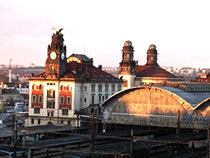
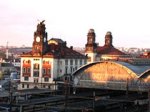
Prague Hlavni Nadrazi main train station

Prague, Czech Republic- (city population 1.3 million, density 6,771 inhabitants/ sq. mi., metro population 2.3 million -KCMO-density 1538.4 inhabitants /sq. mi (2010))
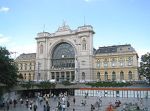
Budapest Keleti Station

The only rainy day on our trip was spent taking the express train from Budapest’s Keleti Station to Prague’s Hlavani Nadrazi Station. This is central Europe so this wasn’t high-speed rail, but as an express train it didn’t have a lot of stops. This train took 7 hours to cover 275 miles. We purchased our tickets online at RailEurope before we left home. We had a 1st class compartment and since it was low season we had it all to ourselves. It was great to be in a comfortable train all day watching the geography and agriculture of Hungary, Slovakia and the Czech Republic go by on a rainy day.

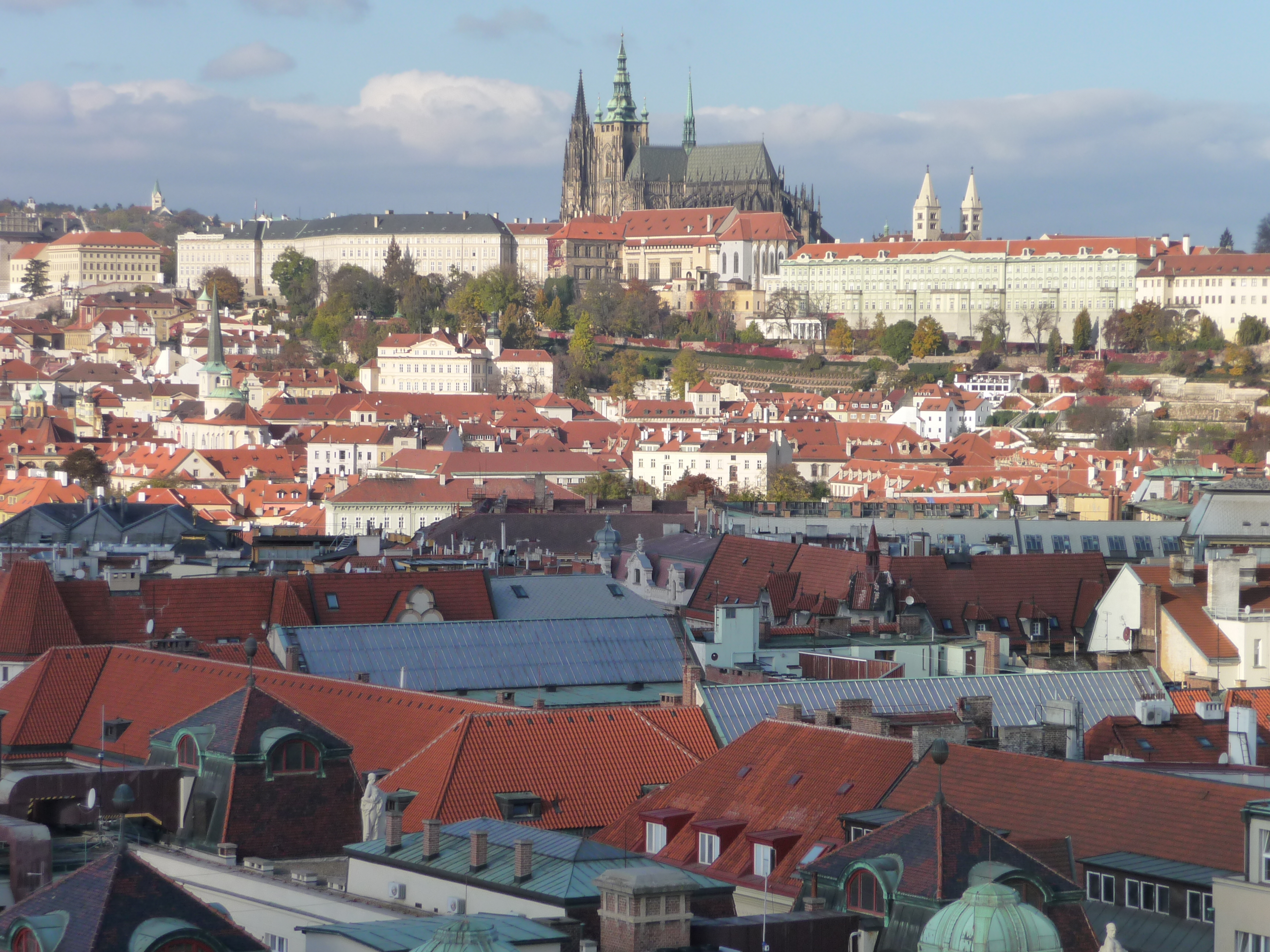
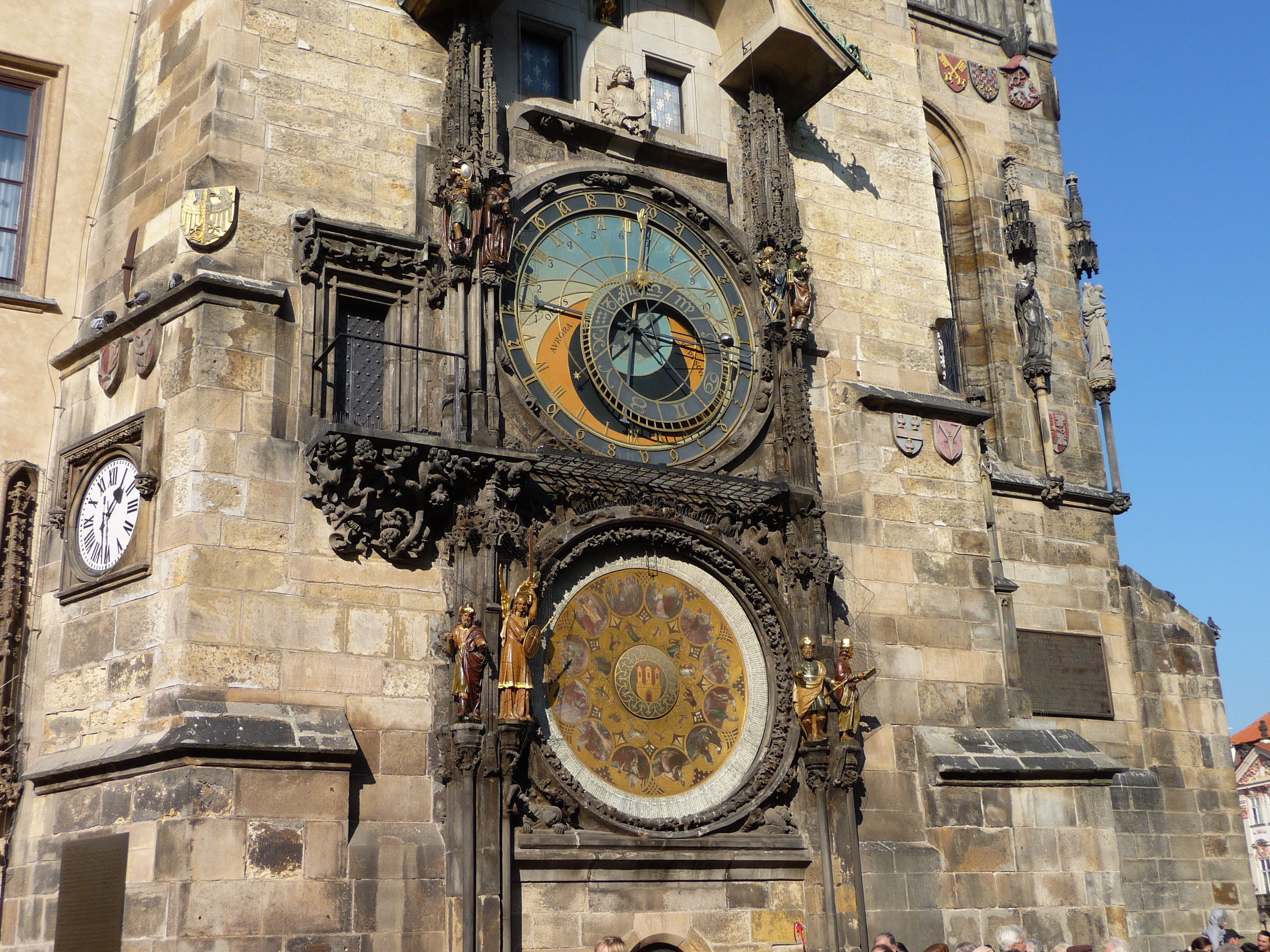
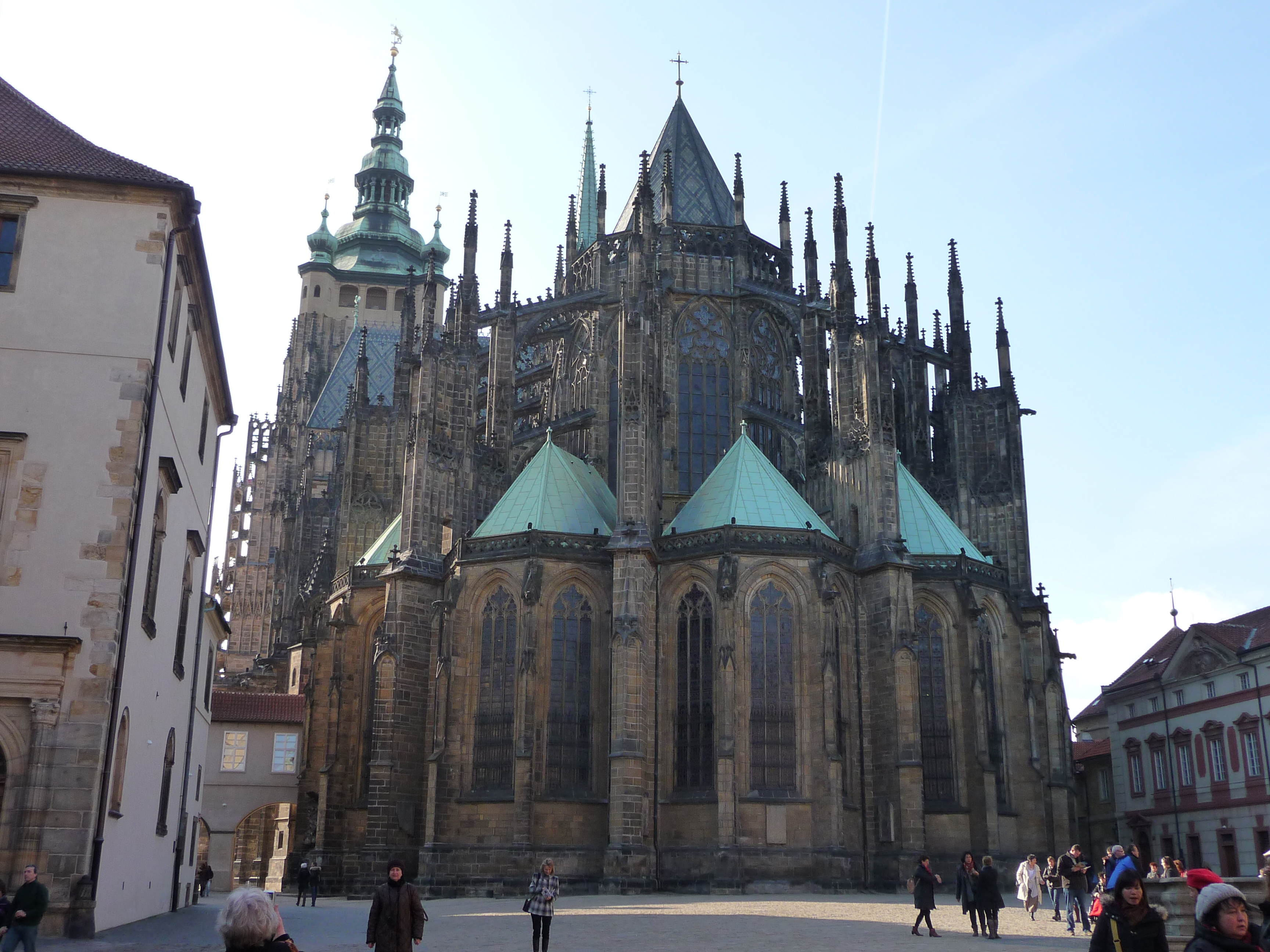
UNESCO listed Prague’s extensive historic center as a World Heritage site in 1992. Prague wasn’t bombed in WWII, unlike Budapest(see previous post). Prague’s Old Town (Staré Město) is an amazing concentration of historical sites, churches, a Jewish quarter, a huge astronomical clock (a main tourist attraction) and winding streets all in the shadow of a 9th century castle and St Vitus Cathedral. We stayed in the heart of the old medieval town in a 14thcentury building that had been converted to a hotel and residential building, so we walked everywhere.
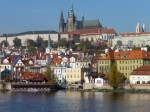
Vltava River, Lesser Town and Castle Hill

St. Climent's Cathedral in Old Town

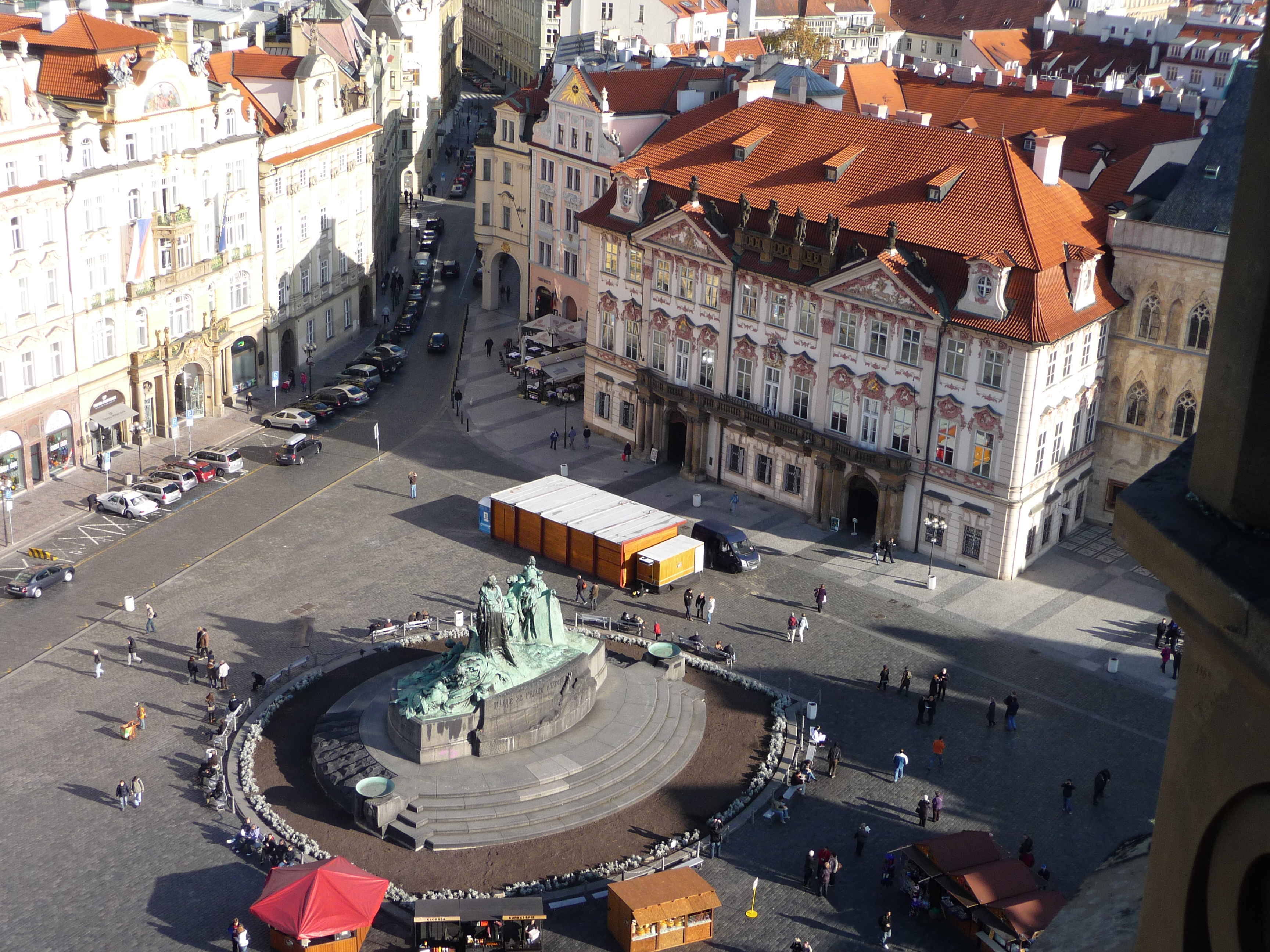
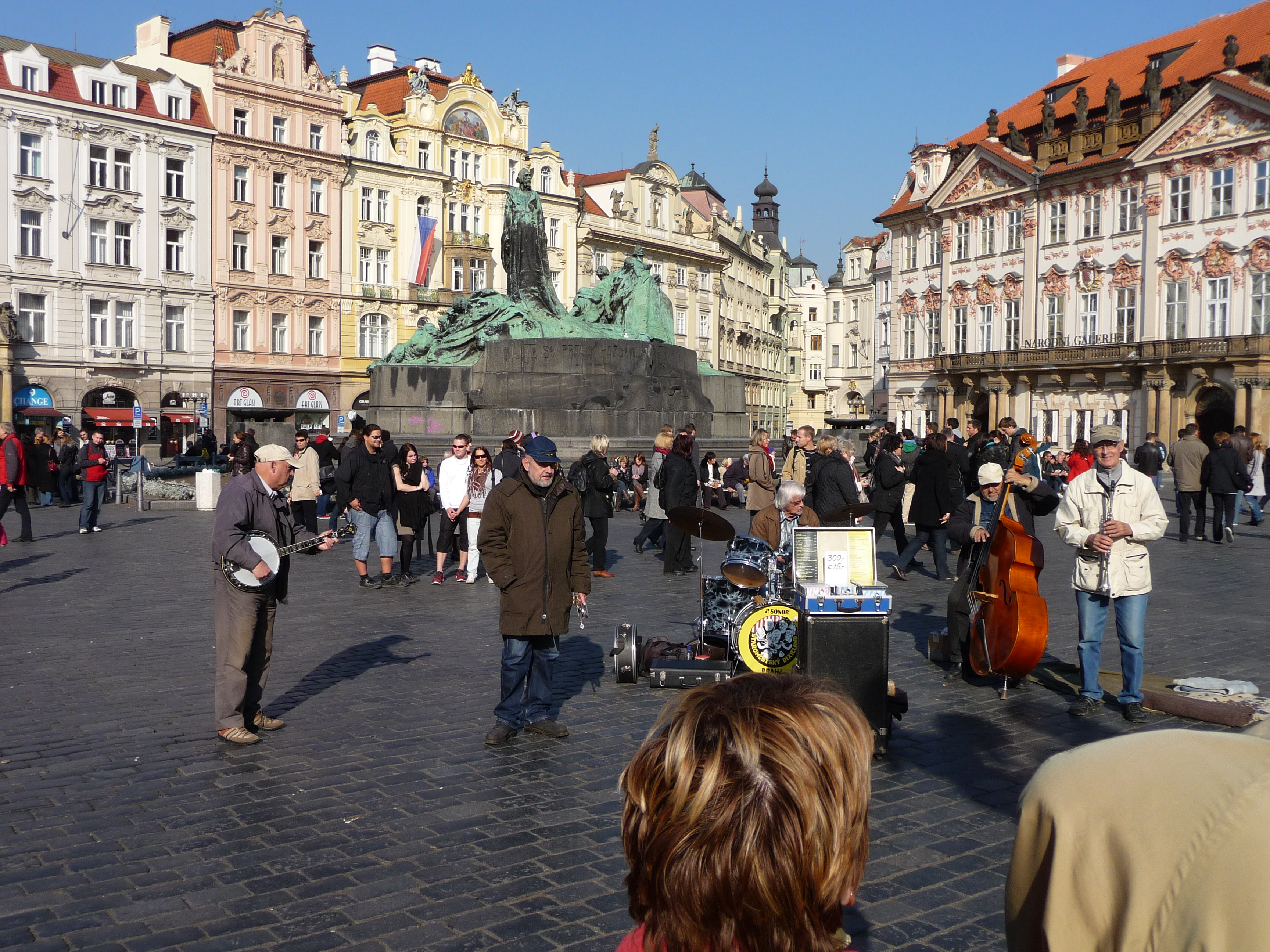
Old Town Square
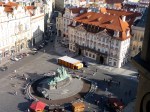
Old Town Square from the bell tower

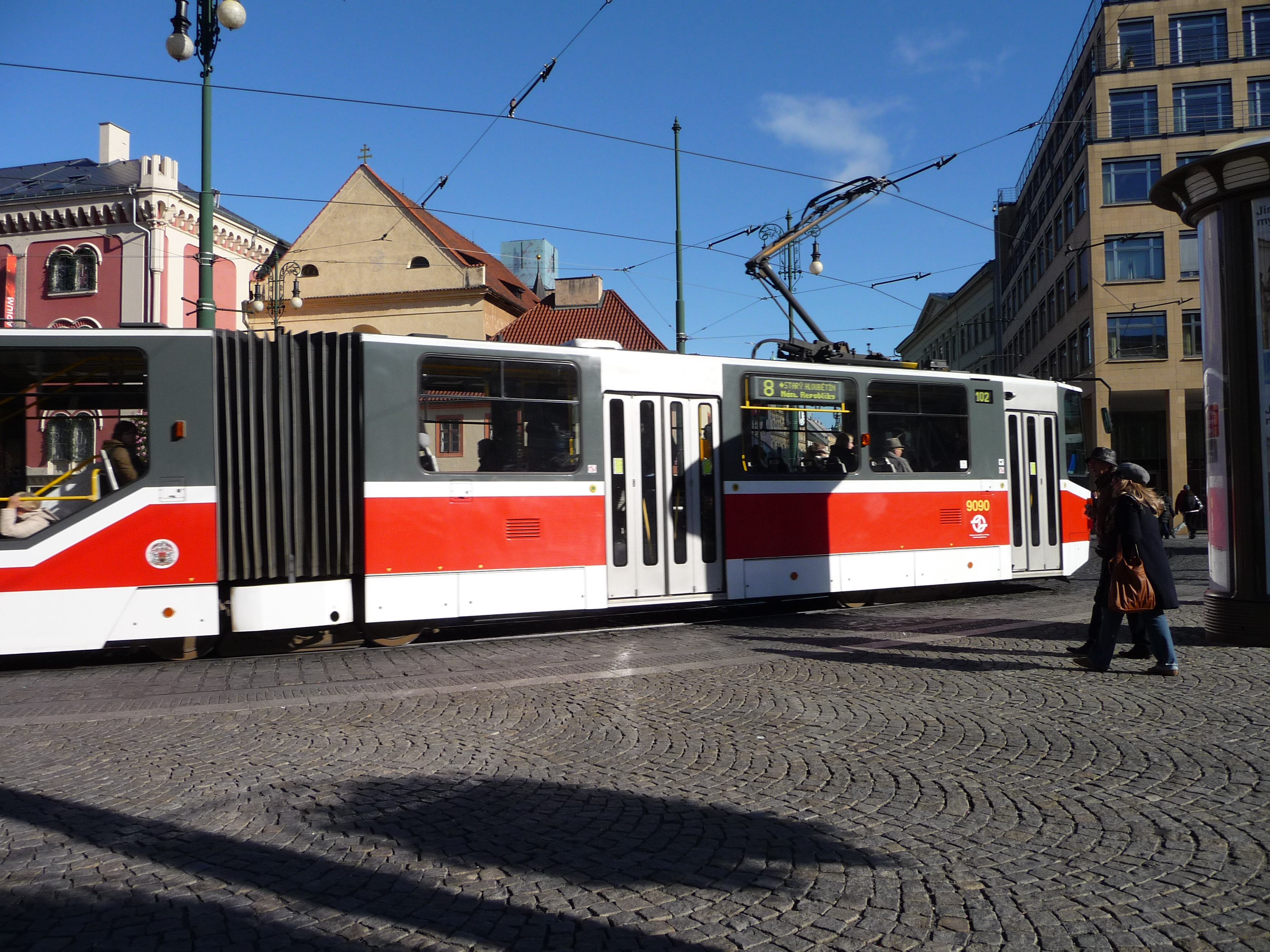
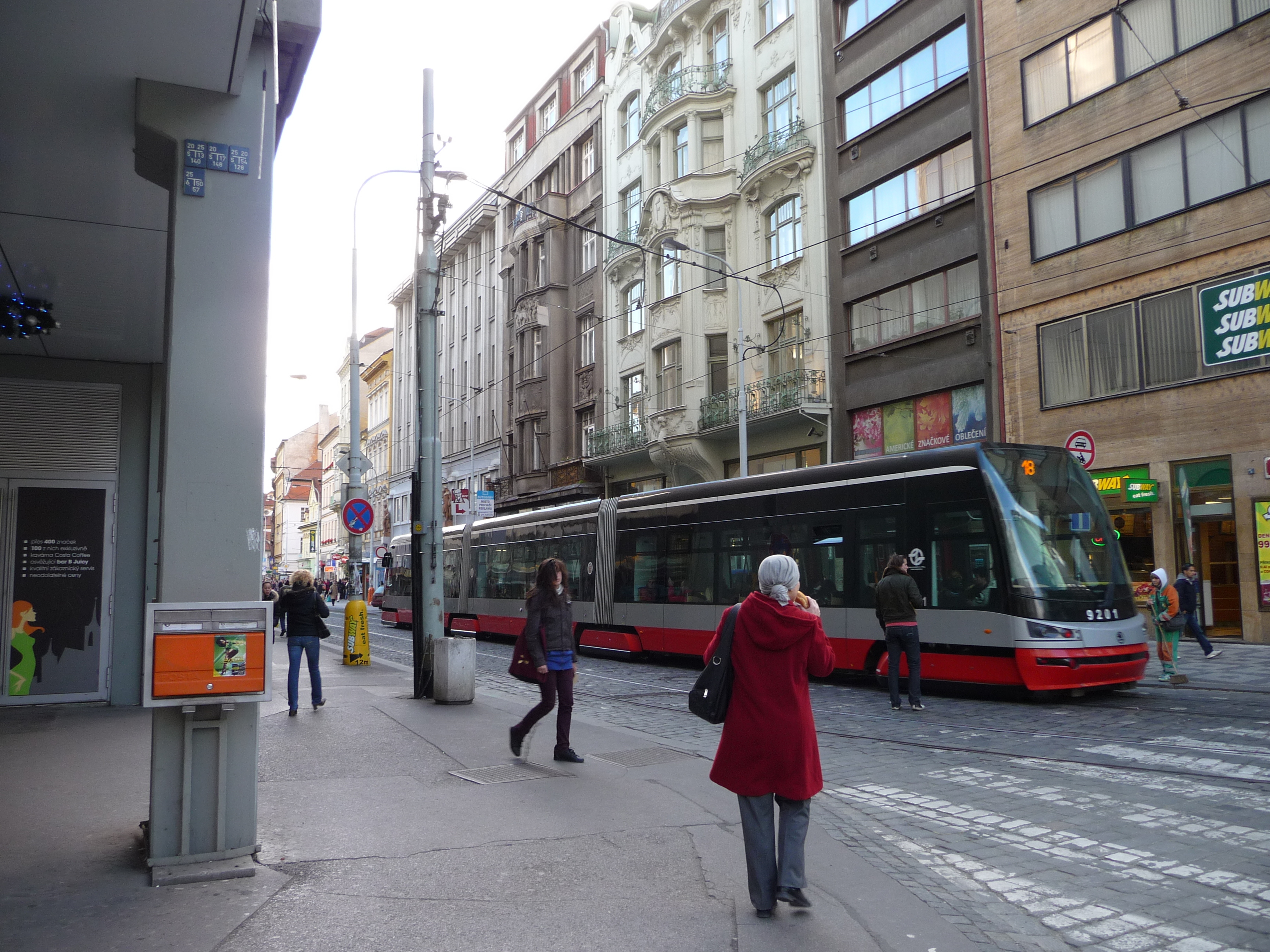
If you visit Prague I hope your ankles and legs are in good shape because you will be walking on lots of narrow, convoluted, cobblestone streets and up lots of steps.  Walking and public transit are the way to see Prague. Biking isn’t usually recommended in the tourist areas since the streets are so narrow and the cobblestones make very bumpy rides plus all this is mixed in with cars and small trucks. You see very few people on bikes in the Old Town. Cars are allowed in the Old Town and trams go around the outer part but buses are not allowed in the Old Town except for some tourist buses to pick people up in the main square.

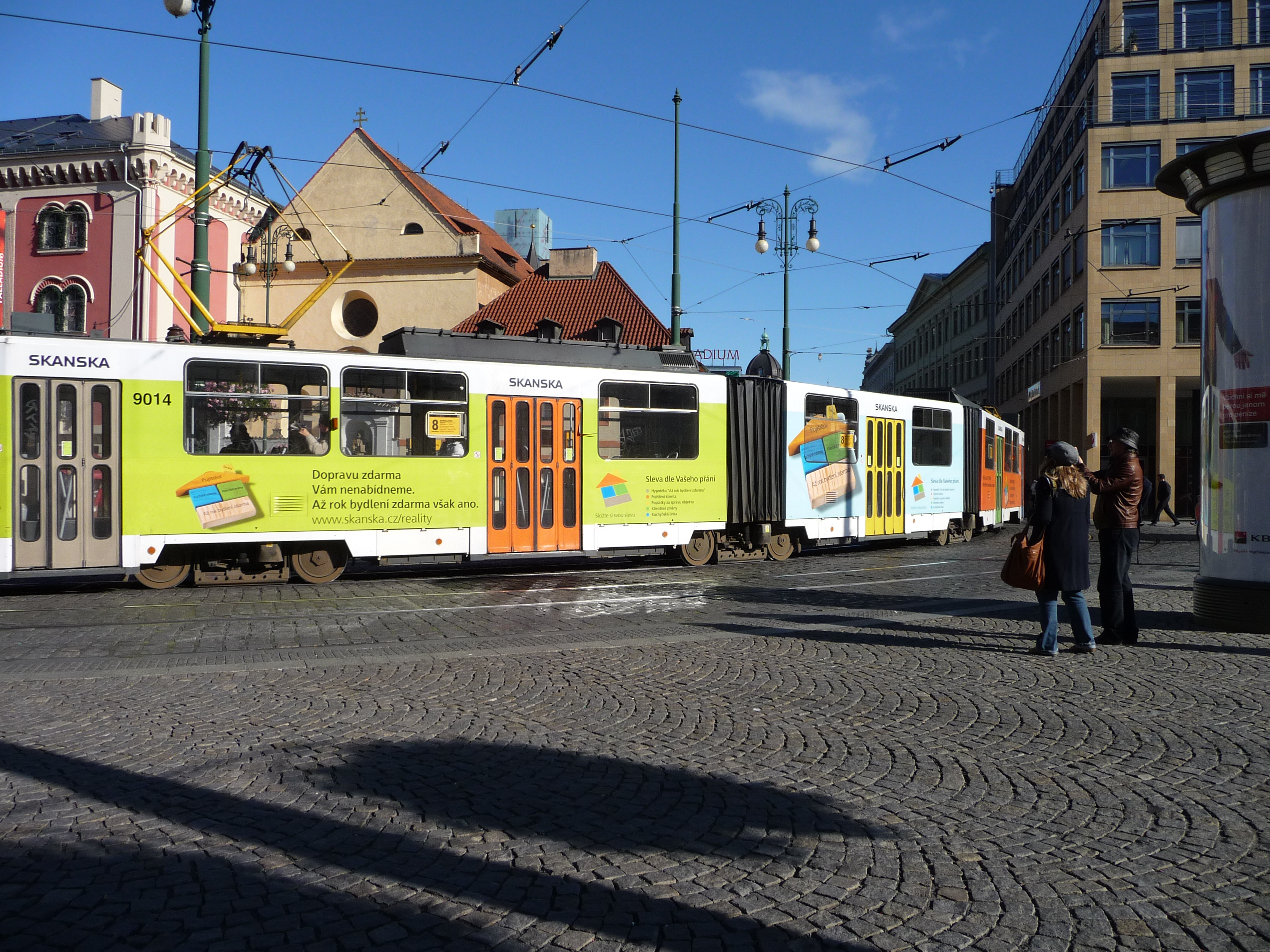
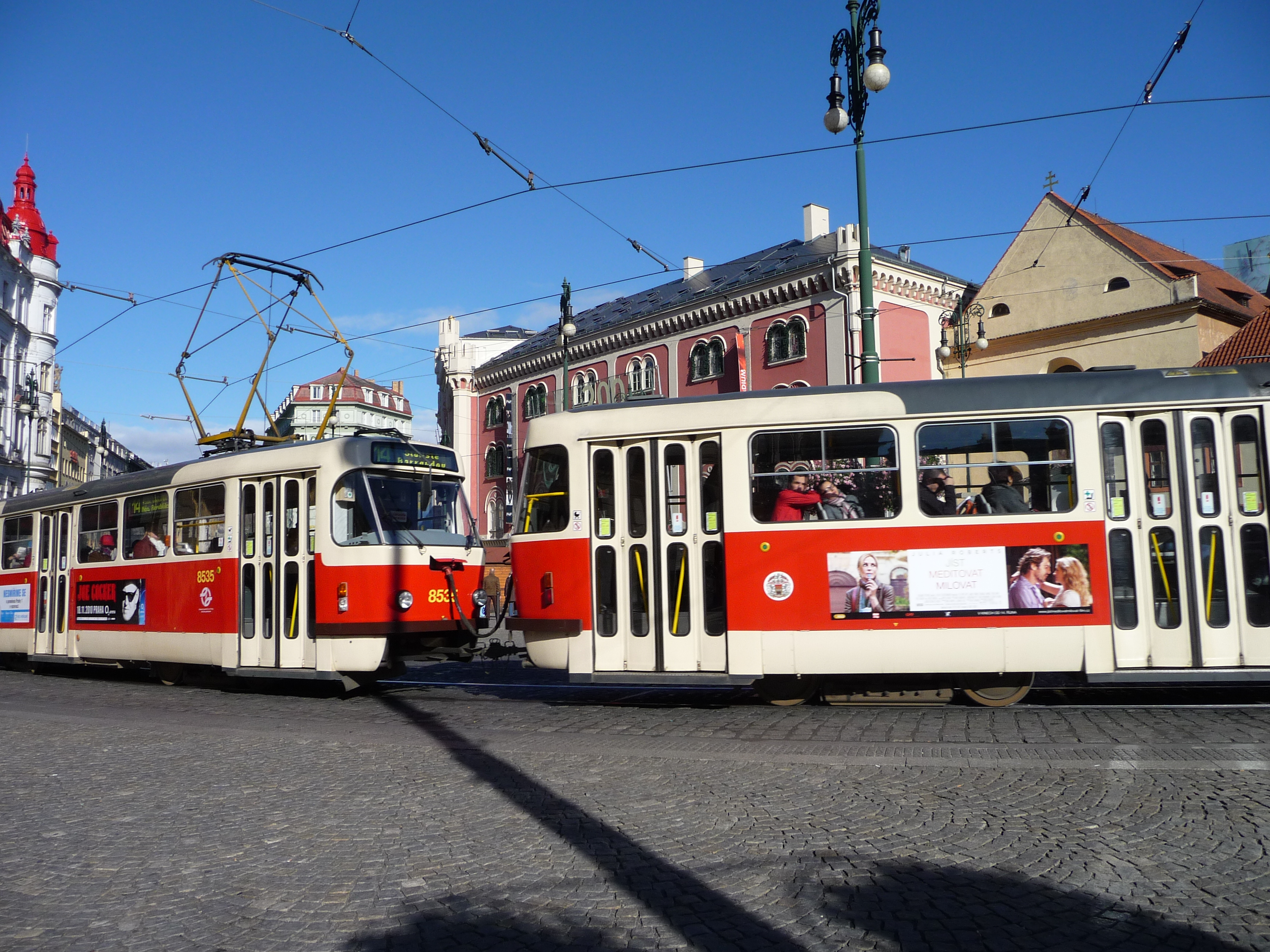
Tram - Prague
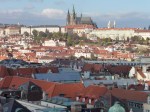
Castle Hill from the Clock Tower
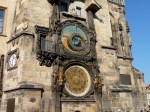
Astronomical Clock-Prague
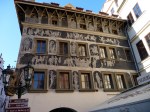
Franz Kafka's boyhood home
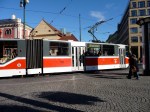
Tram in Prague

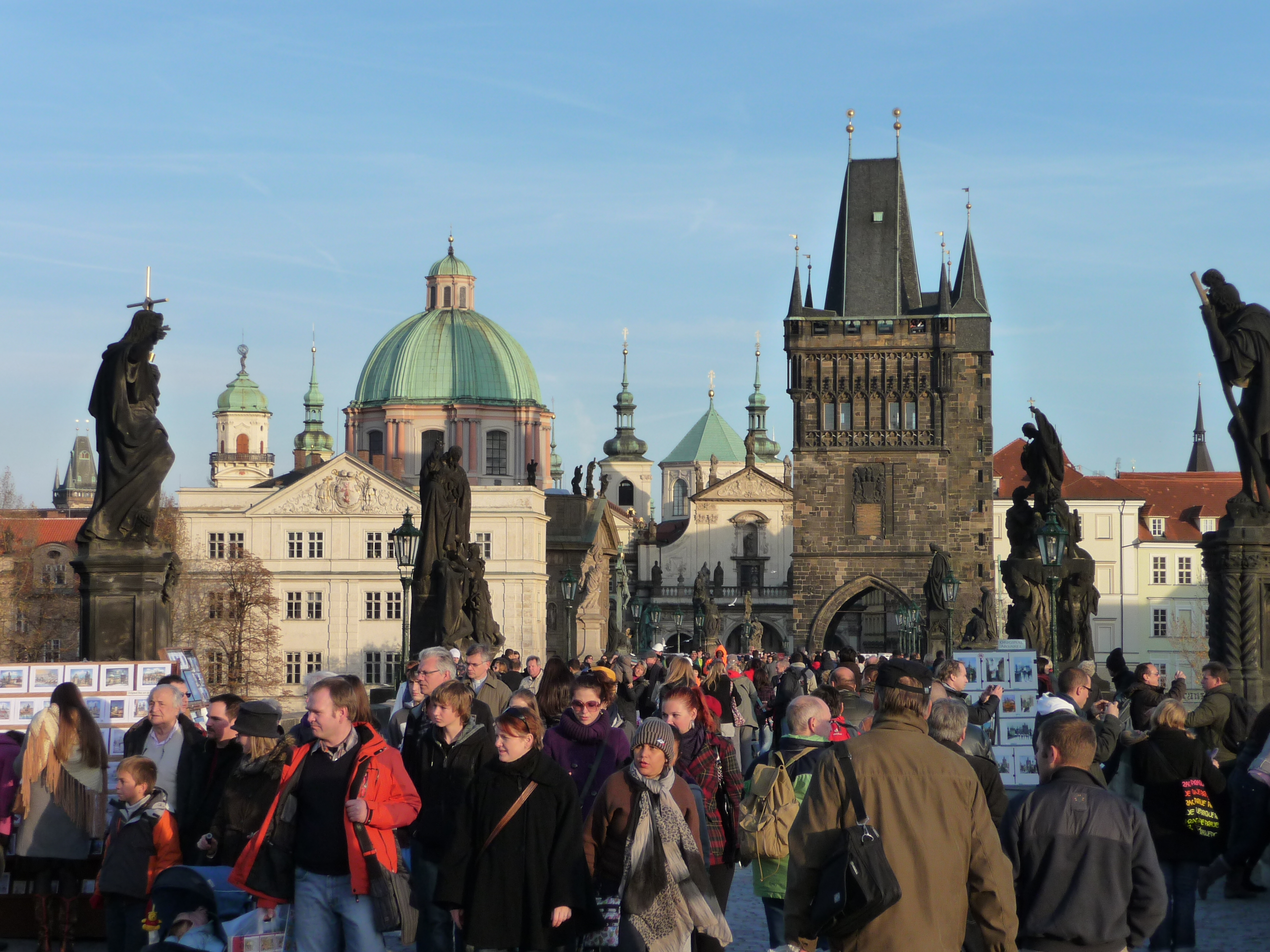
There are several parts of the historic district, the Old Town where the peasants and merchants lived and across the Vltava River to Lesser Town and up the Castle Hill to the castle area where the rulers live. The set up is similar to Budapest except these weren’t administered as separate towns. The Charles Bridge connects Old Town and Lesser Town on your way to the Castle. On the river’s bank in Lesser Town is the Franz KafkaMuseum, worth it if you are a fan.

Public transit ticket vending machines

Outside of the Old Town, Prague has a one of the best transit systems in Europe with a metro (subway – 3 lines, 400 million passengers a year), trams (26 lines, 300 million passengers a year) and buses. The metro is only 30 years old and mostly Russian built. Two thirds of the population uses public transit. Single and transfer tickets are available at yellow vending machines.  Tickets may also be purchased at metro ticket offices, tourist information offices and newspaper stands. 1, 3 and 5 day passes are available. In Prague you can also purchase transfer tickets through your mobile phone and have the ticket delivered to your phone in one minute. Very technically up to date.

Back of St. Vitus Cathedral

Charles Bridge in low season

Most services are handicapped accessible – but check to make sure.  They have some special transportation mini-buses available, too

If you visit in high season it might be cheaper to stay just outside the Old Town and take a tram in. Some tourist buses come in to the Old Town Square (Staromestske) like the HOP ON HOP OFF bus but they don’t stay. The HOP ON HOP OFF bus in Prague mainly does a trip around the perimeter of the Old Town and castle, so we didn’t take it. No buses are allowed in the Old Town and with such an excellent metro and tram system most public transit buses are on the outskirts of the city.

Prague’s taxis have a bad reputation so ask the price from your hotel before using them and make an agreement before you get in.
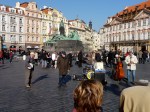
Musicians in the Old Town Square

Musicians on Charles Bridge

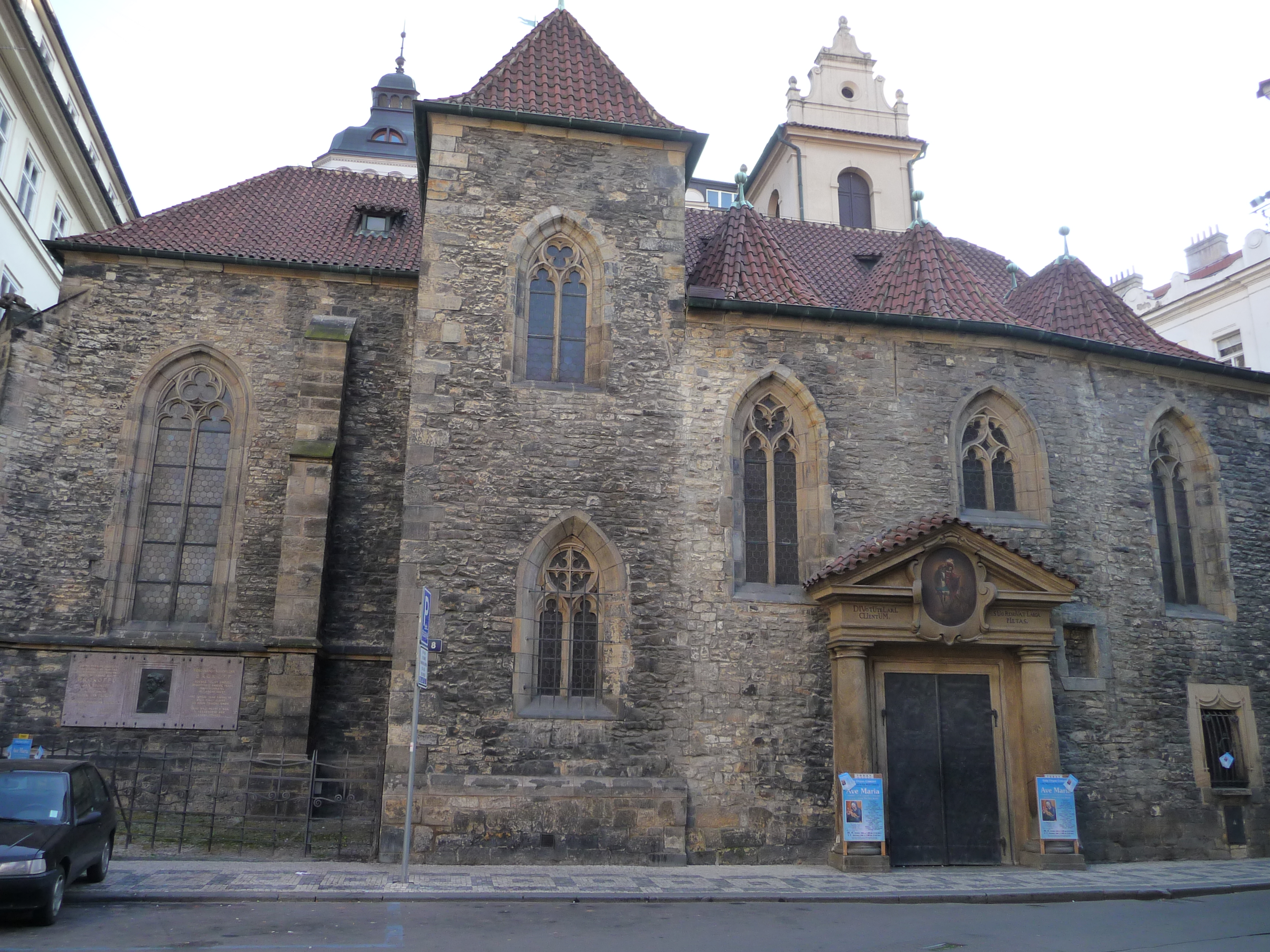
Prague is renowned for its music. There are bands in the Old Town Square and on the Charles Bridge, our hotel had a blues club in the basement, Susan Vega performed one night at the Hard Rock Café just off the Old Town Square, every church has concerts and there are the Prague symphony and opera houses. All of it is delicious and depends on your time, interest and pocketbook. The concerts in the churches are a big tourist attraction and since these are all stone churches with vaulted ceilings, the sound is very beautiful. Although we went to several church concerts that were excellent, I want to recommend a small ancient, beautifully preserved church, St. Martin in the Wall. The big churches are more famous; their interiors are beautiful and sometimes so over the top with Baroque decorations that they are a bit gaudy for me. However St. Martin in the Wall is very old and built into the side of the Old Town wall. It has barren stone walls and a small chapel. We experienced the best sound quality with an amazing performance in this unassuming venue.

Prague tram

St. Martin in the Wall Church

You will need a full day to explore the Castle area, the largest in Europe. The Castle consists of a lot of different buildings with courtyards. In the center of the complex is St. Vitus Cathedral. It is very impressive and if you are up to it climb the winding staircase up the South Bell tower, 287 steep narrow steps. Go as early in the day as possible before it gets really crowded. I waited for my husband who thinks that all towers were created for him to climb. The cathedral is magnificent. I suggest you get an audio guide to the castle district and the cathedral if you are really interested in exploring this site.

Part of the fun of the Castle is getting there. The Castle steps are famous and there are two choices. Since none of the trams were close to our location in the Old Town, we zigzagged up the streets so the trip was not as steep as the castle steps. We walked down the Old Castle steps at the end of the day.
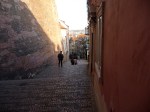
Halfway down the Old Castle Steps

Walking up to the castle:

1. Castle Steps (Zámecké schody) – these are considered the romantic Castle Stairs, which will take you to the Garden on the Ramparts (Zahrada na Valech).

2. Old Castle Steps (Staré zámecké schody) – These are near the  Malostranská metro station and Jiřská street. You will be rewarded with one of the most beautiful views of Prague.

Prague tram in Lesser Town-4 articulations

Getting There by Tram

Taking the tram will save you a walk uphill or up the stairs, and the ride is quite scenic. Take tram 22 (e.g. from Národní třída or the Malostranská metro station) and get off at one of these stops:
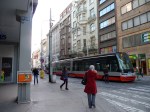
Some streets are tram only

1. Královský letohrádek – if you get off here, you can start with the Royal Garden, Belveder and Ballgame Hall, then cross the Deer Moat bridge to get to the Second Courtyard
Note: The Royal Garden and Deer Moat are closed from November through March

2. Pražský hrad – this is considered the main Prague Castle stop. Get off here if you would like to start at the Second Courtyard.

3. Pohořelec – getting off here will enable you to walk to the Castle through Hradčany and arrive at the main entrance. Considered the nicest route.

A good way to go is to take the tram up to the Castle and walk back down when you’re done.
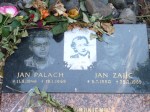
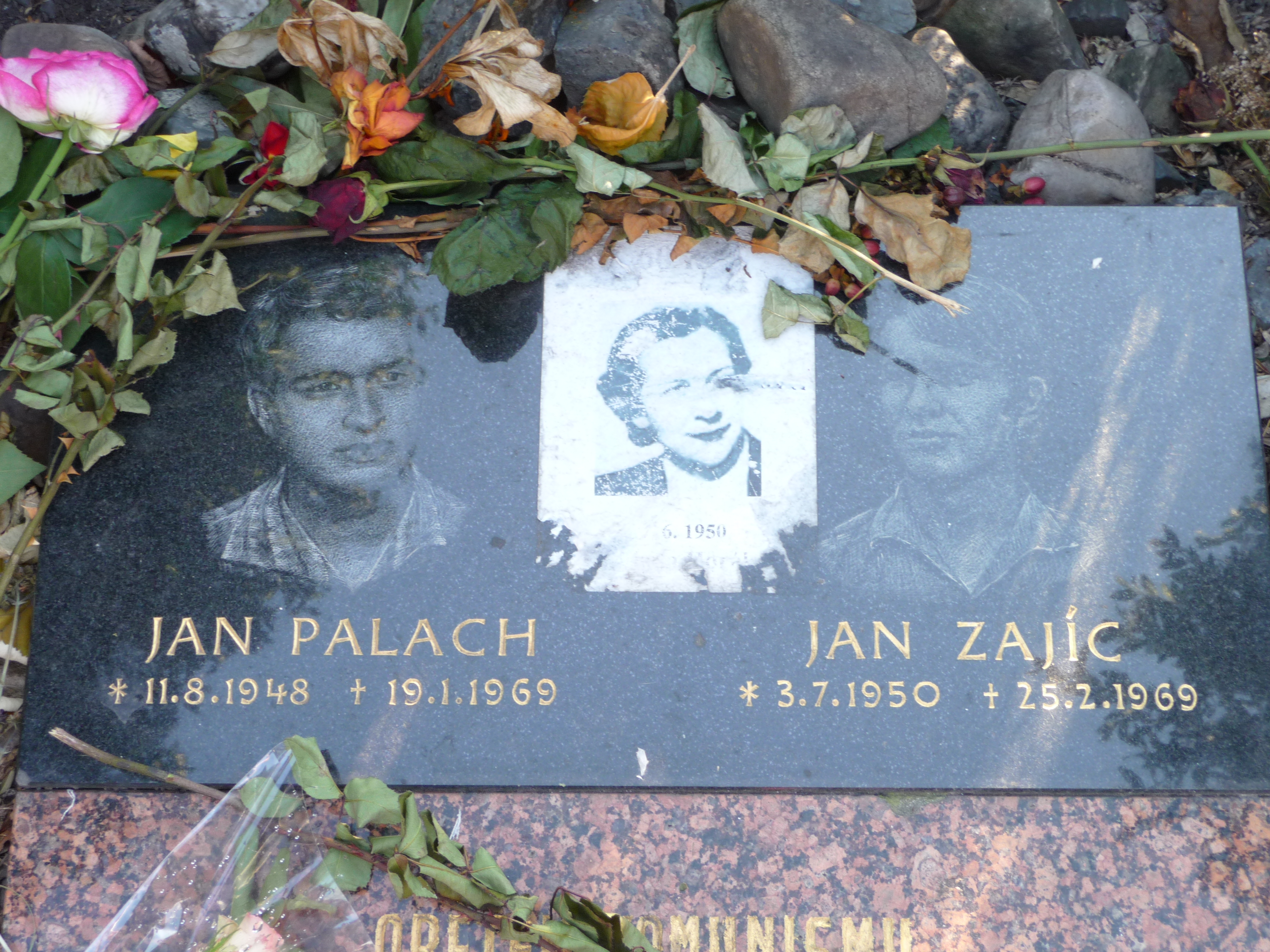
Memorial to Jan Palach and others
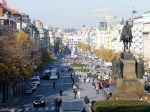
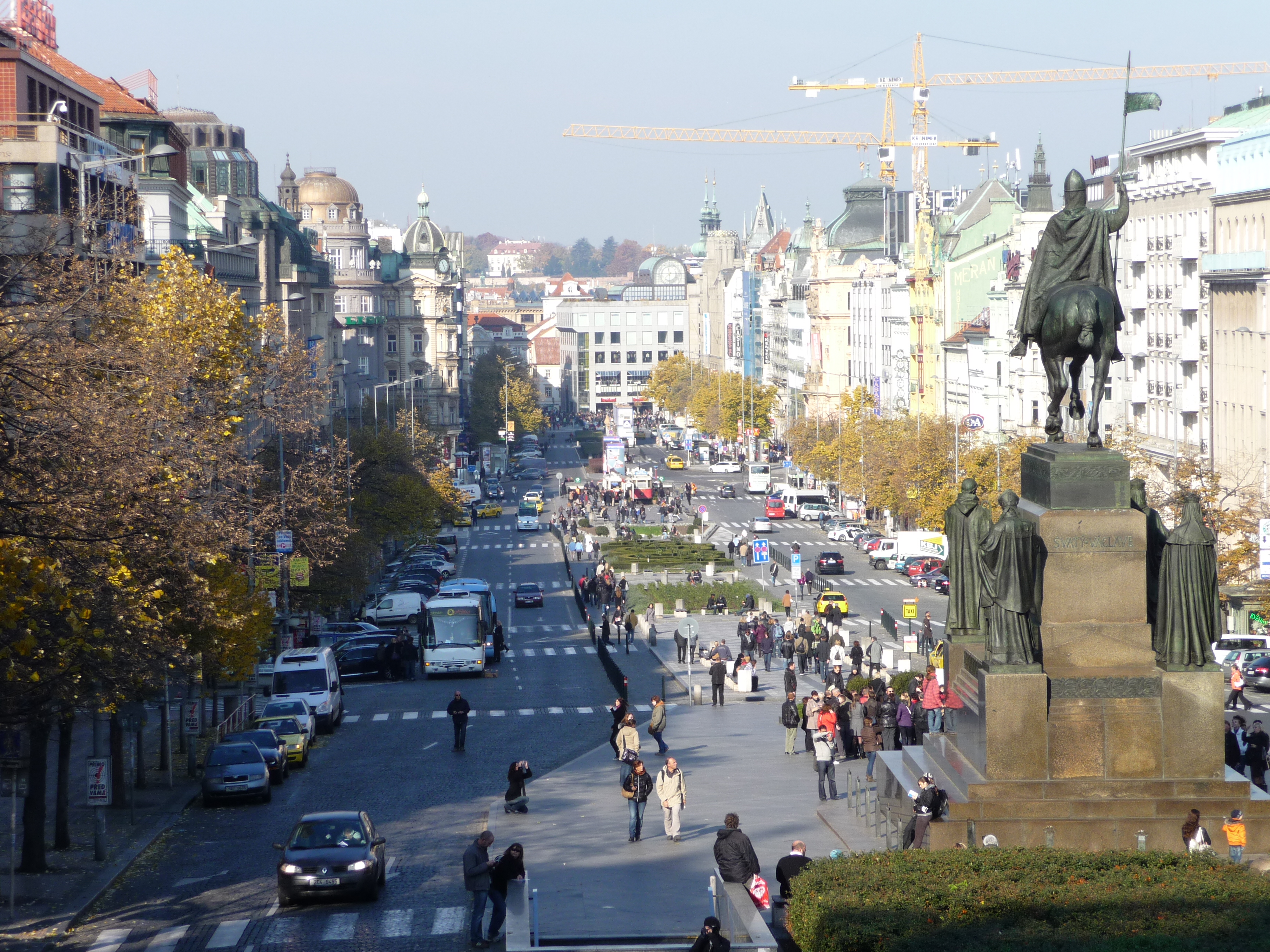
Wenceslas Square

A five-minute walk from the Old Town Square is New Town (east and south of the Old Town), dominated with wide straight streets set out in a grid.  Wenceslas Square has a huge statue of Saint Wenceslas (yes, the one from the Christmas song) at the top of the street. Of course the Good King was really a prince and is considered the founder of the kingdom. His brother killed him in 935 AD. So much for family values!

Part to the way down Wenceslas Square is a small memorial to Jan Palach who set himself on fire January 1969 to protest the Russian occupation and the demoralization of the Czech people.

At the bottom of the street starts a long pedestrianized shopping area with all the top designer shops and lots of restaurants.
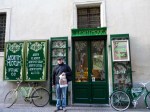
Bill at an Absinthe Shop and Museum

Prague is also known for its beer. However, you’ll see Absinthe (the Green Fairy) being sold everywhere in Prague. It’s bad reputation and subsequent ban throughout most of the western world came from the disastrous effects it had on French artists in the 1900’s. However, the ill health effects and early deaths were mainly related to becoming alcoholics, not the wormwood in the drink.  The US ban was lifted in 2007.
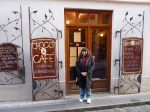
Janet at a chocoholic paradise

It is good I don’t live in Prague because I would die from chocolate overdose at the Choco Café. The dark hot chocolate (70%) is so thick you need a spoon (it is actually referred to a spooning chocolate). I ordered mine with wild berries but they had lots of fruit choices and combinations. Drinking a whole mug must have equaled several candy bars. They also have great food.

Next stop-London

Photos by Janet and Bill Rogers, except the rail stations and vending machines

Posted in Rail, Transit and Travel | Leave a Comment »

Streetcar Presentation at Downtown Neighborhood Association

Posted by Transit Action Network on April 29, 2011


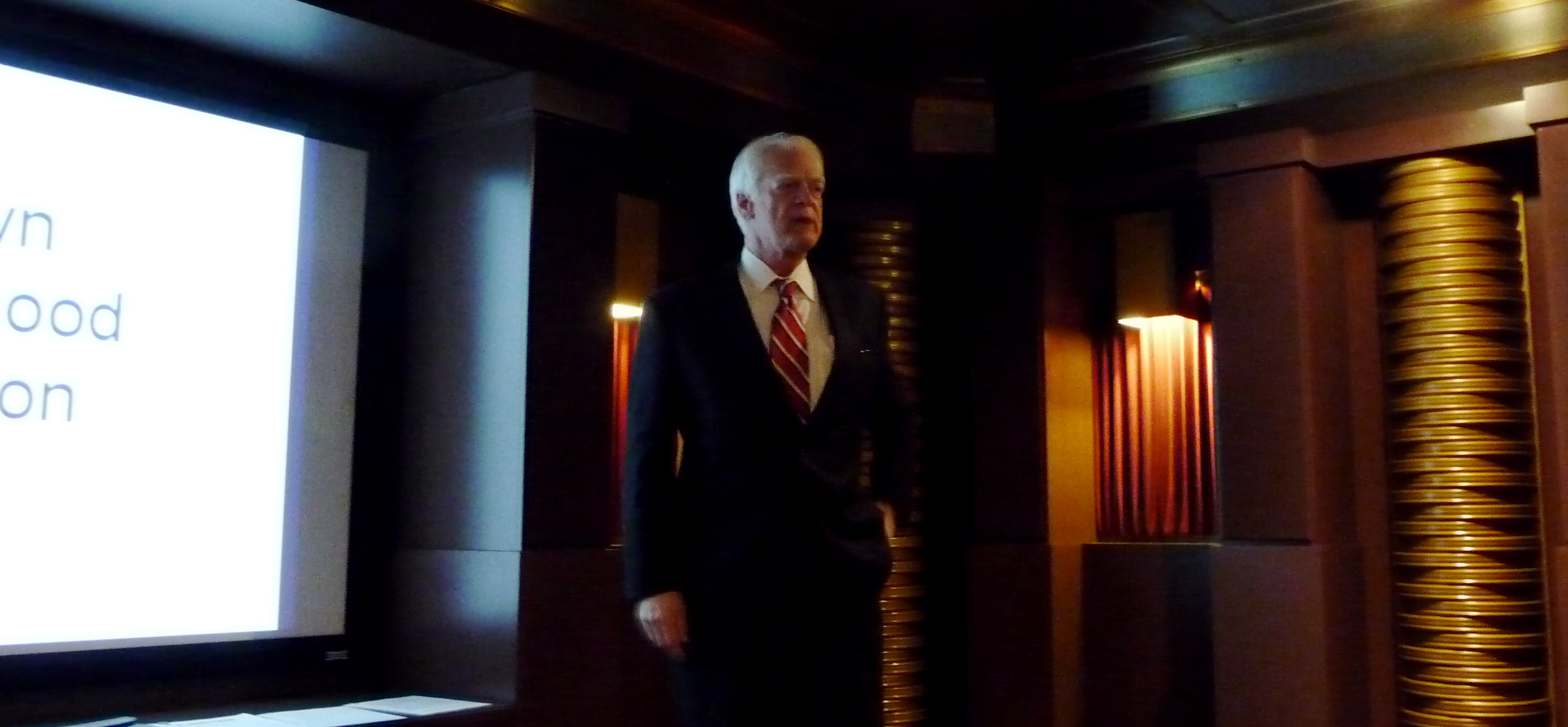
Sherri McIntyre, KCMO Assistant City Manager. addresses DNA

Sherri McIntyre, KCMO Assistant City Manager, and Mark McDowell, Transit Action Network, both addressed the Downtown Neighborhood Association Wednesday evening regarding the Downtown Corridor (Streetcar) Study. Sherri talked about the nature of the study, how the study would progress, its time frame and how positive the city is about implementing a modern streetcar line downtown. Mark McDowell then focused on different financing issues and how a Transportation Development District (TDD) is a possible funding mechanism. The Missouri legislation for a TDD will be a strong contender for funding all or part of a streetcar line for both capital and operating expenses.

Mark McDowell addresses DNA

Since the study is scheduled to be completed by the end of the year, it is not too early to start grassroots organizing. Transit Action Network asks Downtown residents, as well as residents in the River Market and Crossroads, to take part in a group to make the streetcar happen and to participate in an eventual campaign to pass whatever funding mechanism is ultimately proposed.   Downtown residents can contact TAN at TransActionKC@gmail.com to find out more.

The Kansas City Star (April 29) carried a front-page article by Mike Mansur about the meeting. http://bit.ly/mNA8Zs

Posted in Action, Meeting Reports, Rail | Tagged: | Leave a Comment »

Future Downtown Streetcar could be in the Hands of Downtown Residents

Posted by Transit Action Network on April 25, 2011


Come hear about a Transportation Development District. Presented by Mark McDowell and TAN.

Downtown Neighborhood Association April Meeting | 04.27.11 | 7:00 pm | Central Library | Film Vault

http://www.dnakcmo.org/dna-events.html

Posted in Events, Local Transit Issues, Rail | Tagged: | Leave a Comment »

Streetcar Study Off to Fast Start

Posted by Transit Action Network on April 20, 2011


A Downtown Streetcar “Alternatives Analysis” (AA) study is on a fast track to completion, according to Charlie Hales, project manager for lead consultant HDR.  That’s our conclusion based on Hales’ presentation to the Kansas City Parking and Transportation Commission today.  The Commission, chaired by Councilwoman Jan Marcason will be the “primary sounding board” guiding the study.

Hales, who has had extensive rail transit experience in Portland and other cities, said though the federal funding situation is uncertain, the best way to get such funding is to have a plan ready when the next money becomes available.

The study timetable is ambitious:
– June – Statement of purpose and need, plus identification of initial alternatives.
– August – Alternatives evaluation and financing options.
– September – Draft of a Locally Preferred Alternative (LPA) report.
– November – Formal recommendation of a single Locally Preferred Alternative.

The FTA has awarded $400 million in grants for streetcar projects in the past 15 months through the TIGER and “Urban Circulator” programs, Hales said, and USDOT Secretary Ray LaHood really likes streetcar projects.  Getting the current study done will enable Kansas City to be “nimble” in applying for FTA “new starts” or “small starts” money, or other federal money that may become available.  Some transportation funding, for example, has recently been turned back by other grantees, and that money — even high-speed rail money — could conceivably be redirected to a streetcar project such as ours.

The Downtown Streetcar study will follow the FTA’s formal process, which requires consideration of reasonable options for both route and mode, but will seek a so-called “categorical exclusion” (a category of project considered not to have major environmental impacts) to simplify the “environmental screen” required in the FTA process.  Issues such as event-related street closures (e.g., at Sprint Arena and Crown Center), utility location requirements, the strength of bridges over the freeways, and where to locate a maintenance facility are among those to be addressed in the study.  Other factors include ridership forecasts (estimates based on travel demand models as well as “off-model” considerations) and financing options.

Hales noted that the study will build on a number of recent and ongoing local studies, including the Greater Downtown Area Plan, KCATA’s Comprehensive Service Analysis, the region’s Urban Corridors Study, and the Grand Boulevard Vision, plus all of the light rail planning work that’s been done in past years.  The streetcar study will be coordinated with the Commuter Corridors study (not yet underway), which will consider commuter rail in two major corridors.

Keeping the project manageable is important, too.  When projects fail, Hales said, it’s not for engineering reasons.  Rather, it’s for political reasons.  Thus, every effort will be made to keep all stakeholders involved, to limit expectations, and to avoid a key mistake of past Kansas City rail studies, letting the scope of the project expand.  Holding the project to just two miles gives it the highest likelihood of success, based on past voter response.  (It’s widely expected that funding for this project would come largely from within the streetcar corridor, and thus a citywide vote would not be required.)  This also keeps it small enough that the city might be able to finance it without federal assistance, should that become necessary.

KCATA General Manager Mark Huffer noted that a bill has been introduced in the Missouri Senate that would allow a Transportation Development District (TDD) to be set up specifically for transit, and that would simplify the makeup of the TDD’s governing body.  That bill (which might not be critical) might or might not get through the General Assembly this year.

Assistant City Manager Sherri McIntyre will oversee the project for the City.  She said she looks forward to guiding the study to completion and then getting the project built.

Said Chairman Marcason: “I’m the most optimistic that I’ve ever been (about getting a rail transit project done).”

Posted in Local Transit Issues, Rail, Transit Studies | Tagged: , , | Leave a Comment »

Downtown Trends and Transit- Is a Streetcar in Kansas City’s future?

Posted by Transit Action Network on April 18, 2011


Downtown areas are being revitalized all over America.

The 2011 March-April edition of the magazine The Futurist looks at current trends in an article titled “The “American Dream” Moves Downtown”.

Although the Renaissance in many downtown areas came with light rail, read streetcar for KC.  Portland is leading the way in using streetcars, which helps other cities see their potential.

Times are changing, as are attitudes in KC. The corridor from the River Market to Crown Center has lots of activities and major attractions with more and more people actually living in the area. Demand for more effective inner city transit from the people who will use it may finally have arrived. It certainly has arrived in other cities around the country.

The trend includes more than just rail. Other aspects of enhanced downtown areas include restoring and enhancing natural settings with small to mid-size parks, urban ornamental or vegetable gardens (like the one at 18th and Broadway), integrating commercial and residential functions in multi-use buildings and changing public infrastructure to favor people over cars.

Since transit is considered a major component of this trend it is often called “Transit-Oriented Development” or TOD, which has mixed use, relatively dense development that emphasizes walk-ability.

KC already has some of the improvements mentioned in the article and the new zoning code that went into effect January 2011 will help with others.

The new study for a two-mile long streetcar is starting. If a good plan emerges from the study, let’s hope we find a way to finance building it as well as operate it.

Posted in Local Transit Issues, Rail | Tagged: | Leave a Comment »

Transit Consultant Chosen for Commuter Corridors Alternatives Analysis

Posted by Transit Action Network on April 7, 2011


April 6. It was announced at the MARC Transit Committee that Parsons Brinckerhoff will be recommended to conduct the Commuter Corridors Alternatives Analysis in Jackson County. Parsons Brinckerhoff (PB) is considered one of the world’s leading planning, engineering, and program and construction management organizations.

PB founder William Barclay Parsons was chief engineer for the original New York City subway.

PB has designed 30,000 miles of heavy and light rail systems, automated guideways, commuter rail and busways.

The PB team consists of Nelson\Nygaard, Olsson Associates and Shockey Consulting. PB has a local office in Lenexa, Kansas.

From MARC’s  Request for Proposal (RFP):

For the purposes of this Alternatives Analysis, the two commuter corridors to be studied run through multiple jurisdictions. The I-70 Commuter Corridor runs from the heart of Kansas City, Mo and extends east paralleling the Kansas City Southern railroad through Independence, Blue Springs, Grain Valley, and Oak Grove in Jackson County and east to Odessa in neighboring Lafayette County. The Rock Island Corridor begins in the heart of Kansas City, Missouri, sharing a common corridor segment with the I-70 corridor approximately to the eastern edge of Kansas City, Mo, and then follows the old Rock Island rail corridor through Raytown, Kansas City, Lee’s Summit, and Greenwood in Jackson County and further south to Pleasant Hill in Cass County.  Both corridors run proximal to two heavily-traveled roadways, Interstate I-70 and Highway 350 (Blue Parkway), and through cities experiencing a growing residential population.

Several activity centers, including Downtown Kansas City, MO, Truman Sports Complex, and multiple town centers fall within in these corridors. Downtown Kansas City, Mo is the expected terminus of the various alternatives that will be considered in this Alternative Analysis, therefore this AA is to be closely coordinated and integrated with the Downtown Kansas City, Missouri Corridor Alternatives Analysis. In addition, this AA is to be closely coordinated with the Missouri Department of Transportation’s (MoDOT) Second Tier Environmental Impact Statement (EIS) for the I-70 corridor (I-470 to the Kansas/Missouri state line, including the downtown loop).

Existing transit service in downtown primarily focuses on bringing persons from outlying parts of Kansas City and the region to and from downtown. These commuter services continue to be needed, especially in Jackson County. Previous studies have indicated that the I-70 commuter corridor would greatly benefit from additional service, potentially through additional travel options such as expanded express bus or rail.  The Rock Island corridor is currently served by a commuter express bus on Blue Parkway and cities along this corridor have interest in increasing service to meet growing demand and looking at potential options in the Rock Island Rail alignment.  This rail alignment also connects to Missouri’s statewide Katy Trail in Pleasant Hill, formerly the Missouri-Kansas-Texas Railroad, therefore any use of the Rock Island rail alignment would likely include a trail extension into Kansas City, making it a multiuse corridor.

MARC, KCATA, the City of Kansas City, Mo and Jackson County intend to build on previous efforts and complete an Alternatives Analysis for both the I-70 and Rock Island Corridors. The intent will be to use the AA results to secure funding for implementation and potentially apply for federal funds–New Starts, Small Starts, or other federal sources. 

Specific consultant activity will be limited to the I-70 and Rock Island/M-350 corridors within Jackson County and portions of Lafayette and Cass Counties in Missouri. A more specific study corridor will be further defined by the Project Partnership Team with input from the study advisory committee.

The purpose of the study will be to determine the preferred alternative including specific alignments for the option best meeting current and future transportation needs while also helping to shape, support and focus future economic development and revitalization of activity centers for each corridor.

The recommendation will be submitted at the next MARC Board meeting for approval.

Posted in Local Transit Issues, Rail, Transit Studies | Tagged: , | Leave a Comment »

Transit Consultant Chosen for Downtown Corridor Alternatives Analysis

Posted by Transit Action Network on March 24, 2011


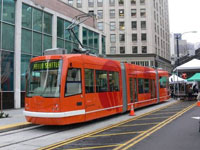
Modern StreetCar

March 22. The MARC Board approved authorization to execute an agreement with HDR to do the Alternatives Analysis (AA) for the downtown corridor. HDR is an international employee-owned architecture, engineering and consulting firm. They have an excellent reputation working on transit projects and HDR has been heavily involved in streetcar implementation, especially in Portland. They have a KCMO office at 4435 Main.

The HDR team includes Nelson/Nygaard, Patti Banks, Burns & McDonnell, Polsinelli Shugahart, HG Consult, and Architectural & Historical Research.

From MARC’s  Request for Proposal (RFP):

For the purposes of this Alternatives Analysis, the downtown corridor is in Kansas City, Missouri and extends from the Rivermarket on the north, through the Central Business District and the Crossroads areas to Crown Center on the south.  This is the center of the bi-state region and includes the region’s largest concentrations of employment, regionally significant activity centers and a growing residential population.

Downtown is the current regional hub for transit services and the expected terminus for future regional rail being studied in a separate Alternatives Analysis that is to be coordinated with this effort. There is significant transit service downtown, including two BRT lines terminating downtown, but existing services primarily focus on bringing persons from outlying parts of the city and region in and out of downtown. There is a significant and growing need for transit service focused on conveniently moving people within downtown and connecting the downtown activity centers, employment centers, residential areas and transit hubs. This need will heighten with any future introduction of regional or commuter rail.”

Modern streetcar and a variety of alternatives will be considered to meet the current and future needs.

Read KCATA’s  Kansas City Streetcar Concept

The AA is expected to be completed by Jan 2012.

Posted in Local Transit Issues, Rail, Transit Studies | Tagged: , | Leave a Comment »

Preparations for Two Transit Studies Move Forward

Posted by Transit Action Network on January 8, 2011


Jan 7, 2011: The major agenda item at a Kansas City, Missouri, Parking and Transportation Commission meeting this afternoon was a report on the downtown streetcar concept by Mark Huffer (general manager, KCATA), Dick Jarrold (project engineer, KCATA), and John Dobies (HNTB).  It was largely the same presentation that Dobies gave to MARC’s Transit Committee last month.  The line is expected to run from River Market to Crown Center along Main Street, and would be the first phase of a streetcar / light rail system that would extend farther south to the Plaza.  One of the issues identified was whether this line would be “serious transportation” or a tourist-oriented line.  Presenters articulated a clear bias toward the “serious transportation” purpose (though there would obviously be tourist implications).  We strongly agree.

Huffer confirmed that the streetcar and commuter corridors Alternatives Analysis studies (AA’s) will be done separately, albeit in a coordinated manner. The $1.8 million that the region has received from the FTA for the studies https://transactionkc.com/2010/12/22/commuter-rail-maybe-maybe-not-1-8-million-to-study-transit-corridors/ is 90% of the $2 million requested, so each study is expected to receive 90% of the original request.  Thus, the downtown streetcar study would receive $540 thousand and the commuter corridor study $1.26 million.

KCMO and KCATA expect to coordinate and provide the local match for the streetcar study, and the ATA has already written a draft scope of services in preparation for issuing an RFP (request for proposals) next month.  They will meet with the FTA on January 20 to work out details, and they hope to get the KCATA Board of Commissioners to approve the draft scope this month.  If all goes well, KCATA could select a consultant as early as April, and the study will likely take about 10 months.  The streetcar AA can move forward quickly because so much of the 2007-08 light rail AA work is applicable.  There’s also a sense of urgency because Kansas City has a shot at getting “small starts” money from the FTA under the current administration — if they decide to pursue federal funding.  This two-mile segment is part of the 14-mile light rail line that was turned down by voters in 2008, and is widely considered the segment most likely to be eligible for federal funding.

The commuter corridors AA for two lines — one to Blue Springs and beyond, and the other to Lee’s Summit and beyond — is much more complicated and will involve a much larger group of stakeholders, including several local jurisdictions, MoDOT, transit agencies, inner-city neighborhoods, transit advocates, trail proponents, the railroads, etc.  It will be coordinated jointly by Jackson County and MARC with Jackson County providing the local match, and it could easily take a couple of years to complete. They will also meet with the FTA on January 20.

Posted in Local Transit Issues, Rail, Transit Studies | Tagged: , , , | 3 Comments »

Commuter Rail? Maybe-Maybe Not – – – $1.8 million to Study Transit Corridors!

Posted by Transit Action Network on December 22, 2010


December 21,2010 MARC announced that the Kansas City Region was awarded $1.8 million by the FTA for ‘Alternatives Analysis’ studies for transit in three corridors.  Two have been identified as having potential for commuter rail — they are part of the ‘Regional Rapid Rail’ system promoted by Jackson County Executive Mike Sanders — and the third has potential for modern streetcar in the downtown to Crown Center corridor.

The media are jumping to commuter rail conclusions based on expectations from Sanders’ innumerable public presentations. In fact, while the studies will look at commuter rail they will also look at other options such as express bus, BRT and even light rail. This is different from the recent ‘Commuter Corridors Study’ in which MARC allowed commuter rail to be the preferred solution.  In an FTA Alternatives Analysis all the transit modes have to be treated in an equivalent manner. The MARC press release http://bit.ly/gial1a is objective and doesn’t promote a particular alternative.  Stories in the Star http://bit.ly/ghL0Mj and KC Business Journal http://bit.ly/dFDt3r jump right to commuter rail conclusions.

The bottom line for now is that press reports about this grant feed unrealistic public expectations. The FTA recently changed its evaluation process and that is partly why rail is being considered again in these corridors. Previous analysis along the I-70 corridor resulted in express buses as the preferred alternative. At first glance commuter rail looks remarkably (and seductively) cost effective.  With closer scrutiny however, the realities of this plan suggest that federal funding will be difficult to secure. Unless the changes to the FTA evaluation process make a huge difference, express buses will likely come out on top for the two suburban corridors.

Meanwhile, the ‘downtown streetcar’ corridor study will restart work in preparation for rail in the most promising corridor for federal funding in the region.

Posted in Local Transit Issues, Rail | Tagged: , , , | 1 Comment »

NOTICE: Urban Core Transit Issues-meeting Tues Aug 17.

Posted by Transit Action Network on August 14, 2010


StreetCar from KCATA Streetcar Concept Webpage

Condensed from a press release from the Office of Councilman Russ Johnson, August 13,2010

The Traffic & Transportation Subcommittee of Kansas City’s Parking and Transportation Commission will hear information on the current status of urban transit as well as options for the future. The meeting will take place on Tuesday, August 17th at 2:45 p.m. at the Kansas City Area Transportation Authority (KCATA), 1200 E. 18th Street, Kansas City, Missouri.

The KCATA will present information concerning its financial status, the current condition of downtown transit, examples of transit options from other cities, and future opportunities for downtown transit, including street cars.

“The Traffic and Transit subcommittee is excited to make progress on improving urban core public transit issues,” said Councilman Russ Johnson. “The Subcommittee welcomes members of the public who are interested in hearing the presentation and learning more about the condition of existing transit and the challenges we face.”

The Traffic and Transit Subcommittee  is charged with addressing public transit, pedestrian, and vehicular traffic issues.  Although no recommendations will be made during this meeting, the public will have an opportunity to comment on the presentation and issues under the scope of the subcommittee.

The subcommittee will also hear a report from the Missouri Department of Transportation concerning its I-35 feasibility study.

Posted in Events, Local Transit Issues, Rail | Tagged: | Leave a Comment »

July KCATA BOC meeting:Comprehensive Service Analysis, Public Input and Customer Satisfaction Survey

Posted by Transit Action Network on August 8, 2010


KCATA Board of Commissioners meeting July 28, 2010

July 28- KCATA Board of Commissioners Meeting

Comprehensive Service Analysis

The KCATA Comprehensive Service Analysis (CSA) is underway. Link to find out about the 2010-2011 Service Analysis.

Take the Preference Survey for the CSA. It is  important that transit riders speak up and take this survey. It is available in English and Spanish.  The choices are hard.

Link to the CSA July2010 presentation by Nelson Nygaard about the analysis.

KCATA expects to have public meetings in the Fall. We will keep you informed of these meetings.

Public Input:

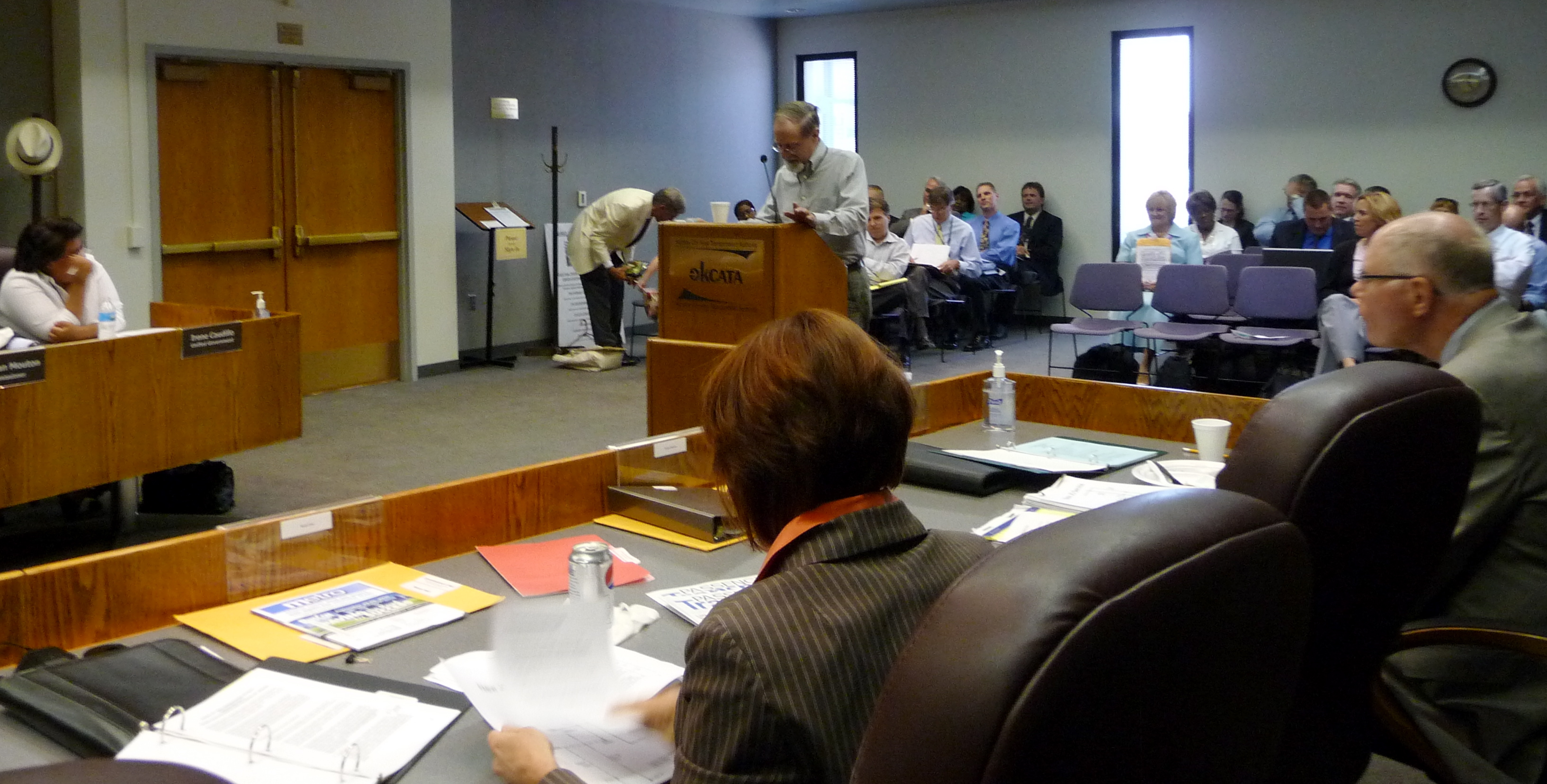
Ron McLinden, advocate with Transit Action Network, presents appeals for seamless transit at the July 28,2010 KCATA BOC meeting

Ron McLinden, an advocate with the Transit Action Network, spoke about the new services started by Johnson County Transit. He expressed TAN’s strong support for this service and the importance of these routes toward the development of Bus Rapid Transit in Johnson County. TAN had met previously with Cindy Baker, KCATA Director of Marketing, about combining signage and schedules between KCATA and the JO for these new routes. Since Cindy had said KCATA was willing to do this, Ron expressed appreciation for this important step toward seamless transit.

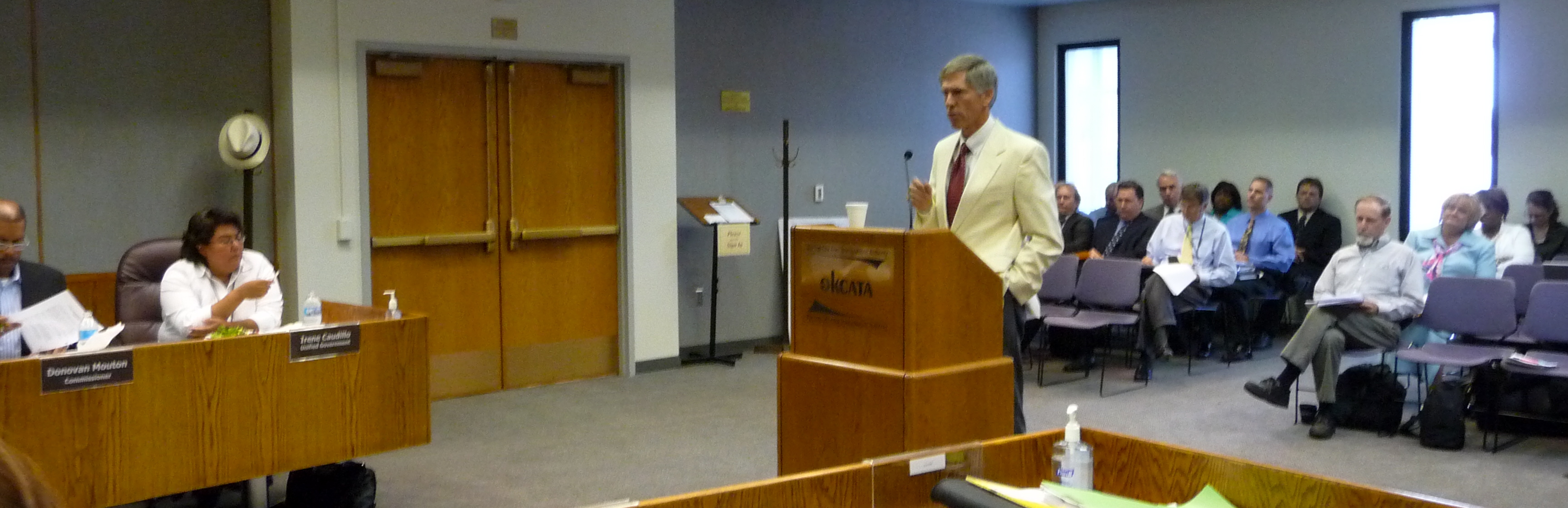
Clay Chastain spoke. He offered an “olive branch” to the KCATA and wanted them to work with him on a transit package to take to voters this  November. The board listened politely and thanked him for coming.

Clay Chastain presentation to KCATA BOC July 28,2010

Customer Satisfaction Survey

ETC Institute recently conducted a Customer Satisfaction Survey about KCATA.  This survey showed overall improvement from the previous survey in 2007.

Sixty-five percent of those surveyed used the service for either going to work or job seeking, supporting the idea of how important the service is to the community. More people are transit dependent than in 2007.

Riders felt there were big improvements in on-time performance and  transit service. Ninety–one percent of riders surveyed would recommend the MAX and the METRO.

Overall results were very positive and better than in 2007 but there is always room for improvement.

Suggested improvements: Improve the courtesy on the Metro information line, integrate technology to distribute information and improve the condition of the buses.

Greatest need: increase weekend service and service between 6am ad 6pm.

Posted in Local Transit Issues, Meeting Reports, Rail, Seamless Transit | Tagged: , | 1 Comment »

Big Week for Regional Rapid Rail

Posted by Transit Action Network on August 5, 2010


This week two very informative articles appeared in the papers about the TranSystems Regional Rapid Rail concept and the hard work Jackson County Executive Mike Sanders has done to promote the idea.  Both articles discuss problems the plan is encountering and give an update of its status.  We strongly encourage you to read them both since they provide different but complementary information.

Report by KC Star’s Brad Cooper and Michael Mansur –Area rail plans advance slowly. Included in the article is a quote by Transit Action Network advocate Janet Rogers.

Report by the Pitch’s David Martin- Jackson County Executive Mike Sanders puts his energy and his reputation into an unlikely commuter-rail plan.

Transit Action Network reported on July 15 that four of the six lines in the Regional Rapid Rail plan are not being pursued at this point. Federal money is being requested by Mid-America Regional Council to study the remaining two lines and a downtown streetcar distribution system.

Additional information about this concept:

The Regional Rapid Rail concept does not use streetcars or light rail. Both of those are electrified and light-weight by train standards. This idea uses Diesel Multiple Units (DMU). Each DMU would be a two-car train probably run on bio-diesel fuel. They can run on freight lines and city streets. This plan uses underused, abandoned freight lines and new tracks in the suburbs. These freight lines are not available in Jackson County once the train enters Kansas City north of the Truman Sports Complex. At that point it would run on new tracks laid on the streets in what is being called a COMMON LINE for the trains from eastern Jackson County. With this concept the trains on the common line would not function like streetcars or light rail, but would travel much like regular trains except they would be on the streets.

The $2 million Alternatives Analysis (AA) is being requested for these two routes:

The two remaining corridors, the I-70 corridor to Blue Springs and beyond using the Kansas City Southern line, and the Rock Island corridor via Raytown and Lee’s Summit, face their own challenges.

These two lines would share the common line from the vicinity of Union Station — the proposed passenger facility would be across the tracks to the north of Union Station and not in the station itself (freight house district in the region of Lidias Restaurant). The common line would travel to the vicinity of 23rd Street and the Blue River where it would link with the Rock Island right-of-way.  This common line would probably be along yet-to-be identified streets. (Truman Road was studied originally but other alignments would be investigated in the AA).

The Rock Island corridor would have to be completely re-built because the existing rails and roadbed have not been maintained since the last trains used them some 30 years ago.

The I-70 corridor faces additional challenges since it is so circuitous. The current alignment has commuter trains from Blue Springs traveling on the existing KCS line to near 33rd and Noland Road, from which there would be a new line parallel to the existing Union Pacific line south to I-70, then westward along the I-70 right-of-way to a point near Blue Ridge Cut-Off where the route would head south to join the Rock Island line south of Truman Sports Complex.

If federal money is received to study the remaining two commuter routes, a downtown streetcar will be reviewed as well.

For the commuter routes, Expanded Express Buses, Light Rail Transit and Regional Rapid Rail would be evaluated and compared in the commuter corridors.

The study of the downtown circulation system would evaluate and compare Local Bus and Bus Rapid Transit, Streetcar and Light Rail Transit.

Various reasons the other four commuter routes will have express bus/bus on shoulder recommended for the near term:

+ The Wyandotte County corridor has little congestion, relatively little ridership potential as a commuter rail line, and would require significant new right of way.

+ The I-29 and I-35 corridors require the high cost of a Missouri River bridge, and have low ridership projections.  The I-29 corridor faces the added challenge of re-assembling an old inter-urban alignment that has been abandoned for many decades.  The I-35 corridor faces the added challenge of a very circuitous route:  commuters to and from Liberty, for example, would travel via Riverside and the north edge of North Kansas City.

+ The US 71 corridor was eliminated largely because of low ridership projections.  In addition, the alignment under consideration would run on or near Van Brunt Extension and Swope Parkway, and would require a new and yet-to-be defined corridor from near the south edge of Swope Park to an intersection with the existing Kansas City Southern line in the vicinity of 83rd and I-435.

Posted in Local Transit Issues, Rail, Regional Rapid Rail | Tagged: | 2 Comments »

Regional Rapid Rail and MARC’s Alternatives Analysis Request

Posted by Transit Action Network on July 15, 2010


Mid-America Regional Council (MARC) has submitted to the Federal Transit Administration a $2 million request for funding an Alternatives Analysis (AA) based on the results of the Commuter Corridor Study that TranSystems is currently completing. This study includes the Regional Rapid Rail system.

The AA would investigate two commuter corridors: 1) I-70/Blue Springs corridor alignment to Odessa and 2) the Rock Island/Lee’s Summit corridor alignment to Pleasant Hill. In these corridors Expanded Express Buses, Light Rail Transit and Regional Rapid Rail would be evaluated and compared.

In addition a downtown circulation system is included in the request. It would evaluate and compare Local Bus and Bus Rapid Transit, Streetcar and Light Rail Transit.

According to the submission, “Through the proposed alternatives analysis, the region will determine the type of transit that can best facilitate positive changes for the citizens of Greater Kansas City with commuter and urban service”.

Federal funding for this analysis is not guaranteed.

Read the submission: AA request

At the July 7th MARC Transit Committee meeting TranSystems presented an update of the current Commuter Corridor Study. Four of the Regional Rapid Rail lines, US-71 (Grandview), I-70 West (State Ave.), I-29 (KCI Airport), and I-35 North (Liberty), will not be pursued in the Alternatives Analysis.  Express buses/ Bus on Shoulder solutions will be recommended. Multiple reasons were given for 4 of the 6 regional rapid rail lines not being pursued at this time but they mainly related to lack of sufficient ridership numbers to warrant the expense.

Posted in Rail, Regional Rapid Rail | Tagged: , , | 1 Comment »

Transit Adventure: A Trip to Harry’s Town via KCATA and Amtrak

Posted by Transit Action Network on June 18, 2010


Jayson lives in Midtown Kansas City.  A few months ago he decided to go carless, and he started a blog, http://www.carfreeinkc.com, to write about his experiences.  He posts occasional reports about his transit adventures, and we especially like the one about a trip he and a friend took from Kansas City to Independence (KCATA Route 24 from Downtown) and return via Amtrak to Union Station.  It’s a pretty easy half-day trip, but you will probably want to make train reservations in advance, http://www.amtrak.com, to avoid an extra charge.  Amtrak fare is generally $8 for adults (second adult and senior tickets are less) and $4 for kids 2-15.  Here’s his account of the trip:

Posted in Amtrak, Transit Adventures | Tagged: , | Leave a Comment »

Mike Sanders will be on Up to Date Tuesday May 25, 2010 at 11:00 am

Posted by Transit Action Network on May 24, 2010


Mike Sanders will be on Up to Date tomorrow, KCUR 89.3FM at 11:00 AM.

They will discuss the County’s Regional Rapid Rail concept, the charter review process and property assessment.

Posted in Rail, Regional Rapid Rail, RRR | Tagged: | 2 Comments »

TAN to City Council–Postpone Support for Commuter Rail

Posted by Transit Action Network on May 20, 2010


Two weeks ago Mike Sanders and Jim Terry (TranSystems) presented the Regional Rapid Rail concept to the Kansas City Council and requested a letter of support for a $4.5 million earmark to do an Alternative Analysis of this concept and supporting transit. The Kansas City Council proposed a resolution to provide this letter. Testimony was held this morning on the resolution.  Mike Sanders and Jim Terry spoke in favor of the resolution. Ron McLinden spoke in favor of putting the resolution on hold until the MARC Commuter Corridor Study is complete in 6-8 weeks. This study is supposed to evaluate the feasibility and viability of the concept. The legislative committee passed the resolution this morning.

Link to Kansas City’s resolution

http://cityclerk.kcmo.org/liveweb/Documents/Document.aspx?q=YqMTgyrZqfbuzQ4IU2LxaHt4aTbzM6yZAILEMUBDk4MoMoIapbXkhY9XeKSqKxrE

Below is a copy of Ron’s statement this morning.

Presentation to the Kansas City Council Legislative Committee on May 20, 2010 by Ron McLinden

The idea of turning underused rail lines into a regional transit system is appealing – almost seductive.  There’s a lot of interest in having rail transit.  Every big city has it, and we don’t want to be left behind.  There’s less agreement, of course, about where it should go, and how we should pay for it.

In January, 2008, when the ATA was doing its most recent light rail study, you heard a presentation from Jeff Boothe, a rail transit expert from Washington, DC.  I recall distinctly one of the things he said:  Before you do light rail you need to know what you want it to do for you.

The same applies today.  What do we want rail transit to do for us, and will this proposed system actually do it?

You may be aware of a commuter corridors study that Mid-America Regional Council has had under way for about six months.  Its principal focus is to determine whether this commuter rail concept makes sense:  Can it deliver the travel time savings needed to attract enough riders to make it a viable project, one that can successfully compete for federal funding?  That study should be completed in six to eight weeks.  We suggest that you hear the results of the MARC study before you endorse the concept.

The concept envisions using city streets for some of the most critical rail segments, and it would cross several boulevards at grade.  We suggest you get input from your Public Works Department, and also from the Parks Board.

If you adopt this resolution now, before you have all the facts, you will further heighten public expectations about a concept that might or might not be viable.  The resolution says that you support asking for federal money to study the proposal further, but the headlines will say that commuter rail is a big step closer to becoming reality.

Candidly, we’re concerned that this proposal is a distraction from more fundamental transit issues:  What kind of total transit system will best serve the citizens of Kansas City, and help our city to grow as the vibrant urban center of the region?  How can we assure adequate and reliable funding for the transit service we already have, and for expansion to meet growing needs?

All of us applaud Jackson County’s interest in transit, and we should seize this opportunity to work with the County to put in place a mechanism for county-wide funding of major transit corridors, including commuter service using buses or rail.  Creating a county transit authority under existing state law is one such funding mechanism.  Jackson County outside Kansas City has unmet transit needs, and funding will be needed regardless of what kind of transit service is ultimately provided, so let’s get going on it now.

In summary, here’s our request to you:

+  Put this resolution on hold pending the results of the MARC study, and input from Public Works.

+  Join with other elected officials and work with Jackson County to establish a broader funding base for transit through creation of a county transit authority.

KC Regional Rapid Rail Concept

Posted in Rail, Regional Rapid Rail, RRR | Tagged: , , , | 2 Comments »