Transit Action Network (TAN)

Advocates for Improved and Expanded Transit in the Kansas City Region.

Posts Tagged ‘MARC’

Enhanced Streetcar/DMU/BRT Combinations Are Discussed

Posted by Transit Action Network on February 24, 2012


The Partnership Team and consultants added eight additional alternatives to the Jackson County Commuter Corridors Alternatives Analysis (JCCCAA).  In the final interview of this series, Lisa Koch, senior planner with the lead consulting team Parsons Brinckerhoff, discusses these alternatives which include various combinations of three transit modes; Enhanced Streetcar, Diesel Multiple Unit (DMU) and Bus Rapid Transit (BRT). Maps of all the combinations are available below.

Lisa also describes the traffic control elements being planned for an Enhanced Streetcar to travel on the streets and how these elements differ from the ones used by the Regional Rail DMU alternative discussed in the previous interview.

For a closer look at the display board Lisa uses during the interview, see JCCCAA display-board-nov 2011 or print page 11 of the second open house display boards. JCCCAA-open-house-display-boards-nov 2011

Summary of JCCCAA Streetcar/DMU/BRT combinations being studied

Click to enlarge

Maps of all the Streetcar/DMU/BRT Combinations

A. Enhanced Streetcar/DMU – Linwood Alternative

B. Enhanced Streetcar (ALL) – Linwood Alternative

C. Enhanced Streetcar/DMU – Truman Road Alternative

D. Enhanced Streetcar (ALL) – Truman Road Alternative

E. BRT/DMU – Linwood Alternative

F. BRT (ALL) – LinwoodAlternative

G. BRT/DMU – Truman Road Alternative

H. BRT (ALL) – Truman Road Alternative

An alternatives analysis requires a substantial amount of work to evaluate the possible transit solutions for a corridor. The analysis includes a complex comparison process to decide which alternative is the best fit for our region at this time. Lisa has agreed to visit with TAN again to update us on status of the study and provide insight into the FTA process used to rate the alternatives.

TAN appreciates Tom Gerend of MARC and Lisa Koch of Parsons Brinckerhoff, along with Shockey Consulting and TranSystems, for making all of this information available to our viewers.

The next open house is March 13 -15 going to be re-scheduled.

Traffic Control Elements for RAIL on Streets in the JCCCAA

Link to the first interview: MARC And Parsons Brinckerhoff Discuss The Current Status Of The Commuter Corridors Altenatives Analysis

Link to the second interview: Parsons Brinckerhoff Consultant Discusses Three Alternatives In The JCCCAA

Link to the third interview: Discussion About The Regional Rail Alternative for the JCCCAA

Project website:  KCSmartMoves

Posted in Local Transit Issues, Rail, Regional Transit Issue, Transit Studies, Videos-Transit | Tagged: , , , | Leave a Comment »

Discussion About The Regional Rail Alternative for the JCCCAA

Posted by Transit Action Network on February 20, 2012


In the third of our four interviews, Lisa Koch, senior planner with Parsons Brinckerhoff, discusses the Regional Rail alternatives for the Southeast Corridor (the unused Rock Island line through Raytown and Lee’s Summit) and the Eastern I-70 Corridor (the underutilized Kansas City Southern line through Blue Springs).

Diesel Multiple Unit -DMU

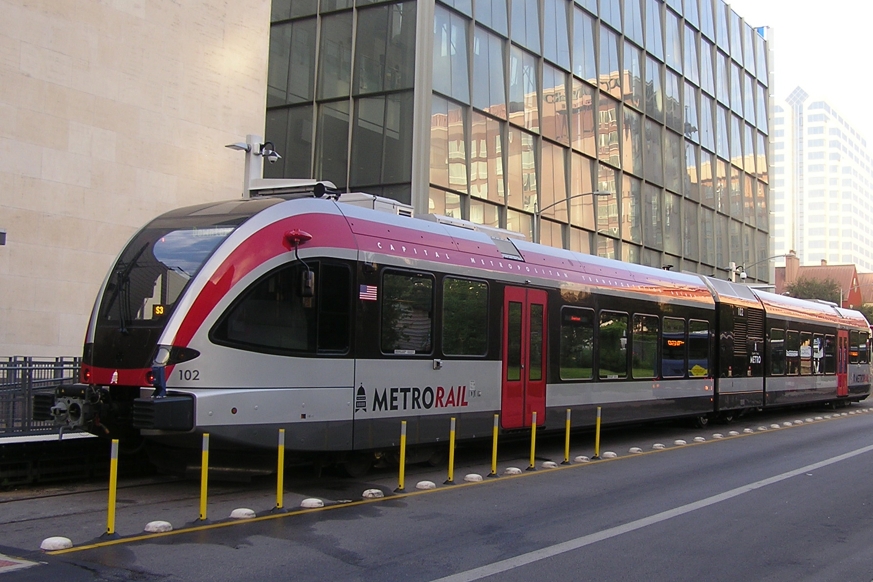
Lisa describes the routes being considered, along with traffic control elements that would be required by the Federal Railroad Administration for a Diesel Multiple Unit (DMU) train to use new rail on the streets of Kansas City and Independence to reach a commuter rail terminal in the Freight House District, north of Union Station.

For a closer look at the display board Lisa uses during the interview, see JCCCAA display-board-nov2011 or print page 11 of the second open house display boards. JCCCAA-Open-House-Display-Boards-Nov2011


Following is the proposed map for the Regional Rail system being studied in the Southeastern and Eastern Corridors of Jackson County. MP (Mile Point) is the distance in miles from Union Station.

Click To Enlarge


Details of all the alternatives are changing as the study continues.

The Jackson County Commuter Corridors Alternatives Analysis is scheduled for completion in late Spring 2012.

Our fourth interview, covering combinations of streetcars, DMU and BRT, will be posted later this week.

Link to the first interview: MARC And Parsons Brinckerhoff Discuss The Current Status Of The Commuter Corridors Altenatives Analysis

Link to the second interview: Parsons Brinckerhoff Consultant Discusses Three Alternatives In The JCCCAA

Posted in Local Transit Issues, Rail, Regional Transit Issue, Transit Studies, Videos-Transit | Tagged: , , , | Leave a Comment »

Parsons Brinckerhoff Consultant Discusses Three Alternatives In The JCCCAA

Posted by Transit Action Network on February 17, 2012


Lisa Koch, a senior planner with the lead consulting firm for the study, Parsons Brinckerhoff,  discusses three of the alternatives being studied in the Jackson County Commuter Corridors Alternatives Analysis (JCCCAA) with Transit Action Network.

No Build

Transportation Systems Management

Enhanced Express Bus (part of TSM)

Lisa also describes the travel demand model used to estimate ridership for each mode in the study’s forecast year of 2035.

The study is in the second phase, called Tier Two, where a detailed analysis of the remaining alternatives is conducted and the alternatives are narrowed down to come up with a Locally Preferred Alternative (LPA). The study is scheduled to be completed in late Spring 2012.

http://vimeo.com/36946225

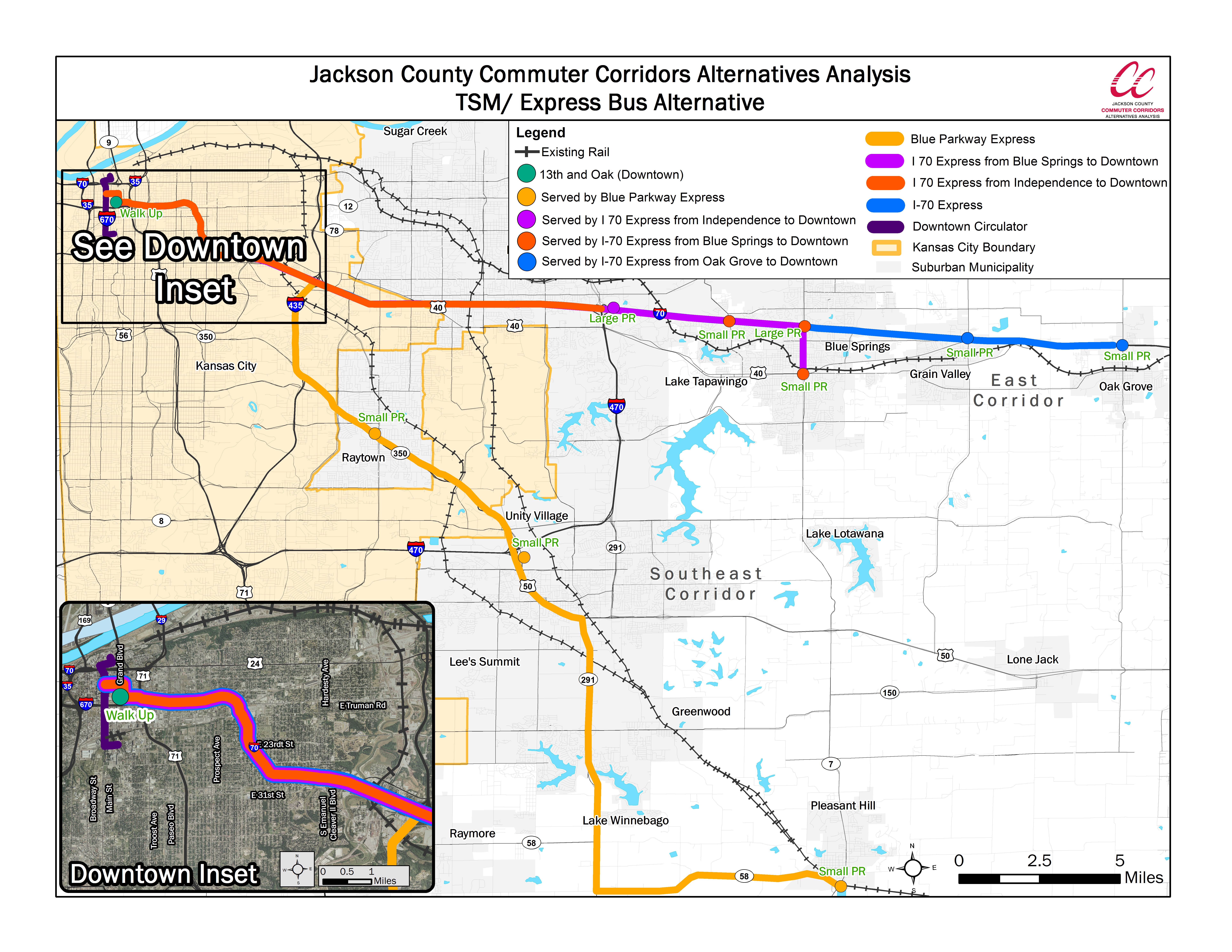
This map is the current proposed map of the Enhanced Express Bus System. It has different colors to represent the different express bus services being considered. Some services are new. PR stands for Park and Ride lots. The map is subject to change.

In 2007 there was an I-70 Commuter Corridor Alternatives Analysis (AA).  In the Summary Report the consultant’s near-term recommendation was to improve the Express Bus system. The AA also studied the underutilized Kansas City Southern (KCS) Railroad line. In that study, the KCS line traveled to the Knoche Rail Yard and then new rail  was needed from there (near the Missouri River) up to Third St. and Grand.  In another variation the KCS line connected to the Trench, the Kansas City Terminal Railroad tracks that run past Union Station. Neither of those rail alternatives were recommended in 2007 and both of those options were eliminated from the current study in the Tier One evaluation.

Link to the first interview: MARC And Parsons Brinckerhoff Discuss The Current Status Of The Commuter Corridors Altenatives Analysis

Posted in Local Transit Issues, Rail, Regional Transit Issue, Transit Studies, Videos-Transit | Tagged: , , , | Leave a Comment »

MARC And Parsons Brinckerhoff Discuss The Current Status Of The Commuter Corridors Altenatives Analysis

Posted by Transit Action Network on February 15, 2012


Last week Transit Action Network sat down with Tom Gerend, Assistant Director of Transportation and Project Manager at Mid-America Regional Council (MARC), and Lisa Koch, Senior Planner with Parsons Brinckerhoff,  in a series of four video interviews to discuss the Commuter Corridors Alternatives Analysis currently underway in Jackson County.

MARC is on the Partnership Team overseeing the study and Parsons Brinckerhoff is the lead consulting firm conducting the study.

Transit Action Network believes this is a good time to bring everyone up to date since the last public open house was the end of November 2011. The next open house won’t be held until after the Stakeholders Advisory Panel on March 6. (update-the third open house will be March 13-15 rescheduled)

These interviews provide background on the study as well as the current information about the three corridors and the multitude of alternatives being studied.

Keep in mind that none of the alternatives have been chosen to implement at this point and the situation changes as new information becomes available and decisions are made. Since the last open house, more analysis has been done and another alternative has been eliminated. Consultants and engineers continue to look for the best solutions to challenges presented by the options.

Join us on this first interview with Tom for an introduction to the series and background on the study.

The study website is KCSmartMoves.org

Posted in Local Transit Issues, Rail, Regional Transit Issue, Transit Studies, Videos-Transit | Tagged: , , , | Leave a Comment »

Public Workshop on Bus/Bike Route Planning – Jan 10

Posted by Transit Action Network on January 3, 2012


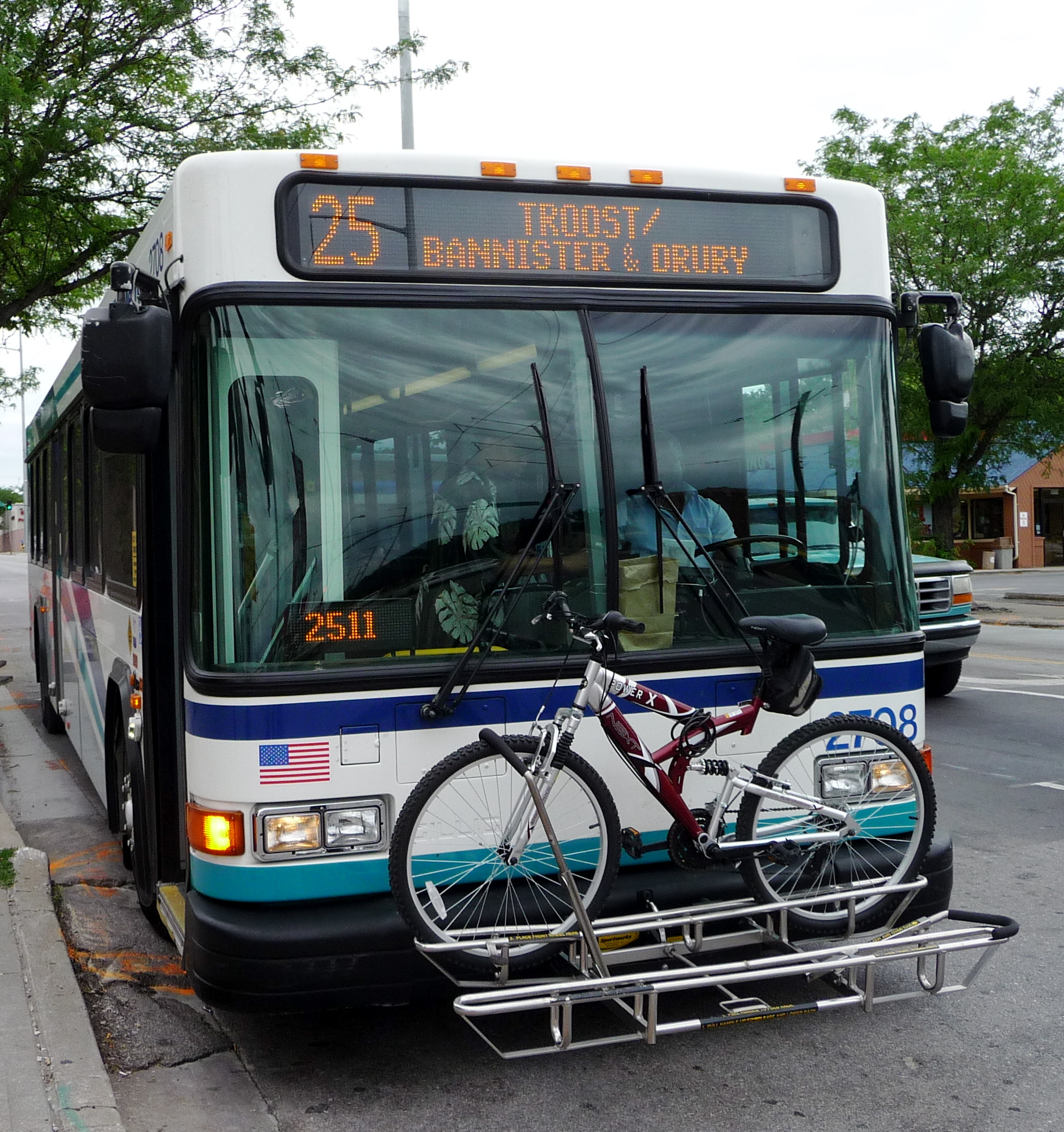
Bus and Bike

Need help finding your personal transportation routes combining buses and bikes? When is it better to wait for the next bus and when is it better ride?

Eric Bunch, Director of Education, at BikeWalkKC is offering a free public workshop to give you the skills and knowledge to plan your local bus/bike trips.

Google Trip Planner doesn’t allow a user to unlock the full potential of combining modes like bus and bike. The only way to know is by getting out the transit map and learning the routes.

The class will look at the regional bus routes and the MARC bike map and help each participant chart their commute or other transportation needs using these modes.

January 10, 6:00-8:00 PM
Tony Aguirre Community Center
2050 W. Pennway Terrace, KCMO

Link to the registration and information page:

http://bikewalkkc.org/civicrm/event/info?reset=1&id=107

Posted in Events, Local Transit Issues, Regional Transit Issue | Tagged: , , | Leave a Comment »

Comment on Jackson County Commuter Corridors Alternatives Analysis and Watch Video of the Open House

Posted by Transit Action Network on December 2, 2011


The second open house for the Jackson County Commuter Corridors Alternatives Analysis was held this week. The meetings in Lee’s Summit, Blue Springs and Kansas City, consisted of displays explaining the project, process and alternatives. Project consultants answered questions and explained the project. On Wednesday Nov 29th at the Gamber Center,  a welcome from Lee’s Summit Mayor Rhoads was followed by presentations from Jackson County Executive Mike Sanders and Project Leader Shawn Dikes of Parsons Brinckerhoff.

The project team is moving from the first stage, Tier One, to the more quantitative stage, Tier Two. Some of the original alternatives have been eliminated and two new alternatives have been added that include additional rail options.

The purpose of the open house is to gather public input. Read the open house handout explaining the alternatives that are advancing to Tier Two JCCCAA-Open-House-Handout-Nov2011, then view the display boards from the meeting for more information. JCCCAA-Open-House-Display-Boards-Nov2011

After viewing the project materials please go to the project website and make your comments.

There was an excellent turnout for the main meeting. Watch portions of the presentations on TAN’s first video.

http://vimeo.com/33047816

Posted in Action, Events, Local Transit Issues, Rail, Regional Transit Issue, Transit Studies | Tagged: , , , | Leave a Comment »

Open House #2 Nov 29, 30 & Dec 1- Jackson County Commuter Corridor Alternatives Analysis

Posted by Transit Action Network on November 23, 2011


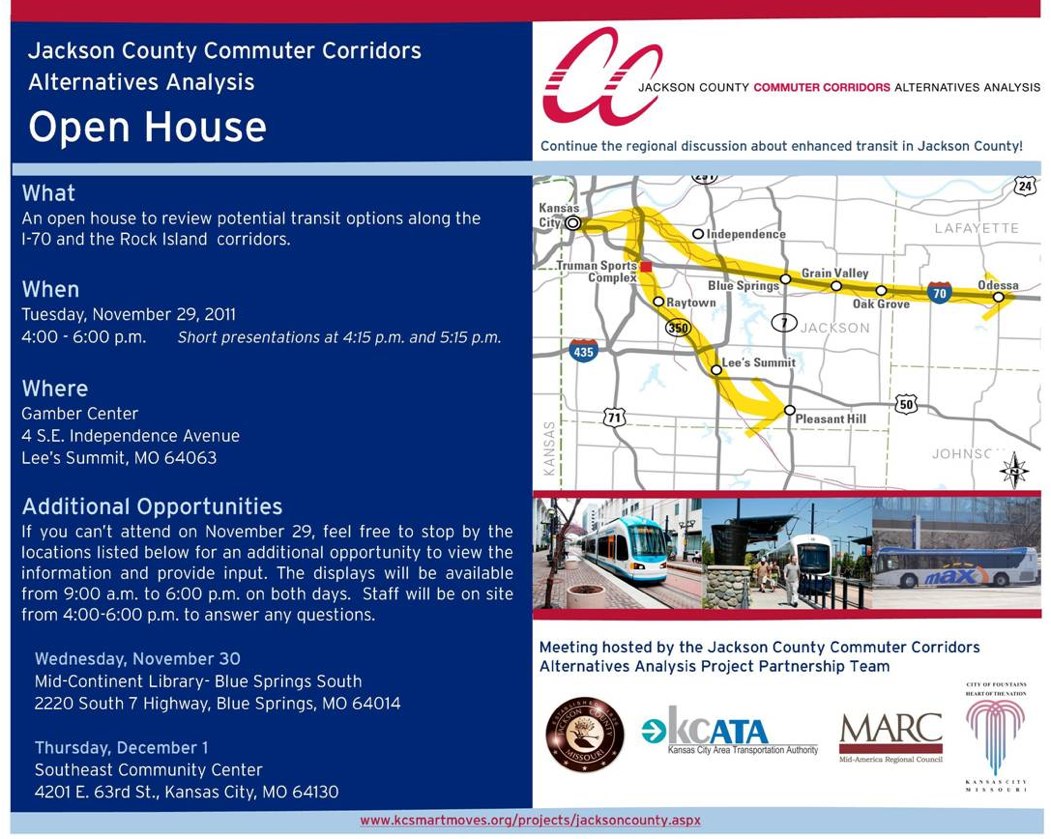
Don’t miss the second open house for the Jackson County Commuter Corridors Alternatives Analysis. There are opportunities in Lee’s Summit, Blue Springs, and Kansas City to view and comment on the alternatives considered for advancement to the Tier Two Screening. There are significant changes from the first open house and some new alternatives. Study website

Tier 2 Screening: This screening ultimately will result in the selection of a single Locally Preferred Alternative (LPA) defined in terms of mode and general alignment. Tier 2 Screening will evaluate the short list of full corridor alternatives at a level of detail sufficient for local decision-makers to select a LPA. The Tier 2 screening will rely on the travel demand forecasting model and limited conceptual engineering focusing on capital, operating and maintenance costs.

Invitation to JCCCAA 2nd open house

y

Posted in Events, Local Transit Issues, Rail, Transit Studies | Tagged: , , | Leave a Comment »

So Many Alternatives to Evaluate in Jackson County!

Posted by Transit Action Network on October 13, 2011


The Jackson County Commuter Corridors Alternatives Analysis is studying six different alternatives to find the best option to improve transit from Eastern Jackson County into downtown Kansas City.  The commuter corridors under consideration are east along the I-70 corridor to Oak Grove and southeast along the old Rock Island Corridor possibly all the way to Pleasant Hill.
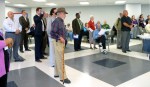
JCCCAA Open House-Independence

The Federal Transit Administration requires the study look at different alternatives to find the best and most cost-effective solution in a corridor. At the first open house the project team presented each alternative with descriptions and maps. They published the JCCCAA_Open_House_Booklet_092711 with these details.

The study is guided by FTA standards and will evaluate and compare the alternatives for mobility improvements, user benefits, operating efficiencies, cost effectiveness, ridership numbers, capital and operating costs, existing transit supportive land-use, and economic development effects. Economic development effects are evaluated based on transit supportive plans and policies and the actual performance of the land use policies as well as the potential impact of the project on regional land use.  Transit supportive plans and policies include factors such as growth management, transit supportive corridor policies, supportive zoning regulations near stations and tools to implement land use policies.

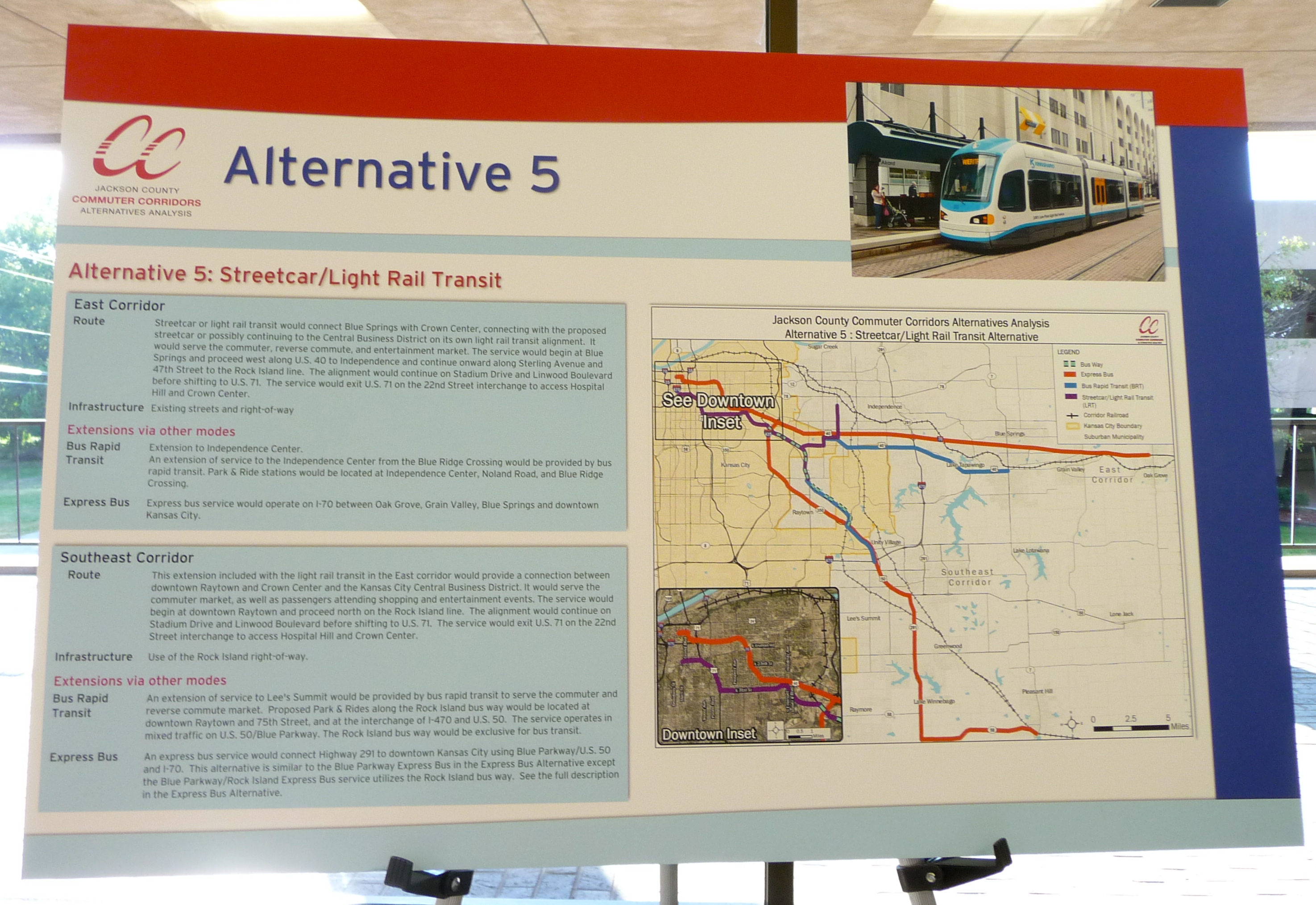
Here are the basic alternatives under consideration. The streetcar/light rail description in the booklet of the Alternative 5 eastern corridor is incorrect. It is a spur into Independence. The map is correct.

Alternative 1 is the baseline alternative for comparison. This is a  “No Build” scenario with minimum investment.

Display board for one of the alternatives

Alternative 2 is Transportation System Management to improve operating efficiency of current systems without adding capacity on the highways or making major capital improvements to the transit system. This could include improvements to the Scout System, improvements to the transit system already identified in the KCATA Comprehensive Service  Analysis, and expansion of Transportation Demand Management/ridesharing programs. TAN feels that many of these ideas should be implemented regardless of the other outcomes in the study since they can be done in the near term with relatively small financial outlays and noticeable improvements to the management of the corridors for all transportation modes, including cars.
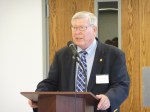
Independence Mayor Reimal

Alternative 3 is an Enhanced Express Bus to Oak Grove and Pleasant Hill via the current highway system. There is the possibility of using Bus on Shoulder on I-70 between I-470 and the Kansas City Central Business District sometime in the future.

Alternatives 4 and 5 basically build on Alternative 3 by adding Bus Rapid Transit (BRT) on US 40 and the Rock Island corridor, then adding a streetcar/light rail line from Crown Center that has two spurs, one to Independence and one to Raytown.  In these versions, the southeastern corridor uses the Rock Island corridor as a fixed guideway for the Enhanced Express Bus as well as the BRT.

One of the alternatives 3, 4 or 5 may be the preferred alternative if Regional Rapid Rail isn’t competitive in the analysis.

Alternative 6 is the Regional Rapid Rail system. There are three variations to the route provided, but the Truman Road route has been discussed the most. This system uses underutilized rail in the suburbs but requires new rail in multiple sections including the last seven miles into downtown. The eastern corridor uses the KC Southern line to Noland Road then requires new rail to cut over to the Truman Sports Complex. The southeastern corridor uses the old Rock Island line to just west of the Truman Sports Complex at US40. The Rock Island Corridor has not been used for almost 40 years, so it will be interesting to find out how much renovation is needed to return the line to safe operating condition.

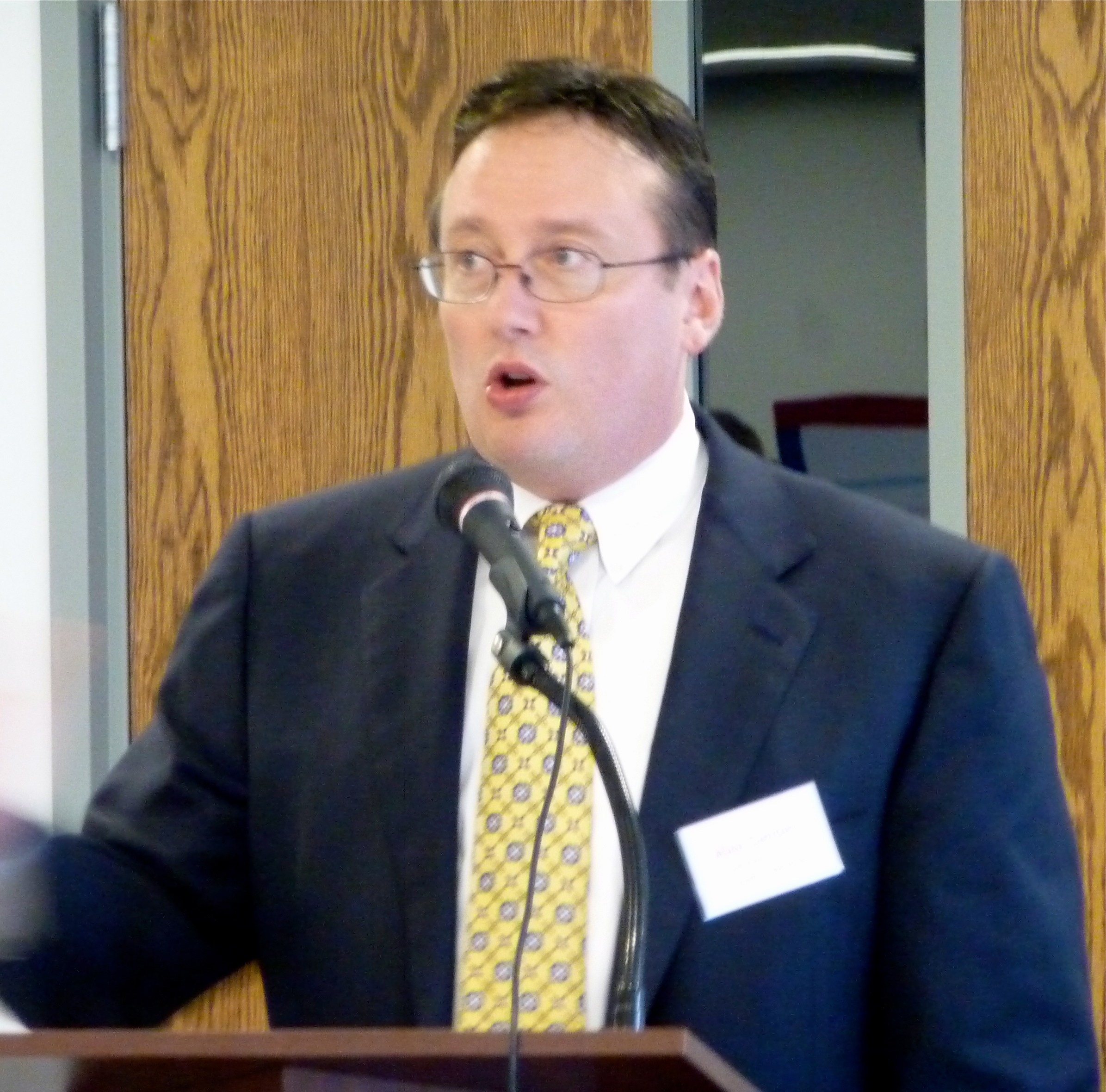
Jackson County Executive Mike Sanders

Study participants from Parsons Brinckerhoff, Shockey Consulting and MARC

Both lines converge just east of the sports complex. There is discussion of a station south of the Chiefs south parking lot, what is currently the wooded area past entrance 3 to the Chiefs parking lot. A train viaduct can be seen as it crosses Blue Ridge Cuttoff just north of Raytown Road.

The two routes use a Common Line into downtown.  The last seven miles of the Common Line, after Leeds Junction by US 40, is on new tracks and often runs on city streets. According to the MARC corridor study in 2010, anytime the DMU (Diesel Multiple Unit) vehicle travels on the streets it will have a maximum speed of 25 mph.  It goes north in the vicinity of 18th and Topping to Truman Road west of Jackson Avenue, and travels on Truman Road at a maximum speed of 25 mph. It turns south on Cherry to 20th where it turns west to arrive north of Union Station in the Freight House district close to Jack Stack Bar-B-Que.  This area is on the old KC Star storage track.  TAN still has many outstanding concerns about this alternative as expressed in an earlier article related to last year’s corridor study.

There are two other versions of this alternative. One has the eastern route stay on the KCS line until 23rd street and skips the Sports Complex. The 23rd street route runs down the center of the street at a maximum speed of 25 mph and connects with the Common Line at I-435. The other variation has both routes connecting at the Sports Complex, and traveling along the Common Line but cross Truman Road and follows the Kansas City Terminal and then the “trench embankment” into the Freight House district north of Union Station.

TAN is waiting on the project team to provide more details about the routes as they proceed in the study. Some sections of the routes are still vague, but that is normal since the study just started and the team needs time to find the best options.

The project team held three open house sessions the last week of September, Independence, Raytown and Union Station, to explain and discuss the “Purpose and Needs” statement for the project and show the public the proposed alternatives. There was an excellent turnout. Three additional public meetings are planned in November 2011, January 2012 and March 2012.  Visit the study’s website for more information.
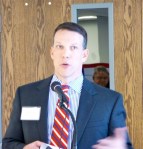
Project Leader Shawn Dikes

In Independence, Jackson County Executive Mike Sanders spoke about the need to plan ahead for future transit needs. He also made the point that even if you personally don’t use transit many of the people you interact with do, so you still need transit. Parsons Brinckerhoff Project Manager Shawn Dikes had a PowerPoint presentation to explain the study. See his presentation JCCCAA-Open-House-Presentation-Sept2011

This study is costing $1.2 million. MARC plans to add the study for the US71/Grandview corridor to this study. Jackson County has already received $652,200 to do that study plus MARC has applied for another $1.2 million for the US71 corridor and hopes all these studies can be combined.

TAN feels very strongly that the region needs to implement the best alternative from this study, whether it is Enhanced Express Bus, BRT, Streetcar/Light Rail, Regional Rapid Rail  or a combination.  If we are going to spend this amount of money on studies then it is our responsibility, to the best of our ability, to implement the recommendations that come out of them.
Posted in Local Transit Issues, Meeting Reports, Rail, Transit Studies | Tagged: , , | Leave a Comment »

Commuter Corridors Advisory Group Has First Meeting

Posted by Transit Action Network on September 8, 2011


The first meeting of the Jackson County Commuter Corridor Alternatives Analysis Stakeholder Advisory Panel was held on August 31. Project manager Shawn Dikes of Parsons Brinckerhoff said the study team is “starting from scratch,” and that they are not here to validate some pre-determined solution.  TAN advocates Janet Rogers and Mark McDowell are on the panel.

The study team offered a wider range of options than a lot of people expected: several bus alternatives; streetcar or light rail on a couple of alignments; and several “commuter rail” alignments that had not previously been seen in public. Dikes admitted, however, that they chose to eliminate such options as subways, monorails, and gondolas.  (That got a laugh.)

By consensus the group eliminated a commuter rail route that would terminate at the north edge of the river market.

Dikes reminded the panel that FTA funding for rail projects that are doing well in an AA are currently receiving a maximum of 50 % of the capital costs to build the system. Asking for less money increases a project’s chances of being federally funded.

Whether a suitable so-called “common line” can be found westward from near the sports complex into downtown Kansas City may turn out to be the critical question for commuter rail. At the meeting, TAN expressed concern that one of the routes would go through a disadvantaged community in the vicinity of 18th and Topping. Project work has to comply with Title VI of the Civil Rights Act of 1964.  Disadvantaged communities affected by the project have to be included in the planning process and the project cannot adversely affect the community. Lawsuits have been field against rail projects in other cities related to this issue.  MARC is already discussing these issues with community leaders.

Dikes said that the FTA would not fund rail that hurts bus service.  The rail service in this study would likely differ enough from express bus routes, that the express buses could not be eliminated in order to help pay for rail.

Transit Action Network posted some concerns a couple of weeks ago about the commuter rail concept as developed in last year’s corridor study: https://transactionkc.com/2011/08/16/consultants-face-big-challenge-studying-regional-rapid-rail/

The consultant team has drafted a “Purpose and Need” statement and is currently developing an executive summary.

According to the FTA: “(A) study “purpose and need” establishes the problems that must be addressed in the analysis; serves as the basis for the development of project goals, objectives, and evaluation measures; and provides a framework for determining which alternatives should be considered as reasonable options in a given corridor. … This information provides the context for performing the analysis and for identifying the measures against which alternatives strategies will be evaluated. It also serves as an introduction for decision makers, stakeholders, and the general public to the study area and its transportation problems and needs.”

The FTA goes on to say that “the purpose and need statement serves as the cornerstone for the alternatives analysis.” The statement should not point to one solution, but be as concise as possible, focusing on the primary transportation issues addressed in the alternatives analysis.

The first public meeting on the alternatives analysis will be from 4:00 to 7:00 p.m. on September 27, 2011 at the Ennovation Center, 201 N. Forest Avenue, Independence, Mo. The focus of the meeting will be on the purpose and need for the project and the range of alternatives being considered. Four public meetings are planned. Details will follow as they become available.

Posted in Events, Local Transit Issues, Meeting Reports, Rail, Regional Transit Issue, Transit Studies | Tagged: , | Leave a Comment »

Consultants Face Big Challenge Studying Regional Rapid Rail

Posted by Transit Action Network on August 16, 2011


Parsons Brinckerhoff  (PB), a highly-respected transit consulting firm, has begun work on the $1.2 million Jackson County Commuter Corridors Alternatives Analysis. This analysis will evaluate two corridors from the Regional Rapid Rail (RRR) concept — one through Blue Springs using the Kansas City Southern line, and one through Lee’s Summit using the old Rock Island line — and compare commuter rail to alternatives such as express buses.

 The RRR concept, widely presented around the region last year, proposed six commuter rail corridors using underutilized and abandoned rail lines to provide a rail system from the suburbs into Union Station. After preliminary review of the concept in MARC’s Smart Moves Transit Implementation Plan Phase II: Commuter Corridors Study, it was determined that only two of the corridors warranted further study in the near term. Studying the other corridors was postponed due either to insufficient ridership or being too costly given the projected ridership.

 The two corridors now being studied provide plenty of issues to resolve. Perhaps the biggest unresolved issue is the so-called “Common Line,” which the two routes would share. There is no underutilized track for the 7 miles between Leeds Junction (just west of the Truman Sports Complex)  and Union Station. Nor is there readily usable right of way for the 2 miles immediately east of Union Station.  Therefore, several alternatives are being considered. These include running on city streets (e.g., Truman Road) at a maximum speed of 25 mph, or perhaps along the I-70 right-of-way. The former requires moving or hardening utilities, while the later requires modifications to bridges and exit and entrance ramps. TAN doubts that projected ridership can justify the cost entailed in any of these alternatives.

 The Common Line is critical to the feasibility of the RRR system. If a cost effective solution to the Common Line remains elusive, or if a potential solution undermines operating speed, then the whole RRR concept falls apart.

 There have been two previous studies of commuter rail in the I-70 corridor through Blue Springs using existing rail. In both cases ridership was insufficient to justify the cost of using existing rail into downtown Kansas City.  The RRR concept and the most recent study take that conclusion — plus the freight railroads’ assertion that they will not allow commuter rail on existing tracks into Union Station — and propose a Common Line on new rail as the solution. 

 There are several other outstanding concerns from the Phase II study, and there have been lively and skeptical discussions within the MARC Transit Committee. TAN has been vocal in expressing our skepticism. Cost estimates, travel times, and the absence of credible ridership projections have generated great concern too. All of these issues remain today for PB to resolve.

 An Alternatives Analysis involves consideration of multiple modes. There are new technologies and innovative ways to make Bus Rapid Transit (BRT) and/or express buses compare favorably with rail.  Buses are efficient, cost-effective and can be used to effectively combat congestion. The fact that they can offer greater flexibility and a higher level of service for riders means that rail is not the only possible solution to our transit needs. Nor is rail necessarily more environmentally sustainable than modern buses, particularly where ridership is relatively low. 

 TAN has maintained a consistent position regarding transit service in commuter corridors. If rail is shown to be cost effective, to function well enough to attract additional commuters, and to qualify for FTA funding, then it should be implemented, along with the necessary local bus routes to support it. However, if rail is found not to be viable, and if express buses are again found to be the more feasible alternative, then the region should expand its commuter transit system using express buses. We should not continue to put off improving the region’s transit system just because rail isn’t practical at the present time. We need to build a system that serves commuters today, and that makes sense for our region for the future. The Alternatives Analysis should guide the region to an appropriate decision.

 TAN has sought and been granted a formal role on the AA Advisory Committee, and we have already met with the study team.  In addition, we’ll closely follow the study through our representation on MARC’s Transit Committee.

 What will be the best way to provide mobility from the suburbs into the central business district?  Stay tuned.  The Kansas City region definitely needs to improve its public transit system, and this study will help us decide how best to meet that need.

Posted in Local Transit Issues, Rail, Regional Transit Issue, Transit Studies | Tagged: , | 1 Comment »

Meet the TIGER

Posted by Transit Action Network on August 4, 2011


Mid-America Regional Council (MARC) is producing a video series about how our bi-state area is using the federal TIGER grant we received.

TIGER (Transportation Investment Generating Economic Recovery) grants were born out of the recession. TIGER is a national discretionary and competitive grant program of the U.S. Department of Transportation funded by the American Recovery and Reinvestment Act. The Kansas City bi-state region received $50 million in federal funds for transportation infrastructure projects along several regional transit corridors and in the Green Impact Zone in Kansas City, Mo. David Warm, MARC director, says these investments will improve sustainability, competitiveness and position us for success in the 21st century economy.

The series will be produced over the next few years to document the Kansas City regional TIGER improvements.

View the TIGER Introductory Six-Minute Video on the MARC website or YouTube. Future videos are expected to be shorter and focus on individual projects, event/activities and interviews.

To monitor our regional TIGER grants visit the MARC TIGER website or track the 120 projects funded by this grant.

Congress is making a third round of TIGER grants available. These grants are replacing a lot of earmarks. MARC will probably prepare a TIGER III application and potential submissions are being discussed.

Posted in Local Transit Issues, National Transit Issues, Regional Transit Issue | Tagged: | Leave a Comment »

How Our Region Should Respond to the Brookings Report

Posted by Transit Action Network on July 22, 2011


The recent Brookings Institute report on transit access to jobs, “Missed Opportunity: Transit and Jobs in Metropolitan America,” was released more than two months ago.  It ranked our region 90th out of the top 100 urban regions in our ability to get people to jobs by transit.  That got the attention of many of the region’s leaders — at least for a couple of weeks.

Some might quibble with the study methodology (and Brookings would probably admit to some flaws), but we can all agree that the current transit network doesn’t do a very good job of getting people to jobs here in the Kansas City region.

The question is: What do we do about it?

It’s obvious that the region needs to invest more in transit.  We already knew that.  Missouri invested only $119,000 in the KCATA last year, compared with the $10’s of millions that many other states with large urban areas invest in their transit systems. Even Kansas invests more in its urban transit systems than does Missouri.

But we don’t just have just a transit problem, we have a job sprawl problem.  New employment keeps getting scattered out on the edges of our region in places that are beyond the current transit network and would be costly to serve by transit.

Our region’s economic development people apparently give little or no consideration to transit availability when they try to attract new employers, and competing local jurisdictions seem to fall all over themselves to hand out tax breaks — again, without considering transit availability.

We’ve known for a long time that two-thirds of transit riders are going to work, or going in search of work.  The Brookings report helps to re-frame the transit issue as one of equitable access to jobs and other opportunities.  People who need and want jobs often can’t get to them — can’t even get to a job interview — because they don’t have a reliable car and transit service is lacking.  The situation is just going to get worse in the future as gas prices continue their upward trend and more people need to turn to transit.

Mid-America Regional Council and the transit agencies are actively engaged in many transit studies and projects: the Smart Moves Transit Plan, Downtown and Commuter Corridor  Studies, and investments to make additional corridors “BRT-ready”. These are all good, but Transit Action Network’s impression — and we hope we’re wrong — is that the region doesn’t intend to do much more than it is already doing.  Unfortunately, that isn’t enough to rectify the problems identified in the Brookings Report.

Moreover, MARC and the transit agencies can’t do everything that’s needed.  City and county public officials must be aware of the problem, must take it seriously, and must implement many of the necessary steps.

Transit Action Network makes the following recommendations to the region’s leadership:

1 – Identify the 500 largest job locations (including major “opportunity locations” such as health care, shopping, higher education) in the region, measure how well our transit network serves those locations, promote better transit service to these locations where needed, and track how we improve the situation over time.

2 – Track local, state and federal money used to operate our public transit systems over time, adjusted for inflation.

3 – Publish an annual “Transit Access to Opportunities Report Card” based on the information gathered, and share it with elected officials and the public.

In addition to collecting and reporting data:

4 – Continue to work for additional transit funding.

5 – Impress upon local and regional economic development people, as well as local public officials, the importance of guiding development to existing “activity centers” and transit-served corridors when new employers are courted, or when current employers relocate. That’s called for in our region’s policy on new development, and it requires a new kind of “affirmative action” by local jurisdictions to make sure it happens.

6 – Identify transit friendly land use and zoning policies, and provide municipalities with appropriate templates to assist in adopting such policies.

7 – Discourage public subsidies or incentives for employers who locate beyond the reach of public transit.

8 – Work with state, federal, and private organizations involved with the financing of multi-family housing to make sure it’s located near employment and transit.

9 – Improve coordination of services currently provided by our three transit providers to make using transit more “seamless” for transit riders.

If the Kansas City region is to avoid falling behind in its struggle to compete with other cities, we must place higher priority on getting people to jobs by transit.

Posted in Local Transit Issues, Regional Transit Issue | Tagged: | Leave a Comment »

Please Comment on the Downtown Corridor (Streetcar) Alternatives Analysis

Posted by Transit Action Network on June 28, 2011


More than 100 people attended the first open house for the Downtown Corridor Alternatives Analysis. However if you missed the open house you can still see the presentation and the maps, and include your comments about the study.

See the first presentation  DCAA Overview-Presentation1

These are the various alignment alternatives being considered for the streetcar.

A.”Bi-directional” options – both tracks running north and south on a single street.

Grand Avenue

Walnut Street

Main Street

Baltimore Avenue

A reason to use single streets is expressed in the Nelson/Nygaard Comprehensive Service Analysis currently underway for the KCATA bus system.

“Routes should operate along the same alignment in both directions to make it easy for riders to know how to return to their location of trip origin. All routes should operate along the same alignment in both directions, except in cases where such operation is not possible due to one-way streets or turn restrictions.”

B. “Couplet” options – one direction runs on one street while the other direction runs on an adjacent street. All couplet options contain streets that are currently configured for two-way auto traffic (in whole or just sections).

Grand/Walnut Couplet

Main/Walnut Couplet

Main/Baltimore Couplet

A reason to use couplets, when not necessary due to street constraints, is for the potential of greater economic development. Many people see rail as an engine of economic development and if the route is split onto two streets then it may generate additional development.

South of 20th Street, all streetcars run on Main or Grand. Baltimore options divert to Main at 10th Street. The River Market is a large loop in all scenarios.

View the maps for the various alignments. DCAA-Alignment-Alternatives-Map

COMMENT FORM: Be sure to fill out a comment form about the plan.

Visit KCSmartMoves to keep up-to-date with the study.

Posted in Action, Local Transit Issues, Rail, Transit Studies | Tagged: , | Leave a Comment »

June 21 – First Open House for Downtown Corridor (Streetcar) Alternatives Analysis

Posted by Transit Action Network on June 13, 2011


June 21, 2011: The partnership team for the Downtown Corridor Alternatives Analysis will hold the first public open house to learn about the study and alignment alternatives for a possible starter line. The open house is between 4-6:30 pm in the Helzberg Auditorium at the Central Branch of the Kansas City Public Library at 10th and Main. Short, identical presentations will be given at 4:30 and 5:30 p.m.

Read the news release: Open house scheduled for Downtown Corridor Alternatives Analysis

Comment or RSVP at the FACEBOOK event page: Downtown Corridor Alternatives Analysis Open House #1

The partnership team has set up a Downtown Corridor Alternatives Analysis webpage. Under Study Materials get the FAQ and Fact Sheet #1 which includes a map.

Posted in Events, Local Transit Issues | Tagged: , , | 1 Comment »

June 13 – WHY KC Region Ranked 90th of 100 and What To Do About It

Posted by Transit Action Network on June 8, 2011


The MARC TRANSIT COMMITTEE is sponsoring a Special Forum to present the study and the findings on the Brookings Institution Report

Presenter: Brookings’ co-author Elizabeth Kneebone

When: June 13 at 1:30 pm

Where:  Kauffman Foundation Conference Center, Paseo Room-changed to Town Square Room, 4801 Rockhill Road. Kansas City, Mo 64110

This forum will focus on the report Missed Opportunity: Transit and Jobs in Metropolitan America which ranks the top 100 cities for transit access to jobs. Following the presentation, there will be an open discussion on current transit initiatives and the crafting of a regional response to this report. This meeting is open to the public.

Brookings divided the metro area into the CITY and the SUBURBS. The CITY is defined as both the city of Kansas City and the Unified Government of Wyandotte County. Everything else in the metro is the SUBURBS. Unfortunately the suburbs in their study go so far out that a lot of rural area is included.

The report evaluates the ability of people within ¾ mile of a transit stop or station to get to work in 90 minutes using public transit. Brookings is measuring if transit is even possible to take to work. We don’t fully agree with Brookings approach, for instance many people in the suburbs who live farther than ¾ mile from a transit stop have transit access to work using park and ride lots.

Even with our concerns about the report, it does point out the seriousness of our transit situation. 80% of the CITY has transit coverage but only 25% of the jobs in the metro area are accessible by that transit. The report says only 33% of the suburbs have transit coverage but only 10% of all jobs are reachable by transit in 90 minutes from the suburbs. The overall KC job access rate for the metro area is calculated at 18%.

Of course the biggest question is how will the region use this information to better serve the needs of the community with transit.

TAN doesn’t agree with the Brookings ranking, and we can certainly quibble with their methodology, but we can all agree that our transit-to-jobs situation needs work.  While we don’t have all the answers, we do have some thoughts about tentative actions:

  • Additional funding for transit is needed
  • A set of relevant and objective local measures are needed to track our future progress in making transit available to more people
  • Since it will take more than “throwing money at transit” to achieve these ends, such as providing a transit option to more of the region’s residents for access to jobs and other opportunities, it will take deliberate attention to where future development is located, especially when public incentives are involved.
  • Although there are notable improvements recently, continued efforts are needed between the transit providers to provide a seamless transit experience for riders.

This forum is open to the public and if you are interested in transit please come take part. TAN will be present to make sure we understand WHY we rated so low and to help develop a response.

Multiple comments and criticisms relating to the new transit report are showing up in the media and on the blogs including TAN’s article last week. You may find them interesting reading. One item that seems to drive several bloggers crazy is that New York didn’t come out on top and it was beaten by some small cities. Honolulu came out number one.

Nate Silver’s Five Thirty Eight column in the New York Times

On the Economics of Mass Transit and the Value of Common Sense

Brookings has responded to Nate’s comments with further explanations about the report. New York has a great transit system but not everyone in the suburbs has access which lowered its ranking.

Maintenance on Silver’s Transit Line by Alan Berube and Robert Puentes

Other commentaries

Kaid Benfield on the NRDC staff blog

Warning: transit data may not mean what you think they mean

Richard Layman from Urban Places and Spaces

The weird findings on transit from the recent Brookings Institution

Noah Kazis on Streets Blog

Do 12 American Regions Have Better Transit Access Than NYC? Doubtful.

Alon Levy on Pedestrian Observations

Brookings Folly

Posted in Events, Local Transit Issues, Regional Transit Issue | Tagged: , , , | Leave a Comment »

Upcoming Public Events

Posted by Transit Action Network on May 30, 2011


First Partners Congress on Creating Sustainable Places

MARC is holding the first Partners Congress, to learn more about Creating Sustainable Places and provide your input — through facilitated breakout sessions and electronic polling. Sustainable places require good transit options.

When: Wednesday, June 1, 2011, 9 a.m. – noon, (Registration at 8:30 a.m.)

Where: Jack Reardon Convention Center, 500 Minnesota Ave., Kansas City, KS 66101

Who Should Attend: Anyone from the public or private sector who is interested in creating a more resilient and adaptable region.

Registration: There is no cost to attend, but registration is required. Register online or call 816-701-8234.

Open House for State Avenue Corridor Transit Improvements

 The Kansas City Area Transportation Authority (KCATA) and the Unified Government of Wyandotte County-Kansas City, Ks. (UG), are holding an open house to discuss preliminary design plans for the Minnesota/State Avenue transit corridor.

When: Tuesday, June 7, 2011, 4 p.m. to 6 p.m.

Where: McCarthy Gallery Room, Jack Reardon Convention Center, 500 Minnesota Ave., Kansas City, KS 66101

Who Should Attend: Any area residents, businesses and commuters wanting to review project exhibits and provide comment. KCATA and UG staff, along with consultant design team members, will be on hand to answer questions and discuss issues and/or concerns.

Registration: No registration required.

Posted in Events, Local Transit Issues, Regional Transit Issue | Tagged: , | 1 Comment »

MARC Transit Committee Meeting 5/4/11

Posted by Transit Action Network on May 16, 2011


MARC Transit Committee Meeting 5/4/11

1. Tom Gerend, MARC Assistant Director of Transportation, gave a short update on the Downtown Corridor (Streetcar) Alternatives Analysis.

Tom clarified the report in the KC Star about the line costing $25 million per mile.  It is important to distinguish between single and double tracked routes.

  • This $25 million cost is more relevant to single track routes, like a loop.
  • This study is looking at tracks running in both directions, double tracked.  The route may be 2 miles long but there are 4 miles of track.
  • The cost per track mile will vary greatly depending on whether the track bed is built to a streetcar or a light rail standard.
  • All of these options are going to be studied.
  • NOTE: A previous streetcar presentation at the Transit Committee by a different consultant estimated the cost of a streetcar with double tracks and built to light rail standards at $40 million per route mile, an estimate of $80 million for a two-mile route with these characteristics.

2. Mark Swope, Olsson Associates, gave an update of the Smart Moves Implementation Phase III Study.

  • This study brings together the Phase I Urban Corridors Bus Rapid Transit study, Phase II Commuter Corridors/Commuter Rail Study and Local Services, including paratransit. The regional plan will detail preferred service strategies and include a corresponding financial analysis including developing financial funding scenarios.
  • Mark presented information breaking down both operating and capital costs by county through 2020 using the transit scenarios from the previous studies.

3. After the main meeting the Seamless Transit Workgroup met to continue discussions related to making transit work more easily for riders.

  • KCATA and JCT have been working together to post additional JCT schedule information.
  • KCATA and JCT are discussing the possibility of a reciprocity agreement to allow riders to use monthly passes on either service.
  • JCT is working on improvements to “basic passenger infrastructure” at bus stops, including improved signs, route and schedule information, and concrete pads to connect sidewalks to the street. Bus stops with a higher level of service would get additional amenities.
  • In the discussion regarding real-time information through mobile devices, the transit providers explained that they use different technologies to communicate with riders. In the near term, any real-time information will be provided separately.

Next meeting June 1


Posted in Local Transit Issues, Meeting Reports, Transit Studies | Tagged: , , | Leave a Comment »

KCATA Board of Commissioners Meeting 4/27/11

Posted by Transit Action Network on May 5, 2011


1. During public comment, Ron McLinden, Transit Action Network, asked the board to initiate a unilateral 90-day trial period in which KCATA honors Johnson County Transit monthly passes on Main Street MAX buses.  A limited trial could be implemented at little or no cost, and would be an important symbolic step toward improving the region’s transit system by making transit a more viable option for more people.  The Board agreed to consider the request.

2.The board authorized a contract to purchase eight 2011 Dodge Caravan passenger vans for use in the KCATA”s AdVantage Vanpool Program. The eight vehicles in the current fleet of 33 vehicles have exceeded their 100,000-mile and four-year useful life. The AdVantage Vanpool Program is available to commuters who either reside or work in a community supporting the KCATA through service agreements, and who do not have access to existing public transit services for their commute trip.

View the program http://www.kcata.org/rider_guide/advantage_vanpool_program/

(Unfortunately, the money is for replacement vans only. No additional vans are being added to the vanpool although there is a waiting list and we are in a period of high demand due to high gas prices. This program is great for groups of 6 or more people who want to ride together to work and other forms of public transit are not available: example-people who live in Lee’s Summit but work close to the airport)

3. The Board of Commissioners authorized a cooperative agreement for a KU Medical Center Area Transit Study toward the goal of improving transit service for those working in and around the medical center and improving connections between current transit routes.

The study arose from discussions between Mayor Reardon of Kansas City, Kansas, and Mayor Foster of Roeland Park about improving transit service for those working in and around the medical center and improving connections between current transit routes.

KCATA, MARC, Johnson County Transit, the City of Roeland Park, and the Unified Government have jointly developed a scope for a consultant to analyze options to improve transit services to KU Medical Center for nearby residents, employees, and visitors and to improve transit connections.

HNTB has been selected to conduct the study under their on-call services contract with KCATA, at an estimated cost of $72,500. The study is to be completed this fall. Federal planning funds will be used for 80% of the cost with remaining local funds to be provided by the Unified Government, Johnson County Transit, the City of Roeland Park, and KCATA.

4. The Board of Commissioners authorized a service contract with the City of Kansas City, Missouri, from May 1, 2011, to April 30, 2012, with a City contribution of $43.1 million.

From the 1/2 cent sales tax the contract includes $19.9 million for Metro, $1.9 million for Share-A- Fare and $40.2 thousand to fund specialized services for reverse-commute job transportation. There is $21.3 million from the 3/8-cent sales tax for public transportation.

This contract is an increase of 6.2% over last years contract. Part of that increase is due to the ordinance passed in December 2010 to restore funding to public transit and part is due to higher sales tax revenues.

Keep in mind that this contract is still less than the 2004/2005 Kansas City contract.

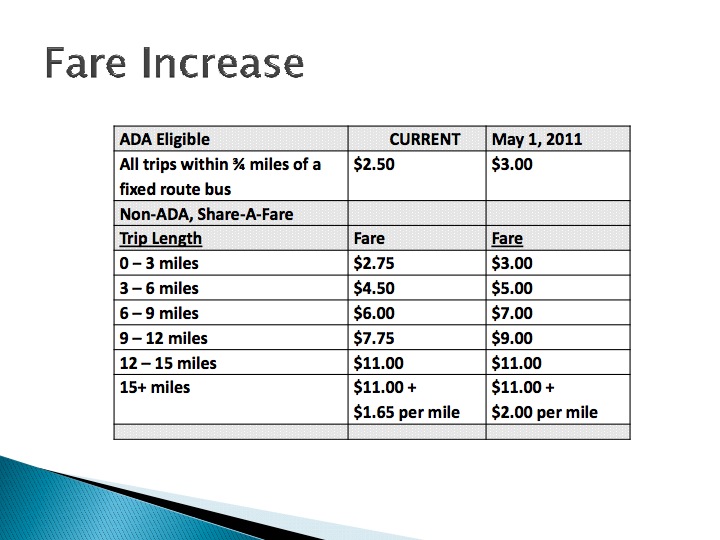
Share-A-Fare Price Increases 2011

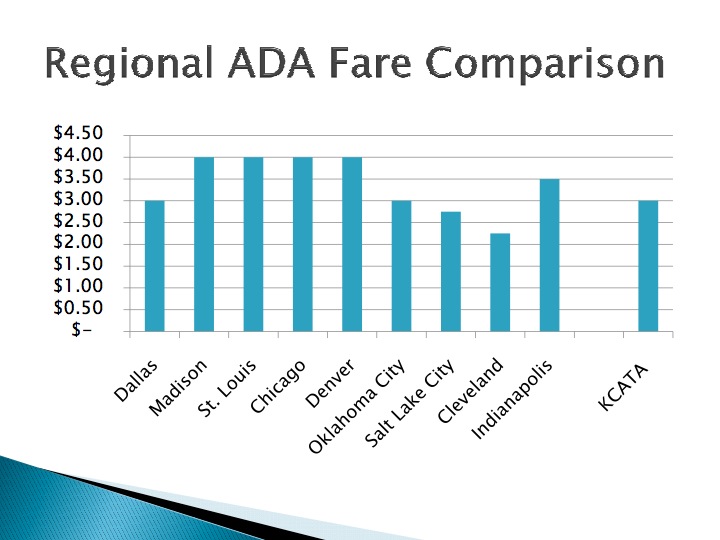
5.Bryan Beck, KCATA’s Director of ADA Compliance and Customer Service, provided an update on the fare increase from $2.50 to $3 per ADA eligible ride for the Share-A-Fare program, including the results of two public meetings and additional public input.  He presented general information and a service review of the Share-A-Fare program. See the full presentation- SAF Update 

6. Cindy Baker, KCATA Director of Marketing,  made a presentation on the State Avenue corridor project, funded by TIGER grants. It is in the design phase and the design team will soon be meeting with Advisory Council, stakeholders, and the general public. One component of this phase is the branding that will go hand in hand with design and then implementation. This project includes transit infrastructure improvements that could serve as a precursor to a future MAX line.

Johnson County Transit is in a similar situation with their Shawnee Mission Parkway/Metcalf route, also a TIGER-funded improved-transit corridor, but not full BRT service.

The JO has been working with consultants and the public to brand their new line. They have opted to call it “The JO Connex”. KCATA, Unified Government, and Johnson County Transit are all amenable to developing a regional brand, called “Connex,” that would represent a family of routes that include enhanced transit amenities, but do not increase service levels to MAX standards.

Next meeting May 25, 2011.

Posted in Local Transit Issues, Meeting Reports, Transit Studies | Tagged: , , , | Leave a Comment »

Streetcar Study Off to Fast Start

Posted by Transit Action Network on April 20, 2011


A Downtown Streetcar “Alternatives Analysis” (AA) study is on a fast track to completion, according to Charlie Hales, project manager for lead consultant HDR.  That’s our conclusion based on Hales’ presentation to the Kansas City Parking and Transportation Commission today.  The Commission, chaired by Councilwoman Jan Marcason will be the “primary sounding board” guiding the study.

Hales, who has had extensive rail transit experience in Portland and other cities, said though the federal funding situation is uncertain, the best way to get such funding is to have a plan ready when the next money becomes available.

The study timetable is ambitious:
– June – Statement of purpose and need, plus identification of initial alternatives.
– August – Alternatives evaluation and financing options.
– September – Draft of a Locally Preferred Alternative (LPA) report.
– November – Formal recommendation of a single Locally Preferred Alternative.

The FTA has awarded $400 million in grants for streetcar projects in the past 15 months through the TIGER and “Urban Circulator” programs, Hales said, and USDOT Secretary Ray LaHood really likes streetcar projects.  Getting the current study done will enable Kansas City to be “nimble” in applying for FTA “new starts” or “small starts” money, or other federal money that may become available.  Some transportation funding, for example, has recently been turned back by other grantees, and that money — even high-speed rail money — could conceivably be redirected to a streetcar project such as ours.

The Downtown Streetcar study will follow the FTA’s formal process, which requires consideration of reasonable options for both route and mode, but will seek a so-called “categorical exclusion” (a category of project considered not to have major environmental impacts) to simplify the “environmental screen” required in the FTA process.  Issues such as event-related street closures (e.g., at Sprint Arena and Crown Center), utility location requirements, the strength of bridges over the freeways, and where to locate a maintenance facility are among those to be addressed in the study.  Other factors include ridership forecasts (estimates based on travel demand models as well as “off-model” considerations) and financing options.

Hales noted that the study will build on a number of recent and ongoing local studies, including the Greater Downtown Area Plan, KCATA’s Comprehensive Service Analysis, the region’s Urban Corridors Study, and the Grand Boulevard Vision, plus all of the light rail planning work that’s been done in past years.  The streetcar study will be coordinated with the Commuter Corridors study (not yet underway), which will consider commuter rail in two major corridors.

Keeping the project manageable is important, too.  When projects fail, Hales said, it’s not for engineering reasons.  Rather, it’s for political reasons.  Thus, every effort will be made to keep all stakeholders involved, to limit expectations, and to avoid a key mistake of past Kansas City rail studies, letting the scope of the project expand.  Holding the project to just two miles gives it the highest likelihood of success, based on past voter response.  (It’s widely expected that funding for this project would come largely from within the streetcar corridor, and thus a citywide vote would not be required.)  This also keeps it small enough that the city might be able to finance it without federal assistance, should that become necessary.

KCATA General Manager Mark Huffer noted that a bill has been introduced in the Missouri Senate that would allow a Transportation Development District (TDD) to be set up specifically for transit, and that would simplify the makeup of the TDD’s governing body.  That bill (which might not be critical) might or might not get through the General Assembly this year.

Assistant City Manager Sherri McIntyre will oversee the project for the City.  She said she looks forward to guiding the study to completion and then getting the project built.

Said Chairman Marcason: “I’m the most optimistic that I’ve ever been (about getting a rail transit project done).”

Posted in Local Transit Issues, Rail, Transit Studies | Tagged: , , | Leave a Comment »

Transit Consultant Chosen for Commuter Corridors Alternatives Analysis

Posted by Transit Action Network on April 7, 2011


April 6. It was announced at the MARC Transit Committee that Parsons Brinckerhoff will be recommended to conduct the Commuter Corridors Alternatives Analysis in Jackson County. Parsons Brinckerhoff (PB) is considered one of the world’s leading planning, engineering, and program and construction management organizations.

PB founder William Barclay Parsons was chief engineer for the original New York City subway.

PB has designed 30,000 miles of heavy and light rail systems, automated guideways, commuter rail and busways.

The PB team consists of Nelson\Nygaard, Olsson Associates and Shockey Consulting. PB has a local office in Lenexa, Kansas.

From MARC’s  Request for Proposal (RFP):

For the purposes of this Alternatives Analysis, the two commuter corridors to be studied run through multiple jurisdictions. The I-70 Commuter Corridor runs from the heart of Kansas City, Mo and extends east paralleling the Kansas City Southern railroad through Independence, Blue Springs, Grain Valley, and Oak Grove in Jackson County and east to Odessa in neighboring Lafayette County. The Rock Island Corridor begins in the heart of Kansas City, Missouri, sharing a common corridor segment with the I-70 corridor approximately to the eastern edge of Kansas City, Mo, and then follows the old Rock Island rail corridor through Raytown, Kansas City, Lee’s Summit, and Greenwood in Jackson County and further south to Pleasant Hill in Cass County.  Both corridors run proximal to two heavily-traveled roadways, Interstate I-70 and Highway 350 (Blue Parkway), and through cities experiencing a growing residential population.

Several activity centers, including Downtown Kansas City, MO, Truman Sports Complex, and multiple town centers fall within in these corridors. Downtown Kansas City, Mo is the expected terminus of the various alternatives that will be considered in this Alternative Analysis, therefore this AA is to be closely coordinated and integrated with the Downtown Kansas City, Missouri Corridor Alternatives Analysis. In addition, this AA is to be closely coordinated with the Missouri Department of Transportation’s (MoDOT) Second Tier Environmental Impact Statement (EIS) for the I-70 corridor (I-470 to the Kansas/Missouri state line, including the downtown loop).

Existing transit service in downtown primarily focuses on bringing persons from outlying parts of Kansas City and the region to and from downtown. These commuter services continue to be needed, especially in Jackson County. Previous studies have indicated that the I-70 commuter corridor would greatly benefit from additional service, potentially through additional travel options such as expanded express bus or rail.  The Rock Island corridor is currently served by a commuter express bus on Blue Parkway and cities along this corridor have interest in increasing service to meet growing demand and looking at potential options in the Rock Island Rail alignment.  This rail alignment also connects to Missouri’s statewide Katy Trail in Pleasant Hill, formerly the Missouri-Kansas-Texas Railroad, therefore any use of the Rock Island rail alignment would likely include a trail extension into Kansas City, making it a multiuse corridor.

MARC, KCATA, the City of Kansas City, Mo and Jackson County intend to build on previous efforts and complete an Alternatives Analysis for both the I-70 and Rock Island Corridors. The intent will be to use the AA results to secure funding for implementation and potentially apply for federal funds–New Starts, Small Starts, or other federal sources. 

Specific consultant activity will be limited to the I-70 and Rock Island/M-350 corridors within Jackson County and portions of Lafayette and Cass Counties in Missouri. A more specific study corridor will be further defined by the Project Partnership Team with input from the study advisory committee.

The purpose of the study will be to determine the preferred alternative including specific alignments for the option best meeting current and future transportation needs while also helping to shape, support and focus future economic development and revitalization of activity centers for each corridor.

The recommendation will be submitted at the next MARC Board meeting for approval.

Posted in Local Transit Issues, Rail, Transit Studies | Tagged: , | Leave a Comment »