Transit Action Network (TAN)

Advocates for Improved and Expanded Transit in the Kansas City Region.

Archive for the ‘Local Transit Issues’ Category

JCT Ribbon Cutting For The New Transit Center

Posted by Transit Action Network on July 2, 2013


The_JO_ConnexJohnson County Transit (JCT) postponed the ribbon cutting for its new Mission Transit Center for a whole month, but the wait was worth it. July 1st was a beautiful day to celebrate the official opening of the Allen Roth Transit Center. Johnson County Board of County Commissioners Chairman Ed Eilert spoke at the dedication of the Allen Roth Transit Center in Mission.

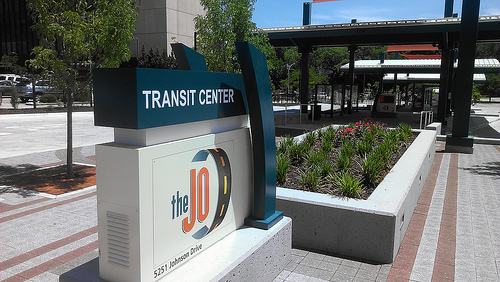
Allen Roth Mission Transit Center Entrance at 5251 Johnson Drive, Mission, Kansas

Allen Roth Mission Transit Center Entrance at 5251 Johnson Drive, Mission, Kansas

The new transit center has 73 transit departures  from this location every weekday.  The Transit Center  is located  at 5251 Johnson Dr. Parking is next to Wendys on the south side of Martway just east of the transit center.

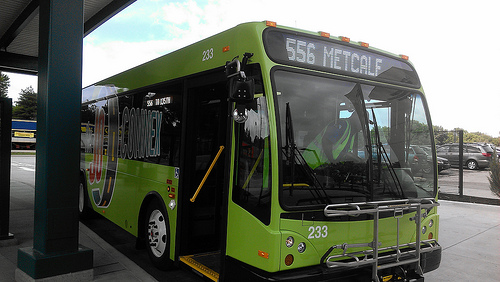
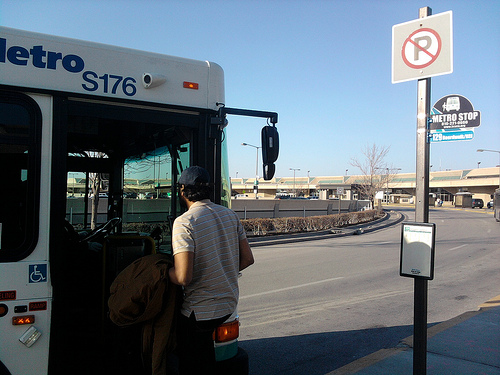
Connex bus 556Although the transit center serves 5 additional JCT routes  (546, 660, 661, 667, and 672) , the big excitement is over the introduction of the new CONNEX service.

CONNEX is the brand for the Metcalf / Shawnee Mission Parkway route (556/856). The route began operating under this brand name on June 3, 2013. There are 17 round trips daily between 119th or 135th and Metcalf on the south, and the Plaza / UMKC / Rockhurst on the north and east.

The JO has six of these buses for use on this route. Each seats 25 passengers.

Midday trips are often operated using smaller buses since these trips may “flex” off-route to pick up or let off passengers who have made advance arrangements.

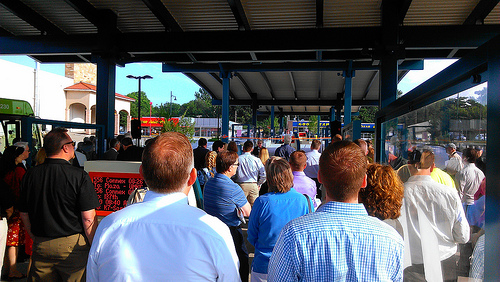
Socializing before the dedication ceremony begins.

Socializing before the dedication ceremony begins.

Dedication ceremonies begin, July 1, 2013.

Dedication ceremonies begin, July 1, 2013.

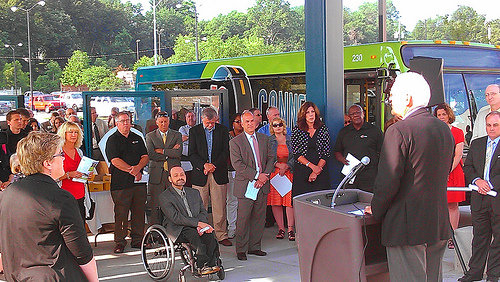
Johnson County Board of County Commissioners Chairman Ed Eilert speaks at the dedication of the Allen Roth Transit Center in Mission.

Johnson County Board of County Commissioners Chairman Ed Eilert speaks at the dedication of the Allen Roth Transit Center in Mission.

Elected officials cut the ribbon to dedicate the new Allen Roth Transit Center in Mission, Kansas. July 1, 2013.

Elected officials cut the ribbon to dedicate the new Allen Roth Transit Center in Mission, Kansas. July 1, 2013.

Connex bus going

Posted in Events, Local Transit Issues | Tagged: , | Leave a Comment »

KCMO Relationship With KCATA Under Review

Posted by Transit Action Network on June 12, 2013


kcmo_big_logoKansas City Missouri (KCMO) is KCATA’s biggest “client,” and therefore their relationship has a huge impact on transit service in the region. Two important events are shaping this relationship. In the short-term, budget decisions this year by the Kansas City Council have forced KCATA to take a 10% loss on the transit service it provides to the City and continue to use its emergency reserve fund to cover this loss. According to KCATA the $46 million budget is $5 million short of the approximate $51 million cost of the current level of service. In the mid/long-term, a new ordinance created a “KCATA Funding Review Committee” which will determine the ongoing relationship between the two entities.METRO ogo

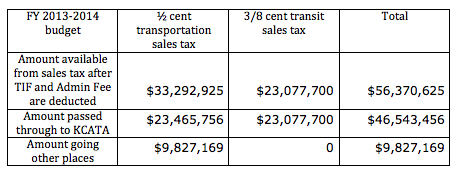
The short-term: The KCATA Board of Commissioners has approved the new $46 million contract, even though they know it is affecting the agency’s ability to respond to emergencies in the future.  KCATA expects to use $5 million of its reserve fund to prop up the city’s transit service, despite the fact that the ½ cent Transportation Sales Tax had an additional $9 million available to budget for the bus service. Instead, the city decided to spend the money on Public Works and the streetcar. Some of this money should have been used to eliminate the difference between the cost of the service level and the budget. KCATA used $3.5 million of its reserve fund last year to prop up this service level. KCMO has not fully paid for its transit service out of the budget since 2008.

To understand why KCATA would continue to use its emergency reserve fund after the economic emergency is over and the KCMO sales tax receipts are budgeted to be the highest ever, you need to know that the reserve fund came from the KCMO 3/8 cent Transit Sales Tax  (more about this later) and understand KCMO’s impact on KCATA’s business. 62% of KCATA’s total budget comes from KCMO but if you omit federal funding and fares and such, and just look at the local funding part — then KCMO provides 92% of those funds. Although KCATA is an independent public transportation agency created by an act of Congress, it doesn’t have any taxing authority, and therefore relies on contracts with government entities to provide transit service. So if you have one client that contracts for 92% of your business, you try to make them happy.  Keeping that in mind, KCMO still purchases transit services as a client of KCATA, not an employer and not an owner.

kcmo_kcata_contractSo the mid-term and long-term relationship between these two separate entities has to be resolved since the current situation is unsustainable. No organization can continue to provide the city with more service than the city can (or will) fund.

That leads us to the mid-term outlook. Although during the budget process the city’s Finance committee deleted Section 2 of Ordinance 100951, which required KCMO to incrementally increase KCATA’s share of the ½ cent Transportation Sales Tax, it retained Section 1, which says KCATA will receive 95% of this sales tax (after TIF and an Administration fee) starting May 1, 2014. During the budget hearings City Manager, Troy Schulte, said he had made preparations to comply with Section 1 of the ordinance. That means that the use of this money for Public Works, which is $6 million for FY 2013-2014, would shrink to about $1-1.5 million for Transportation Planning and the Administrative fee in the next budget. If Section 1 of Ordinance 100951 is implemented and KCATA starts to receive the money that has been diverted to Public Works since 2003, then the current discrepancy between the budget and the cost of the service level will hopefully be eliminated and KCATA can stop depleting the reserve account in the mid-term.  Use of the reserve account in the long-term is a different matter.budget_discussion

The long-term situation. The city’s new “KCATA Funding Review Committee” has had two meetings with the KCATA. The committee has to present a recommendation to Mayor James by Aug 1, 2013 — in time for the next budget deliberations.

A new Ordinance, 130173, set up this committee to look at using the money from the ½ cent Transportation Sales Tax to create  “a multi-year financial plan for distribution of the transportation sales tax after reviewing the needs of the bus service and establishing a maximum allocation for development and expansion of a streetcar system”. Councilman Ed Ford chairs the committee. The other four council members are Dick Davis, Jan Marcason, John Sharp and Scott Wagner.

The first committee meeting mainly consisted of KCATA’s general manager, Mark Huffer, making a presentation he called “KCATA 101” to explain KCATA’s operations and funding situation. There are links to both the presentation and the meeting, with Huffer’s explanation of all the slides, at the end of this article.

The second committee meeting happened at the last KCATA Board of Commissioners meeting. KCATA addressed several concerns that were brought up at the first meeting, including the sustainability of this level of transit service and the use of the KCATA Reserve account.  There are several issues that have emerged.

Issue 1: How to maintain the current level of transit service. The city council is basing these talks on the unique prerequisite that the current level of transit should be maintained. To transit riders and transit advocates that sounds pretty good, except improving and expanding the service level would sound even better. However that has never been the way KCATA has provided service to the city. They have always provided the most service possible for the funding provided. Councilman Dick Davis (previous general manager of KCATA) told us how he used to adjust service levels all the time based on the money the city actually gave KCATA.  Service levels have never been fixed because the cost of service and the funding for the service always fluctuates.

Prior to 2009 KCMO fully paid for the transit service it received. Historically, if the city cut the budget, then KCATA either cut service or raised fares, so the city budget and the amount of transit service were always in agreement. When the recent recession hit, KCMO cut KCATA’s funding $9.5 million or 19.3 % between FY 2008-2009 and FY 2009-2010. The reason transit riders didn’t suffer more during the recession is because KCATA raised fares (by 20 percent or 25 cents) and cut service by only 9.5%. That didn’t fully cover the budget reduction, so KCATA used its reserve account to make up the cost difference and maintain the higher level of service. The decision to use the reserve account left KCMO and KCATA out of sync, with KCATA propping up the city’s transit service at a level higher than budgeted. This situation had never happened before and we doubt if a lot of people even know about it. Most people assume the service cuts and fare increase happened just like before and they matched the amount of the funding reduction. That is not the case.

KCATA acted like a real partner to the city when sales taxes took a nose-dive. The reserve money kept transit riders from having deeper service cuts and bigger fare increases, as happened in many other cities. KCATA used its reserve fund like it is supposed to be used:  for an emergency.

Now, KCATA is being told to maintain this level of service, even though the city isn’t budgeting for it. They are seriously looking at scenarios where the reserve account will be totally exhausted. So the KCATA reserve account is an important part of this discussion.

 Background: How did KCATA get this reserve account? Prior to 2003 KCATA did not have a reserve fund. The reserve money originally came from the 3/8-cent Transit Sales Tax. Although KCMO has control over how to spend the city’s ½ cent Transportation Sales Tax, it acts as a fiscal agent collecting and passing through to KCATA proceeds from the 3/8-cent Transit Sales Tax since language of that ballot measure specifically directed the money to KCATA. After the successful 2003 transit election, it took time to implement new services and get more buses. During that build up time KCATA used some of this money to create its first and only reserve fund for emergencies (it was 6 months of operating costs – which is not uncommon for a transit agency). The original concept for the reserve fund was to protect service levels in the event of unexpected fuel price spikes. This unique opportunity to build the reserve only existed once and KCATA has no way to replenish this money for future emergencies, since the contract with the city does not currently have a provision for funding a reserve account.  The reserve fund is already partially depleted. That is why forcing KCATA to use up this money when the city is flush with transportation funds was unnecessary and irresponsible on the part of the city, because it diminishes KCATA’s ability to respond to future contingencies.

KCATA having a reserve account is no different from anyone having a rainy-day fund. Coming out of the recent recession, people should understand how important it is to have some extra money tucked away. We hope that during the review process KCMO sees the wisdom of KCATA having a reserve account and incorporates this modern risk-management practice into the contract. Properly using a reserve account is good management. It should be used to maintain service levels when less revenue is collected than budgeted or when there are unexpected costs, and then re-filled when revenues go back up.

Without the KCATA reserve account, service cuts and fare increases worth the whole $9.5 million, or 19.3%, would have been necessary during the recession.

Issue 2: There is a serious long-term funding problem for KCMO, which will affect KCATA. The city may have to make drastic changes in many programs, not just transit, unless revenues start growing faster or costs are cut. Considering that sales tax revenue is projected to increase only 1%-1.5% annually, the city is on a collision course when costs will exceed revenue in multiple city endeavors, unless there are big changes. The city’s overall costs are projected to increase at 5%-6% annually.

KCATA is currently managing costs pretty well at a 2-3% yearly increase. If the cost of maintaining this level of transit service continues to grow faster that the sales tax revenue, then at some point, this level of transit service becomes unsustainable.rider_profile

One of the main goals of these meetings is to find a way to maintain this level of service and pay for it. The committee has to decide if that goal can be reached with the funding sources already available. As transit riders, constant fluctuations in service levels based on the city’s current year budget is a transit nightmare. KCATA surveys of riders show that 74% of the transit riders have household incomes less than $30,000 and 62% of the riders are transit dependent, yet 76% of the trips are for work, job seeking or school. The need for transit is well documented and no one wants to cut service or raise taxes, but reality can’t be ignored.

KCATA has been trying hard to cut costs. The goal of implementing the recommendations of the Comprehensive Service Analysis was to make the routes more efficient and eliminate duplications. KCATA negotiated an improved union contract and they plan to change the vehicle fleet to Compressed Natural Gas (CNG). They expect cost reductions from all of these efforts.

So the ball is in the City’s court. In Huffer’s presentation he suggested several ways for the city to deal with the potential collision course between costs and revenues as they affect the transit service.

INCREASE REVENUE

  • City 1/8-cent sales tax capacity
  • More use of ½-cent sales tax
  • State investment
  • Regional investment
  • County
  • Bi-State
  • Fare increases

Of course, KCMO only controls the revenue streams highlighted in red. Another possibility, not on the list, is the U.S. Congress giving state, county and local governments the ability to charge sales tax on Internet sales. If that happens, it will be a boon to government coffers all over the country and a boon to transit services funded by sales taxes. Any increase in the 3/8-cent Transit Sales Tax revenue would automatically go to KCATA, and depending on the decisions made regarding the ½ cent Transportation Sales Tax, KCATA could receive more money for transit.

DECREASE COSTS

  • Greater labor efficiencies
  • Focus only on core services
  • Services reductions/redesign
  • Limit Share-A-Fare to ADA requirements only
  • Alternate fuels/utility savings

Approximately 80% of the transit trips happen on 20% of the routes (core service), so KCTA could reduce the non-core routes. Twenty percent of the routes are about a dozen routes. For perspective, KCATA operates nearly two dozen routes on Sundays.

Currently a city ordinance allows able-bodied people over 65 with an annual income of no more than 150% of the current poverty level to use the Share-A-Fare service. There would be significant cost savings if the service were limited to the people with disabilities.

KCATA’s estimates did not include any cost savings from changing to CNG as a fuel, so that is an outstanding potential cost savings.

All of the above options to decrease costs are within the control of either KCATA or KCMO.

These first two issues, maintaining this level of transit service and the eventual situation where the service level becomes unsustainable due to slow revenue growth and potentially exhausting the reserve account, have been part of the discussions during these committee meetings.

At the second meeting, Mr. Huffer presented several scenarios looking at when the reserve account would be exhausted. The basic assumption is that KCMO doesn’t increase KCATA’s budget. Other scenarios include keeping the same budget but starting to make service reductions and the last scenario doesn’t make service reductions but increases the budget $5 million next year and then revenue only grows at 1% per year.

Of course, exhausting the emergency reserve fund to maintain basic operating levels is not a long-term funding strategy. Councilman Dick Davis, told us recently that he would be concerned if the reserve fund dipped below $10 million. We don’t believe the KCATA Board of Commissioners should let the reserve fund be totally depleted under these circumstances.  See Huffer’s Reserve Presentation at the end of the article.

Issue 3. Another wrinkle that hasn’t been resolved. In December 2010 when Ordinance 100951 was passed, the streetcar didn’t exist.  In the current budget the city allocated $2 million to the streetcar to cover the streetcar’s financial obligations. This amount of money will be needed for the duration of the streetcar bonds, which could be 25 years for a total of $50 million (this amount is equivalent to the cost of a whole year of KCATA transit service to KCMO). One of the questions for the committee is “Will the streetcar money continue to come from the ½ cent Transportation Sales Tax, or some other revenue source? “peer_cities

The streetcar is transit and this is a transportation tax so it fits legally. However, originally the Transportation Development District (TDD) was supposed to pay for the streetcar costs and there was no discussion about using the limited funds available for the bus system to help pay for the streetcar. The streetcar has to be paid for, but TAN would prefer the TDD exhaust its revenue sources before taking the easy way out and use the revenue stream used to pay for the bus system. If the TDD truly can’t pay for the streetcar, then of course revenue sources outside of the TDD have to be tapped.

If there is no other option and the streetcar money has to come out of the ½ cent Transportation Sales Tax, then Section 1 of Ordinance 100951, which currently gives KCATA 95% of the money, will have to be changed.  The city manager’s current plan is to take the streetcar money out first, like the TIF money, and give KCATA 95% of what is left, if that is still the percentage the review committee decides on.   Don’t be misled into thinking KCATA is getting 95% of the money if the city continues to take money out for other priorities first. Getting 95% of the leftovers is a much smaller amount of money. In fact, if money for the streetcar comes out of this fund, the city manager said the maximum percentage of the total amount available for KCATA would be reduced to 87%.

During the budget hearings the council made it very clear that they can do whatever they want with this sales tax regardless of promises to voters or ordinances. The point that the “council can change its mind any time it wants to” is an important one. For instance, even if a $2 million cap is placed on using the ½ cent Transportation Sales Tax money for this first streetcar, this council or a future one could just eliminate the cap and decide a precedent had been established for using these funds to pay for streetcars.

What lies ahead? What about new or improved services? Even though the city has not been fully budgeting for the transit service, KCATA continued with the implementation of several new projects including the Troost MAX in 2011 and the expansion of service to the airport this year. A Prospect MAX is a potential new service since it did well in the recent Jackson County US 71 Transit Study. How the city defines its on-going relationship with KCATA and how the city decides to fund basic transit service to the whole city will determine what improvements or expansions KCATA can make in the future.

The City’s “KCATA Funding Review Committee” has a lot of work to accomplish. So far the committee has been learning about the issues. We look forward to the meetings when they get down to dealing with the difficult questions. They only have June and July to come up with a plan.

Next “KCATA Funding Review Committee” meeting is Thursday June 13, 2013, at City Hall, 10th floor.

Links to the presentations and the video of the first meeting

Huffer to KCMO City Council – ATA 101 Final_20130425

Video of first KCMO City Council “KCATA Funding Review Committee”  (includes Mark Huffer’s explanation of the slide presentation)

KCATA BOC Reserve Fund Presentation  from the second meeting

For more background: TAN posted a series of articles related to the KCMO FY 2013-2014 budget process for funding KCATA. Start with Our Request to KCMO: Move Transit Funding Closer to Goal in Next Budget   and Action Alert! KCMO City Manager’s Budget Is Failing The Transit System  and read through to the last budget article Last Chance – Speak up for KCATA Budget at KCMO Finance Committee Meeting Mar 20  They all have the Tag: KCMO2013-2014budget

Soon: KCATA’s New Vision

Posted in Local Transit Issues | Tagged: , , | Leave a Comment »

JCT Ribbon Cutting For Mission Transit Center – July 1, The JO CONNEX – June 3

Posted by Transit Action Network on May 30, 2013


TIGERThe_JO_ConnexJoin Johnson County Transit at their ribbon cutting event for the new Mission Transit Center.
Where: Mission Transit Center, 5251 Johnson Drive, Mission, Kan.
When: Friday, May 31, 8:30 a.m. Re-scheduled to Monday, July 1

The new transit center will enhance transit service along the Metcalf/Shawnee Mission Parkway Corridor. The transit center is one feature of the extensive infrastructure improvements in this corridor made possible by a federal $10.7 million Transportation Investment Generating Economic Recovery (TIGER) grant. At the ribbon cutting, JCT will provide exhibits of before-and-after transformations along the transit corridor and information about enhancements to the transit services in Johnson County, Kan.

Effective June 3rd, many of The JO buses will change their routes in order to utilize this new Transit Center.   Route 556/856 will be re-branded as The JO CONNEX, an enhanced route with limited-stop service, which will use the new infrastructure in the Metcalf/Shawnee Mission Parkway Corridor.

JCT Proposed_Schedules_June_2013

For questions regarding the ribbon cutting:
Contact Brian Scovill at 913.895.6052 or Alice Amrein at 913.715.8352.

Posted in Events, Local Transit Issues | Tagged: , | Leave a Comment »

Take the KC Streetcar Stops Survey

Posted by Transit Action Network on May 19, 2013


KC_streetcarHelp the design team for the KC Downtown Streetcar choose the design for the streetcar stops. Review the options then take the survey to communicate your thoughts on conceptual plans for streetcar stops.  View the drawings for the five different designs for stops as well as pictures of the existing streetscape in three locations.  Click here to take the survey  Streetcar Survey(inactive). streetcar_survey

The survey is only available until next Friday, May 24, 2013.

Posted in Action, Local Transit Issues, Rail | Tagged: | Leave a Comment »

UG Public Budget Hearing – May 16

Posted by Transit Action Network on May 15, 2013


A public budget hearing for the Unified Government of Wyandotte County is scheduled for May 16th at 7 pm in the UG Commission Chambers at 701 N. 7th Street, KCK (in City Hall).  This meeting is an opportunity for transit rider groups to voice their concerns and desires for transit.photo (51) This meeting is a great opportunity to impress upon the commissioners, especially the newly elected officials and the new mayor,  the importance of transit in the UG community.

Rosedale Development Association is one group working to get transit improvements in their area.  This week, Erin, from Rosedale Development Assn. (center), took Carroll, Carol, and Pastor Joe (photographer) of Westwood Christian Church to survey Rosedale Ridge Apartment residents about their public transit needs. They discovered many of them do not have cars. They rely on rides from friends or make a long hike to the nearest bus stop (~ 1.5 miles away). TAN supports Rosedale’s efforts and hopes that Wyandotte County is able to extend a bus line into their neighborhood.

Posted in Events, Local Transit Issues | Tagged: , | Leave a Comment »

Getting Commuter Rail Downtown Faces Major Hurdles

Posted by Transit Action Network on April 30, 2013


sixtracks

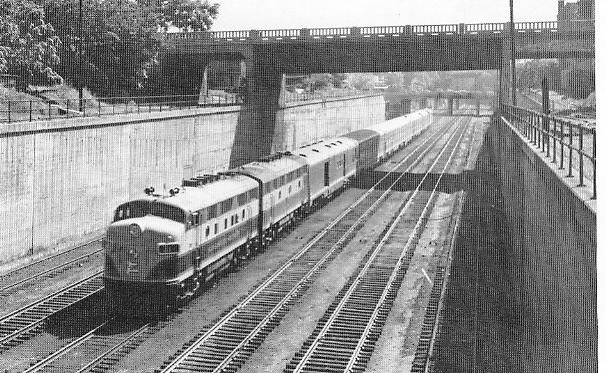
Kansas City Southern train in “trench” east of Union Station, probably taken in the 1950’s from Forrest Ave. Bridge. Note the six tracks in the trench. The next bridge east is Tracy Ave. Note the ramp which rises from the bottom of the trench on the right and comes up toward the viewer under Tracy Ave. and another one going back toward the east. These carried tracks from the trench level up to businesses on the right. In fact you may be able to make out a freight car next to the brick building on the far right.

jc_ccaa_logo_vertLast month Jackson County Executive Mike Sanders announced that there would be no transit election this year. The decision was due to a newly emerged disagreement with Kansas City Southern Railroad concerning the location of the downtown terminus of the I-70 corridor commuter rail line. Based on earlier discussions with the railroads, the County was planning for a Downtown terminus near Third and Grand in River Market. Now, it appears, Kansas City Southern is insisting the line terminate at Union Station.

Since Mr. Sander’s announcement, the Transit Action Network has noticed, in remarks by individuals as well as press accounts, a lack of understanding of the factors affecting the County’s decision. We decided to publish this note in order to provide those interested with more information about the choice of a downtown station site.

The costs and benefits of the two options can be viewed along three dimensions: estimated ridership, commercial development potential, and cost. The chart below summarizes the two options for downtown locations in these terms.

Comparison of Third and Grand and Union Station

 Sites for Commuter Rail Terminus

Third and Grand

Union Station

Estimated Daily Ridership[1] 

I – 70 Corridor

Current Study (Est. for 2035)

1,150 to 2,800

—–

2007 Study (Est. for 2030)

815 to 1,190

1,060 to 1,548

2002 Study (Est. for 2020)

—–

3,346 to 4,160

Estimated Cost of Construction[2] of a “Common Line”

$109,355,000

$1,000,000,000

Commercial Potential[3]

No value yet estimated No value yet estimated

The Mid-America Regional Council (MARC) has completed four commuter rail studies over the past couple decades. The first of these studies examined the possibility of commuter rail in the I-35 corridor to the Southwest, in Johnson County. Union Station was to be the downtown terminus of this route. There has never been a problem getting to the station from the West. Although this corridor has always shown the greatest ridership potential, the I-35 project died because it basically required laying an additional track from Union Station to Olathe. Johnson County voters were not expected to support the high cost of such a project.

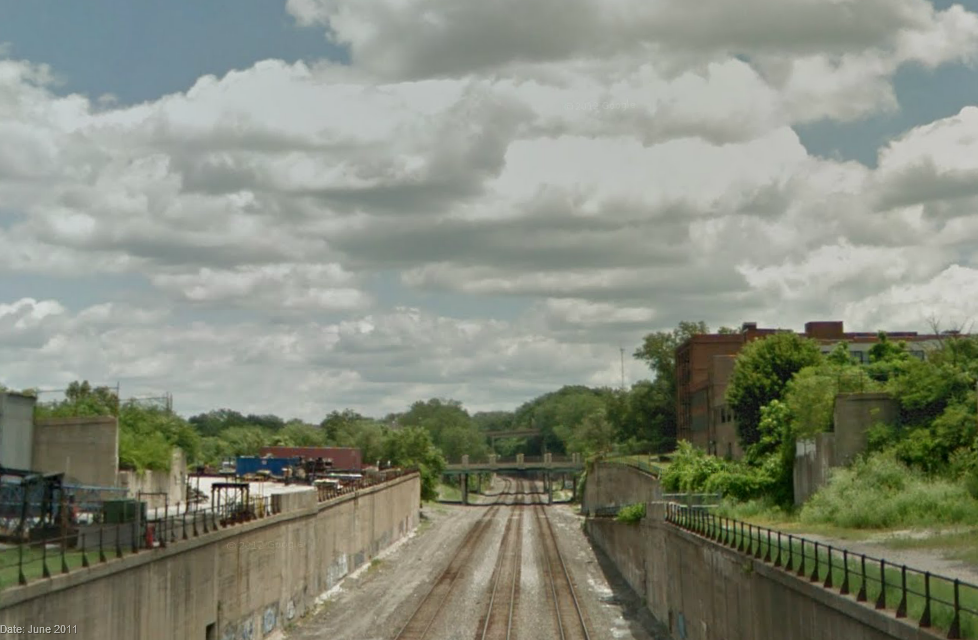
View from Forest Ave. today. Note overgrown bridge abutments where the Tracy Ave. bridge used to be. We assume railroad right-of-way extends approximately from the wall of the building on the left to at least the bridge abutment on the right and possibly to the building out of the picture on the right. This picture provides a better view of the old ramp system bringing tracks up to street level.

View from Forest Ave. today. Note overgrown bridge abutments where the Tracy Ave. bridge used to be. We assume railroad right-of-way extends approximately from the wall of the building on the left to at least the bridge abutment on the right and possibly to the building out of the picture on the right. This picture provides a better view of the old ramp system bringing tracks up to street level.

The next MARC study in 2002 examined the possibility of commuter rail along various routes in both Kansas and Missouri. Of the routes studied the I-70 corridor was the most attractive in terms of potential ridership with a maximum of 4,160 passengers per day in 2020. This study assumed that the downtown terminus would be Union Station. There was no evaluation of the feasibility getting to Union Station compared with other locations.

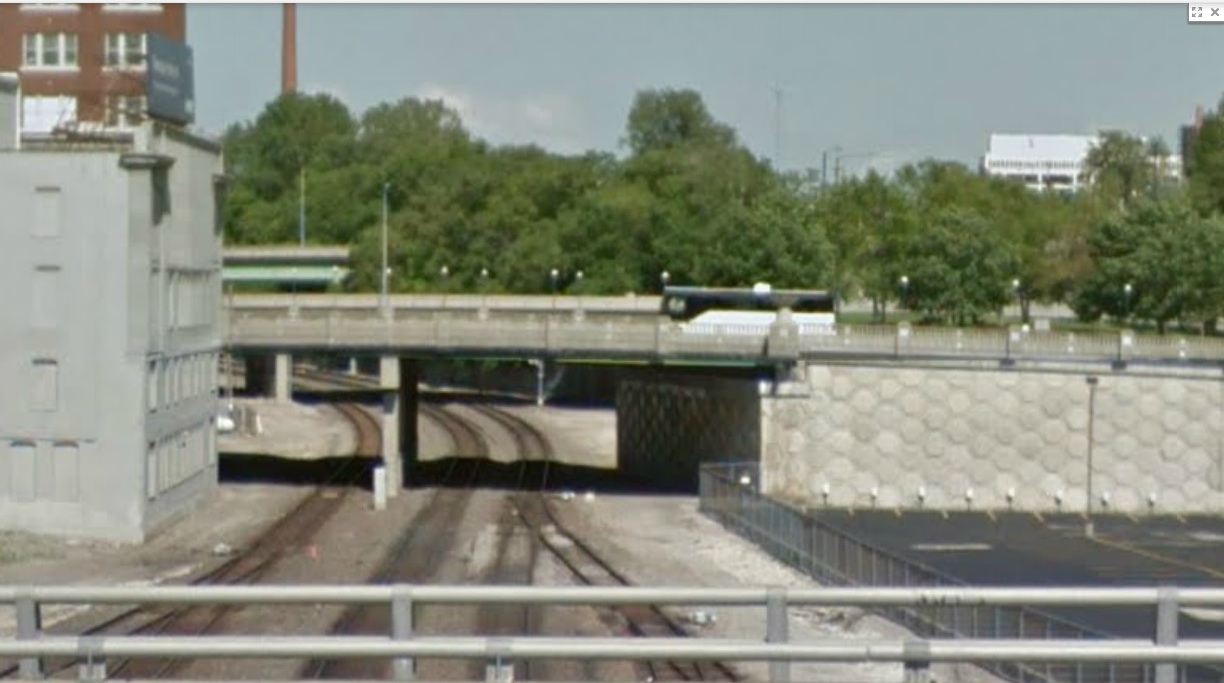
Grand Avenue bridge. An example of one of the bridges that would have to be modified in order to  accommodate a fourth track.

Grand Avenue bridge. An example of one of the bridges that would have to be modified in order to accommodate a fourth track.

The next study, in 2007, focused just on the I-70 corridor, was far more detailed than the 2002 study, and examined both express bus and commuter rail. It used two different forecasting models with varying assumptions imposed on each. Using these models daily ridership estimates ranged from 815 at the low end for a station in River Market to 1,548 as a maximum for service into Union Station. It was in this study that the problem of getting to Union Station first surfaced. As the chart above indicates, it is extremely costly to get to the station from the east. (We will discuss the reasons for this subsequently.) So it was decided that a commuter rail route would preferably terminate in the River Market area. The problem with this was that the ridership forecasting models indicated, overall, about a 30% drop in ridership compared with Union Station. There were two reasons for this: First, commuters would have to transfer to buses to get to their ultimate destinations. (The downtown streetcar was not foreseen at the time.) Research suggests transfers between rail and bus cause a substantial drop in system use. Secondly, the combined travel time of commuter rail plus bus would be significantly longer than the drive time from a commuter’s home directly to their downtown office. Because of this and the large costs entailed in any rail system, commuter rail found no proponents and the idea withered.

That brings us to County Executive Mike Sanders’ vision for expanding transit throughout Jackson County. The County Executive’s plan incorporates commuter rail, express bus, a greatly enhanced county-wide local bus system, and a system of bike and pedestrian trails.

With the County Executive’s backing, MARC began the current study of the I-70 and Rock Island corridors in 2010. An additional study of the Highway 71 corridor was added later and is still underway. A series of ever more detailed study phases produced the most detailed information so far for both the I-70 corridor and the “Rock Island Corridor” to Lee’s Summit (and eventually, to Pleasant Hill). These two routes would come together in the southeast corner of the East Bottoms in the Blue River flood plain near an area called “Rock Creek Junction”. They would then proceed into the city on a “common line”, either to Third and Grand in the River Market or to Union Station (or vicinity).

Looking East from Vine toward  Woodland Ave. bridge

Woodland Avenue bridge (taken from the Vine Street bridge.) The “trench” narrows from here to its start at the 18th Street bridge. A fourth track at the same level as existing tracks would require excavation along one side of the trench.

Getting to River Market requires acquisition of right-of-way from the City of Kansas City along the North side of Kessler Park, construction of a bridge over the Blue River and adjacent north-south mainline tracks, and construction of track between Rock Creek Junction and a station at Third and Grand. The cost is estimated, according to the draft “Locally Preferred Alternative” report prepared by MARC, at $113.3 million, including a station at Third and Grand costing $4 million.

The Union Station route looks deceptively simple. The tracks to Union Station are already there at Rock Creek Junction. So, just run commuter trains on them. Problem solved, cost $0. But this idea is unlikely to work. The tracks through this corridor are part of several key nationally significant rail corridors. The problem is the corridor is already almost at capacity with well over 100 trains a day. Meanwhile, national rail freight traffic is expected to double over the next 20 years[4]. The railroads will not allow their infrastructure to be used in a manner that interferes with their primary business of moving freight. So adding commuter trains, which demand close adherence to fixed schedules, in an already crowded corridor, is not viewed favorably by the railroads.

Another option then is to build an additional track from Rock Creek Junction to Union Station. This turns out to be extremely expensive. According to a consultant working with the MARC team, who has looked closely at this alternative in the past, the cost would be around $1 billion – almost ten times the cost of going to Third and Grand! Here’s the problem. For approximately two miles east of Union Station the tracks lie in a “trench” (Grand Ave. to 18th Street, just east of the “Benton curve” on I-70). When Union Station was built, the trench contained four “thru” tracks. There were additionally two tracks on either side of the thru tracks which led to other tracks running up and down the sides of the trench serving rail shippers lining the right-of-way above track level.  [See black and white photograph of arriving Kansas City Southern train taken from (we think) the Forest Ave. bridge in, probably, the 1950’s.] Today there are just three tracks in the trench. This is for two reasons: Revised safety standards have increased the distance between tracks thought to be safe, and changes in maintenance practices since 1914 require the use of rubber-tired, road-based equipment. So the trench now needs to accommodate a service road. Therefore, in order to add an additional track two things are required: 1. One of the sides of the trench would need to be excavated for at least part of the two-mile length, and 2. Most of the 15 bridges that cross the trench would have to be modified or rebuilt. [See photographs from Google Maps below to get an understanding of the topography and bridge constraints.] It is not difficult to intuitively understand the $1 billion figure.

So is the commuter rail project dead? Very large infrastructure projects require the alignment of numerous parties’ interests and this inevitably creates hurdles along the way to an agreement. Currently, the railroads have agreed to contract for a third party capacity study of existing rail infrastructure. This might reveal that, contrary to the railroad’s beliefs, there is capacity for commuter trains on some basis. Or, perhaps a way will be found to add a fourth track in the trench more cost-effectively. Perhaps clearing the next hurdle may require just another healthy dose of creativity and/or negotiating acumen. Sometimes an idea just won’t work out and the effort has to be abandoned, at least temporarily, until conditions are more favorable.

Given the time, money, and public commitment spent doing transit studies for Jackson County over the past few years, TAN hopes that some tangible transit improvements will result near term, even if commuter rail can not be immediately realized.

See the KC Smart Moves website for updates on the current Jackson County Commuter Corridors Alternatives Analysis

————————————————————————————

[1] These ridership estimates are far from comparable. They represent estimates from four different forecasting models performed over a ten year period, incorporating different relationships between variables, different parameters and different assumptions. Ridership forecasting models are notoriously inaccurate in any case. Today forecasting models tend to err on the side of conservatism so most, but not all, of the newer commuter rail systems have exceeded ridership forecasts; often times by considerable margins.

[2] The cost estimate for getting to Union Station was provided by one of the consultants involved in the current study. It was not prepared for the current MARC sponsored study. It’s date is unknown. Neither estimate includes cost of station, or station upgrades. Sources: MARC “Locally Preferred Alternative” draft and a consultant to the project team.

[3] Because the Union Station alternative was dismissed early in the latest series of studies, there has not been a formal, quantitative analysis of the development potential for each of the two alternative station locations. There is vacant and underutilized property around each, but an analysis of the potential total value of viable projects has not been developed

[4]  MARC, “Regional Transit Implementation Plan – Commuter Corridors “, p.  2-7, 2010

Posted in Local Transit Issues, Rail, Transit Studies | Tagged: , | 2 Comments »

KCMO holds first KCATA Funding Review Committee Meeting – April 25

Posted by Transit Action Network on April 24, 2013


kcmo_big_logoKansas City’s new Ordinance 130173 set up the KCATA Funding Review Committee,  to “recommend  a multi-year financial plan for distribution of the  (1/2 cent ) transportation sales tax after reviewing the needs of the bus service and establishing a maximum allocation for development and expansion of a streetcar system”. The committee’s final recommendations are due to the Council by August 1, 2013.METRO ogo The meeting is open to the public.

The initial meeting of the committee is tomorrow and will include a presentation on “KCATA 101”.

KCATA FUNDING REVIEW COMMITTEE

Thursday, April 25, 2013, at 10:30 AM
10th Floor Committee Room, City Hall

Chair, Councilman Ed Ford

Additional Council members are Dick Davis, John A. Sharp, Jan Marcason, Scott Wagner

Proposed Agenda

1. Discussion on the purpose of the committee.

2. Future meeting schedule.

3. Presentation on the KCATA.

4. There may be a general discussion regarding current KCATA Funding Review Committee issues.

Posted in Events, Local Transit Issues | Tagged: , | Leave a Comment »

Proposed Missouri Sales Tax for Transportation Passes Senate

Posted by Transit Action Network on April 8, 2013


On March 14 the Missouri Senate passed SJR 16, a resolution that would ask Missouri voters to approve a one-cent sales tax for transportation for a period of ten years.  The vote was 24-10.  See “Current Bill Summary” on the Senate website for current status:MO_senate

http://www.senate.mo.gov/13info/BTS_Web/Bill.aspx?SessionType=R&BillID=17866209

The resolution is now in the House where a nearly identical resolution has been under consideration.  We have heard reports that this one-cent sales tax proposal might not get out of the House this year, but that it might instead serve as the basis for an initiative petition campaign financed largely by highway interests.  Thus, it’s important to continue to try to make this resolution as “transit-friendly” as possible.

The resolution is not entirely to the liking of Missouri transit and bike/ped interests since it doesn’t include a specific percentage of the new revenue for non-highway purposes such as local and rural public transit, Amtrak and other inter-city passenger transportation, and improved accommodations for pedestrians and cyclists.  However, it could turn out OK depending on what’s in MoDOT’s “list of projects” that will be prepared prior to the measure’s going on the ballot.  Our impression is that MoDOT has become a whole lot more friendly to non-highway modes of transportation and thus all is not lost.

Below is the “Current Bill Summary” from the Senate website, along with our annotations and comments [Italicized, in color and enclosed in brackets].

SJR 16 – Imposes a temporary one cent sales and use tax for transportation purposes

Current Bill Summary
SS#2/SCS/SJR 16 – This constitutional proposal, if approved by the Missouri voters, would raise the state sales and use tax by one percent for a period of ten years. The proceeds from the additional sales and use tax [estimated to be a total of approximately $7.92 billion over ten years] are to be used for transportation purposes. The temporary sales and use tax measure must be resubmitted to the voters every 10 years until such measure is defeated.

 [The matter of whether to use a general revenue source such as the sales tax to fund highways and other transportation purposes is an important tax policy question that we believe needs further debate.]

Five percent of the sales and use tax proceeds shall be deposited into the County Aid Transportation Fund, which is created in the state treasury by the resolution. Moneys in the newly created fund shall be distributed to the various Missouri counties in a manner similar to how motor fuel tax proceeds are distributed to counties. [A portion of existing state fuel taxes and other user fees is already distributed to counties.] The sales and use tax proceeds distributed to the counties may be used for local highways and bridges, state highway system purposes, or for county transportation system purposes (multimodal).

[“Multimodal” is an ambiguous term meaning any mode of transportation other than roads and bridges.] 

In a similar manner, five percent of the sales and use tax proceeds shall be deposited into the Municipal Aid Transportation Fund, which is created in the state treasury by the resolution. Moneys in the newly created fund shall be distributed to the various Missouri cities, towns and villages in a manner similar to how motor fuel tax proceeds are distributed to such political subdivisions. [A portion of existing state fuel taxes and other user fees is already distributed to cities and other local jurisdictions.]  The sales and use tax proceeds distributed to the cities, towns, and villages may be used for local roads and streets, state highway system purposes and uses, or for city transportation system purposes (multimodal).

 [For reference, our estimate of Kansas City, Missouri’s per capita share of the proposed sales tax is approximately $30.4 million over the ten years. 

$7.92b x .05 x (2010 population KCMO / Missouri: 460k / 5.989m = 0.0768) = $30.4m or about $3 million per year

 Our $3 million estimate uses a distribution method based on population. Actual distribution of new revenue to cities and counties would be according to a more complicated formula.

More than 25 percent of current highway user fees (fuel taxes, vehicle registration and driver license fees, and vehicle sales taxes) is passed through to cities and towns.  Ten percent of the new sales tax for counties and cities/towns/villages would thus represent a significantly lower share of the new revenue than they get at present: it would be an increase in revenue to such jurisdictions, but a lesser share of the state total.]

The remaining sales and use tax proceeds (90%) shall be deposited into a newly created trust fund known as the “Transportation Sales Tax Fund”. Moneys in the Transportation Sales Tax Fund may be expended by the commission for state highway system purposes or for state transportation system purposes and uses (multimodal).

 [Early press reports about SJR 16 have indicated there would be an off-the-top allocation of $1 billion or more for reconstruction of I-70 between Independence and Warrenton. Those accounts have incorrectly conflated the Resolution itself with a preliminary spending scenario that MoDOT has floated in a four-page color brochure. MoDOT has been using that scenario in discussing the update to its long-range transportation plan that is currently underway through “On the Move” listening sessions being held throughout the state. Based on our participation in those sessions, as well as accounts we have read, we believe it is reasonable to conclude that MoDOT’s initial scenario will not survive as prepared.]

The resolution requires the one percent sales and use tax to expire in 10 years unless the sales and use tax is renewed by the voters. If the decennial sales and use tax measure is ever disapproved by the Missouri voters, the sales and use tax will terminate at the end of the year following such election.

Unless approved by the voters, the General Assembly, counties, and municipalities are prohibited from increasing or decreasing the motor fuel tax from the rate of the tax authorized by law on January 1, 2013, while the sales and use tax is in effect

[On careful reading, this provision does not actually promise that the fuel tax would not be raised, only that it would not be raised without a vote of the people — which would be required in any case.  Given that Missouri ranks 45th in the amount of its motor fuels tax, such an increase still makes a lot of sense with or without the sales tax.]

Unless approved by the voters, the commission shall not own or operate a toll highway or toll bridge on a state highway or bridge that is in existence on the effective date of this resolution while the sales and use tax is in effect. A similar provision applies to counties and municipalities. Unless approved by the Missouri voters, counties and municipalities are prohibited from tolling existing highways or bridges under their jurisdiction during the duration of the sales and use tax.

[Again, the “unless approved by voters” clause doesn’t actually prevent Missouri from having one or more toll roads at some point during the ten years, if voter attitudes change.]

The act requires, prior to any election to which the sales and use tax proposal is submitted to the voters, the commission to approve a list of projects, programs, and facilities on the state highway system and state transportation system that will be funded from the additional sales and use tax proceeds.

[While “list of projects” might be interpreted by most people to mean highways or bridges, the inclusion of the word “programs” is encouraging.  Thus, the “list of projects” developed by MoDOT might well include such things as an annual allocation for OATS and other rural transit systems throughout the state related to the rapid growth in the senior population as “baby boomers” retire. Additional programs might include an annual allocation to urban transit systems for capital expenditures or operating assistance, an annual allocation to continue and increase the frequency of “Missouri River Runner” passenger trains operated by Amtrak, etc.]

Starting in the 1st fiscal year following voter approval of the resolution, the commission shall annually submit a report to the Governor, General Assembly and the Joint Committee on Transportation Oversight that shall include the status of the approved list of projects, programs and facilities on the state highway system and state transportation system.

In the annual report filed in the 6th fiscal year following voter approval of the resolution, if the Joint Committee on Transportation Oversight identifies and determines that any project, program or facility on the commission’s approved list has not yet been included in the commission’s statewide transportation improvement program, then the joint committee by two-thirds majority of its members, shall identify each specific project, program or facility that has not been included in the commission’s statewide transportation improvement program and shall within 30 legislative days recommend suspension of appropriations from the transportation sales tax fund in an amount that is equivalent to the amount of funds necessary for each specific project, program or facility that was not included.

 [Provisions in the above two paragraphs help to keep MoDOT “honest” with respect to the list of projects.]

Under the resolution, the General Assembly may approve the recommendation of the joint committee by enactment of a concurrent resolution. Such resolution may be introduced in either legislative chamber no later than 14 calendar days after receipt of the joint committee’s recommendation. The resolution shall not be subject to amendment by either chamber and may only be approved in its entirety. The presiding officer of each legislative chamber in which a concurrent resolution has been introduced, shall submit it to a vote of the membership not sooner than 7 calendar days nor later than 14 calendar days after introduction of the concurrent resolution. The presiding officer of the chamber passing a concurrent resolution shall immediately forward the resolution to the other chamber and the presiding officer of that chamber shall submit it to a vote of the membership not sooner than 7 calendar days or later than 14 calendar days of its receipt from the other legislative chamber.

Any suspension of the appropriations from the transportation sales tax fund shall be null and void when the highways and transportation commission amends its statewide transportation improvement program to include each project, program and facility identified in the joint committee’s recommendation.

 [End of Current Bill Summary]

Posted in Local Transit Issues, Regional Transit Issue | Tagged: | Leave a Comment »

KCATA Workshop: Planning Downtown Service for Kansas City’s Future – April 4

Posted by Transit Action Network on April 4, 2013


Please attend the KCATA downtown workshop.

Thursday, April 4, 5:30 – 7:30 PMMAX brt

Kansas City Design Center
1018 Baltimore
Kansas City, MO 64105

METRO ogo Join KCATA today as it begins examining a wide range of potential improvements for downtown bus service and circulation.  Share your thoughts.

Planning efforts will examine the following:

  • Short-term route changes to simplify and integrate downtown bus and MAX service with the planned streetcar on Main.
  • Potential longer-term improvements such as new transit centers, superstops, a transit mall, transit emphasis corridors and a variety of transit priority measures to best support downtown activities and development.

Posted in Events, Local Transit Issues, Rail | Tagged: | 1 Comment »

KCATA Route 129 Now Serves KCI Airport Seven Days a Week

Posted by Transit Action Network on April 3, 2013


Expanded Route 129 service to KCI Airport began on March 31, with hourly trips connecting Downtown Kansas City with KCI seven days a week, 19 round trips per day. Buses now also serve all three terminals.

Passenger boards southbound Route 129 bus to Downtown Kansas City.

Passenger boards southbound Route 129 bus to Downtown Kansas City.

There’s a bus stop sign and schedule poster on the median at each terminal:
+ Terminal A, about half-way around
+ Terminal B, about two-thirds of the way around
+ Terminal C, about two-thirds of the way around

www.flickr.com/photos/58867268@N03/8609519893/

We’d give you an approximate gate number for each stop, but KCI Airport does not have a consistent system of location reference points outside the terminal buildings. We consider that to be a serious oversight on their part.  Perhaps some of our local “frequent flyers” can help persuade the KCI folks to do better.

Note that there’s relatively little information on the KCATA schedule poster, even though it’s more than half blank. No hint of destination (Downtown at 10th and Main Transit Center), or travel time (less than one hour), or fare ($1.50), or transfer policy (free transfer good for two hours). Nor is there a route map, or even a simple “stick map.” Such information would be immensely helpful to out-of-town travelers who just naturally expect to find a low-cost public transit connection from a major airport to a city’s Central Business District.

Buses from Downtown (via Boardwalk Square) loop around each terminal before making a final stop at Terminal C. Then they pull forward and wait near the ICE (Immigration and Customs Enforcement) office until their scheduled departure time several minutes later. Because this dwell point is not at the curb, drivers would probably not allow a late-arriving passenger to board.

We looked for information about this KCATA service inside the terminal buildings but couldn’t find any. KCATA used to have a colorful panel at each of the nine information kiosks (one opposite each baggage carousel), but those panels are no longer present.
www.flickr.com/photos/58867268@N03/6001852767/

Nor did we see any “Public Transit” directional signs inside the terminal. (Face it, KCI has no incentive to encourage public transit use since they derive much of their revenue from parking and car rental fees.)

All in all, even though there are details to be improved, we applaud KCATA for this new transit connection.

Posted in Local Transit Issues | Tagged: | Leave a Comment »

Online Transit Forum – Candidates for Mayor of WYCO/KCK – Election April 2

Posted by Transit Action Network on March 28, 2013


UG logoTuesday, April 2nd is the election for Mayor of Wyandotte County /KCK.  This re-print of our February online mayoral transit forum contains only the responses from Ann Murguia and Mark Holland.   We appreciate the candidates talking the time to respond to our questionnaire and sharing their philosophy, vision and ideas on transit.

We chose questions on Transit Philosophy, Funding, Meeting Increased Transit Demand, KCATA, and Creating a Transit-Friendly Environment.

Be sure to send this article to citizens of Wyandotte County so they can be informed about the candidates’ positions. Transit is a major issue in Wyandotte County since there is significant demand for a good transit system from the citizens.

The answers are given in the order TAN received them. We do not endorse a particular candidate but believe voters should be well-informed as to candidates’ knowledge of the subject and their positions. The responses are color coded in order to improve ease of reading and finding the response from a particular candidate. The candidates’ initials are used to identify their responses.

Section 1- Transit Philosophy
A. What do you see in the future for transit in Wyandotte County?

Mark Holland

Mark Holland
responses in blue

AM – We need to create the kind of public transportation system that incent ridership. I think we are off to a good start with the $10 million grant we received to improve the State Avenue corridor, but we need to do more.

Ann Murguia

Ann Murguia
responses in green

MH – I think we are going to have to be very creative in addressing the needs of our community. State and Federal funding has been under attack, and these funds are essential to providing the level of service necessary to serve our community. My hope is to improve access to transit.
I supported the “Complete Street” initiative that calls for more sidewalks. Without access for people to walk to the bus from their neighborhoods, it becomes very challenging to increase ridership.

B. Do you support continued county funding of public transit as an essential service throughout Wyandotte County?

AM – Yes….many WYCO residents depend on public transportation to meet their daily needs. The government needs to assist in developing a quality state of the art system that will create such demand, that over time, through ridership, will pay for itself.

MH – Yes. I wish it were stronger, but I believe there will always be a need for a local match for State and Federal funds.

C. Federal funding is dramatically decreasing for ALL transit. A decrease in State transit funding is also a possibility. Should Unified Government replace these lost funds, both capital and operating, in order to maintain the current level of transit service?

AM – I don’t think government is our only option when it comes to public transportation funding. The philanthropic community has a lot of interest in seeing a more healthy Kansas City. I have good relationships with this community and would hope to be able to work with them and private business to offset some of the costs associated with developing a quality transit system that over time could sustain itself.

MH – We are facing State and Federal funding cuts in numerous areas. Transit is one that is heavily dependent on this funding. It would be nice to say that we will not cut services, but the reality is that if this is not a national priority we will be hard pressed to replace the loss dollar for dollar.

Section 2 – Funding
A. Currently local transit funding in Wyandotte County comes out of General Revenue Funds. 1. What local transit funding mechanisms do you think are best for Wyandotte County?

AM – I think there needs to be new ideas in addressing funding for transit. This is a long-standing problem for governments across the metropolitan area and nationally. As I said above, I don’t think government is our only option when it comes to public transportation funding. The philanthropic community has a lot of interest in seeing a more healthy Kansas City. Public transportation promotes a healthier lifestyle. I would hope to be able to work with charitable organizations and private business to offset some of the costs associated with developing a quality transit system that over time could sustain itself.

MH – I think General Fund dollars are the best place for this fund.

2. Would you consider a small county-wide transit tax to help sustain the transit system Please explain your reasoning.

AM – I think any time we talk about taxing the people in WYCO that needs to be placed on a voting ballot.

MH – That would not be my first choice. When we unified the government 16 years ago, we brought a whole plethora of “special taxes” back into the General Budget. I understand the thought that it looks like more of a priority if it stands alone, but I think it is unnecessarily cumbersome in annual budgeting process.

B. Transit demand in Wyandotte County continues to increase. How and where would you get additional local transit funding to meet the increasing demand?

AM – I think it is simple supply and demand. As transit demands increase our product will become better and ridership will increase and therefore revenue from riders will increase.

MH – I think this is where we need to be creative. It is very difficult to put the cost on users, who in our particular community are often the least able to support it. We need to continue tracking which lines are running at capacity and which ones are not. Are there areas where we can expand call for service? Are there areas where we can run smaller vehicles? We need to keep in mind the goal of transit is to get people from point A to point B, not just to run buses.

C. How will you work to increase Wyandotte County’s level of transit funding

1. at the state level?

AM – On many occasions I have been successful in reaching across party lines and will use that experience to lobby for public transportation.

MH- We need to continue to lobby for State funding based on ridership and not on population. This is one of the biggest challenges. Transit money should follow the need, not the area.

2. at the federal level?

AM – Again I have good relationships with our elected officials on the federal level that will allow my voice to be heard for the people of Wyandotte County.

MH – We need to continue to engage with regional lobbying efforts. These collaborative conversations with the entire Metro area will yield far better results than if we go individually. I think the ongoing success of KCATA is the best hope Wyandotte County has for more funding.

Section 3 – Meeting increasing demand

A. Areas such as Rosedale, with very limited transit service, are trying to get additional service to meet the needs of its residents, many of which are transit dependent. What process should exist and/or what criteria should be met in order for residents to get new or expanded transit service?

AM – I think we have many great opportunities in Rosedale specifically to improve transit in some very creative ways. We already have a great relationship with University of Kansas and I definitely think involving them in discussions about public transportation can help improve services for that area of WYCO. But do not forget that there are other areas that struggle to get their fair share of public transportation like the Turner area. Those residents tax dollars pay for that service yet they receive nothing for it at this time. This situation needs to be addressed as well.

MH – Again, creativity. Is there a way to add call for service? How can we partner through KCATA and the Jo, leveraging the proximity to KCMO and Johnson County?

B. Route 101 will change to the Connex service later this year. Will you make sure that the upgrade in service level is enough to alleviate the current overcrowded conditions, without negatively impacting other services?

AM – As to the details of the routes, we hire professional transit staff that make those decisions. These are not made at the Commission level. I have confidence in our staff and their ability to manage over crowding without impacting other services they provide.

MH – Absolutely. It looks like this improvement will make a huge difference.

Section 4 – KCATA
A. What characteristics would you look for in making appointments to the KCATA Board of Commissioners?

AM – I believe that the characteristics of the current Board members are what we need to maintain in the future.

MH – We need collaborative, regionally minded individuals who have a heart for all the benefits transit brings to the people and the environment.

B. Unified Government currently contracts with KCATA for only 90 days at a time. This policy gives a negative impression regarding the stability of the transit system in the county. What needs to happen to return to a full year contract like other municipalities?

AM – This is a staff decision and I would need to consult with staff to better understand why we are contracting in this manner.

MH – This looks like a reasonable request. I would need to speak with our team at the city to see why this policy is in place.

C. Would you consider contracting with KCATA for all fixed route services? Please explain why or why not?

AM – Again, this is a staff decision and I would need to consult with staff before making any changes.

MH – With the State and Federal spending cuts, I don’t think we can take anything off the table. This would have serious considerations for our UG employees and I would not do anything without seeking assurances about their future. Again, we need to be creative in how we serve the community.

Section 5 – Creating a transit-friendly environment

What non-financial actions can be taken to create a more transit-friendly environment in

1. Kansas City, Kansas?

2. Village West?

AM – I currently use our transit system on occasion and I find it to be a very friendly environment. However, I am sure there are always ways to improve and in order to know how to create a “more” friendly environment we need to ask the people using the current system on a regular basis.

MH – 1. KCK – We are looking at residential developments in and around the new 7th street transit center downtown. The more we can foster “transit friendly” development and encourage growth nearby, the better. We are also looking for a major redevelopment at Indian Springs around the new transit center there. I think the strategic location of this center automatically makes Indian Springs a new kind of destination.

MH – 2. Village West – Coordinating routes with businesses and restaurants to make sure the buses are running at the right times for opening and closing. This makes the use of transit a more organic, and less onerous option for the employee.

Posted in Local Transit Issues | Tagged: | Leave a Comment »

Last Chance – Speak up for KCATA Budget at KCMO Finance Committee Meeting Mar 20

Posted by Transit Action Network on March 19, 2013


METRO ogoThe city council is almost finished working on the FY 2013/2014 budget. Tomorrow may be your last chance to comment in front of the council on the Public Mass Transportation Fund (1/2-cent Transposition Sales Tax) budget.kcmo_big_logo

Finance, Governance & Ethics Committee
March 20, 2013 at 8:30 am
10th Floor Committee Room
City Hall
414 E. 12th Street
Kansas City, MO 64106
 

In your testimony about the budget for the 1/2 cent Transportation Sales Tax and Ordinance 130173:

  1. Encourage the committee to table the new ordinance, 130173, which is an attempt to deal with the transit issues we’ve have all been concerned about. The council hasn’t had sufficient time to thoroughly discuss the ordinance and determined how to get the best result. It is possible to complete this budget with the current ordinance.
  2. Even if the committee tables the new ordinance, which we hope it will, please ask them to comply with the existing ordinance relative to non-transit uses and restore funding to KCATA.
  3. Ask that $5 million, currently allocated to non-transit uses, be moved to KCATA:
    •  to comply with current ordinance 100951 to restore funding to KCATA.
    •  to eliminate KCATA’s need to use its emergency reserve account to maintain current transit service levels.
  4. Ask that the streetcar only uses this funding source for one year, while an alternative funding source is identified.

Currently the FY 2013/2014 budget for the  city’s use of the 1/2 sales tax money includes $6 million dollars allocated to non-transit projects, $2 million to the streetcar, and $600 thousand to administrative fees.

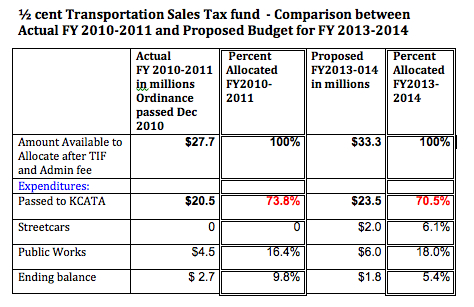
Based on Ordinance 100951, city non-transit uses were supposed to start shrinking in 2011 so the KCATA budget could rise to 95% of the available funds from the ½ cent Transportation Sales tax by 2014. KCATA would only be allocated 71% of the available funds in the new budget.

The 2003 and 2008 elections for a 3/8 cent sales tax were based on the assumption that the ½ sales tax would continue to go to the KCATA but here is what actually happened.

1_2_cent_comparison_2003_2014

Up until now the city has ignored its own ordinance and continued to spend money on other priorities.

Contrary to what most people think, KCATA has not been receiving 7/8 cents in sales taxes (sum of ½ cent and 3/8 cent sales taxes). In the proposed budget KCATA is budgeted LESS money from the ½ cent transportation sales tax than it received in 2003 although receipts have increased considerably.

In 2003/2004 the city was only using $1.3 million for non-transit uses from the ½ cent transportation sales tax.

Here’s what we propose:

  1. Table the new ordinance: it is not needed.
  2. Move $5 million from Public Works Capital Improvements to KCATA. That would move the budget closer to complying with the current ordinance and eliminate the need for KCATA to use up its emergency money. Based on the ordinance, KCATA should be receiving close to 88% of the 1/2 cent Transportation Sales Tax for the proposed budget.
  3. Due to the short time-frame, use $2 million from the Public Mass Transportation Fund  for the streetcar for this one-year only.
  4. Once the budgeting process is completed, begin working on alternative funding sources for the $2 million, preferably out of the TDD.  The city sold the idea of the streetcar being funded out of the TDD. Do this and provide long-term financial stability for the streetcar using those new funds.
  5. Convene the Transit Working Group that Councilwoman Circo proposed at the March 6 meeting of this committee, and let that group take some time to explore all of the transit-related issues involved.  There are a lot of issues, and decisions related to transit should not be made in a vacuum.
  6. Include Transit Action Network in that Transit Working Group, as we asked two weeks ago.

The council can work this out, but the time is running out. The budget has to be voted on next week.

Contact Kansas City Mayor and City Council

Mayor’s office 816-513-3500 email Mayor@kcmo.org

Council office 816-513-1368

Go to http://kcmo.org/CKCMO/CityOfficials/CityCouncilOffice/index.htm for phone numbers and emails for specific council members

TAN has been writing about this issue since January when the city manager released his proposed budget for FY 2013/2014.

See previous articles for more information.  KCATA and the KCMO Budget-Video of the March 6 hearing of the Finance, Governance and Ethics Committee

Posted in Action, Events, Local Transit Issues | Tagged: , , | Leave a Comment »

KCATA and the KCMO Budget-Video of the March 6 hearing of the Finance, Governance and Ethics Committee

Posted by Transit Action Network on March 13, 2013


METRO ogoPeople are  speaking up about the failure of Kansas City’s proposed budget for FY2013-2014 to properly fund KCATA as required by Ordinance 100951 and expected by elections in both 2003 and 2008.

Watch the testimony: http://kansascity.granicus.com/MediaPlayer.php?view_id=2&clip_id=7223kcmo_big_logo

Testimony related to transit begins at 38:30 and ends about 1:41:30

  • Loretta Jackson-Cowans about 38:30
  • Councilman Ed Ford about 41:40
  • Councilwoman Marcason about 46:40
  • Mark Huffer of KCATA about 48:02
  • Councilwoman Cindy Circo about 1:05:08  – We need to create a working group…
  • Councilman Michael Brooks about 1:07:00
  • City Manager Troy Schulte about 1:07:12
  • Jonothan Walker of ATU about 1:19:22
  • Sheila Styron of The Whole Person about 1:23:25
  • Janet Rogers of Transit Action Network about 1:26:13
  • Ron McLinden of Transit Action Network about 1:33:02
  • Closing remarks by Council members about 1:39:10
  • End of transit testimony about 1:41:30

Lynn Horsley’s KC Star article about the meeting http://www.kansascity.com/2013/03/06/4103920/concern-about-kc-bus-money-going.html

Get more information:  Attend KCMO Finance Committee Meeting March 6 – – City Wants to Replace Ordinance That Restored Funding to KCATA

Posted in Events, Local Transit Issues | Tagged: , , | Leave a Comment »

Attend KCMO Finance Committee Meeting March 6 – – City Wants to Replace Ordinance That Restored Funding to KCATA

Posted by Transit Action Network on March 5, 2013


kcmo_big_logoPlease attend the Finance Committee meeting tomorrow to object to replacing Ordinance 100951, which restored funding to KCATA, with a different ordinance. Even if you don’t speak, your presence in support of transit is very valuable.  If you can’t make the meeting, continue to contact the Mayor and council members.

Finance, Governance & Ethics Committee
March 6, 2013 at 8:30 am
10th Floor Committee Room
City Hall
414 E. 12th Street
Kansas City, MO 64106

Since the City Manager released his budget for FY 2013-2014 Transit Action Network has been fighting against the city’s blatant violation of Ordinance 100951, which was passed in 2010 to restore funding to KCATA.

Instead of restoring funding to KCATA the city is unilaterally increasing money to non-transit projects. In 2003 only 5% of the money went to non-transit projects, but this budget has increased non-transit expenses to 18%. In 2010, when we exposed what the city was doing, the council passed Ordinance 100951 to restore funding to KCATA up to the 95% level by May 2014. In 2010 non-transit projects received  $4.5 million and the ordinance required them to start decreasing this amount in order to increase the KCATA amount. Instead they have purposely ignored the ordinance and raised the non-transit budget to $6 million in the proposed budget.  There is no excuse for this since we started reminding the mayor, council and the city manager about this ordinance last September.

So we spoke up again this year asking the council to

  1. Honor its commitment to voters and taxpayers
  2. Obey Ordinance 100951 – – the KCATA share should be close to 88% of the available money in this budget, instead of only 71%
  3. Support the bus system and fully pay the bill for bus service to KCATA instead of forcing KCATA to use $5 million of emergency funds to keep the buses rolling at this level.

Instead responses have included

1 So what if KCATA has to use up the emergency money.

2. So what if we made a promise to the voters-we make promises all the time we don’t keep.

3. We aren’t doing anything wrong because we aren’t cutting service (Does it occur to them that service will have to be cut when the emergency money runs out so this is not a sustainable plan for funding transit? Does it occur to them that it is coercive to force a congressionally chartered bi-state authority to use its emergency funds to provide their transit service?)

4. So what if we are violating the ordinance-we’ll just change it like we do all the time.

And changing the ordinance is exactly what they are planning on doing. Instead of moving in the direction to restore money to KCATA, they are working on a new ordinance to do exactly what they want instead of what voters wanted. I think people believed Mayor James when he commented on this issue BEFORE he was elected, so why is he taking the opposite position now?

Candidate James, February 2011: First, we must restore trust in City Hall and confidence that we are spending tax dollars wisely. As I mentioned before, I will make sure that money goes to the purpose specified by voters.  For example, I will make sure that the tax revenue voters devoted to the KCATA gets to the KCATA.  Withholding such devoted funds breeds the type of widespread distrust of City Hall that must be fixed.

Although the meeting is about the budget and this ordinance is about providing transit vs diverting that money to other uses, it is significant that this committee also reviews the city Ethics and Governance issues.

We would like to know how it is ethical to take tax money and then unilaterally decide to spend it somewhere else.  The deal made with voters was more contractual than just a casual promise.

1. TWICE the city made a well documented offer to voters – – if voters agreed to pay another 3/8-cent sales tax for transit, then the city would add the new money to the ½ cent transportation sales tax and KCATA would receive 7/8 cents in sales tax to provide a bigger, better bus system.

2. The voters accepted this offer by passing the new transit tax.

3. Millions of tax dollars are collected to pay for the bus service.

Instead there has been an increasing amount of money diverted to non-transit uses even after Ordinance 100951 was passed to correct this failure to fulfill the explicit contract.  If you made this type of deal with a business, then the failure to comply would be an obvious breach of contract. It is not ok to use your money for something other than what was agreed to in the contract. If nothing else, why isn’t this a serious ethics violation?

Governance is not just about passing laws, regulations and ordinances – it is about enforcing them. Why is the head administrator allowed to ignore direction from the elected officials and an important ordinance by diverting millions of dollars to projects of his choice instead of where both the voters and the council have directed him to spend the money?  Why is the response to this flagrant disrespect for the rule of law (which an ordinance is) allowed? Why, instead of making him change the budget, is the city considering changing the ordinance?

If KCATA has to severely cut service in a couple of years, you’ll be told that KCATA was given 7/8 cents in sales tax and they couldn’t live within their means. That explanation will be a serious distortion of what happened.

How does the streetcar fit in? Although the $2 million is small in comparison to the money being diverted to non-transit uses, it is significant over time. If they take $2 million for the 25 year length of the bonds, that is $50 million dollars being taken away from the bus service. That is about 20 years of operating the Troost MAX service. That $2 million could pay to operate a Prospect or North Oak MAX. The money they want to take for the streetcar isn’t excess money lying around. Using the money for roads and streetcars will have a negative impact on bus service levels in the foreseeable future.

Although the streetcar is a great addition to transit in the city it is not a game changer for the vast majority of riders and it doesn’t reduce the city’s responsibility to provide bus service throughout the city. They shouldn’t be taking any money from the bus funding until they have exhausted the funding mechanisms in the Transportation Development District (TDD), which they have not done.

Don’t be naive and think the streetcar is only going to take the $2 million. Don’t fall for the “it is all transit“ line. Once they start identifying this money for streetcars, then expect any additional streetcars to take even more money away from the bus system.  Although it may seem good to limit the streetcar amount to the $2 million they have in this budget, it still sets the precedent that this is streetcar money and they will just change the ordinance in the future if they want more.

If the city wants to use this money for the streetcar, then let it be from the 5%.  What we don’t want is to start carving away at this money, which is all the bus system has. We don’t want 5%-20% to Public Works, 6% to the first streetcar, 5%-17% hoarded in the ending balance, more streetcars, etc., etc.

Keep it simple – – 95% to KCATA for bus service and they can use the rest as they please for transportation. The 5% can be used for public works, streetcars or any ending balance in the account.

Below is the proposed ordinance as it stands. Of course, they may have filled in the blanks by Wednesday.

Ask for

The first blank:  95%

Second blank: providing bus service through KCATA.

This would keep the ordinance basically as it is.

ORDINANCE NO. 130173

Amending Chapter 68, Article VII, Code of Ordinances of Kansas City, Missouri entitled “Sales Taxes,” by repealing Section 68-472.1 and enacting in lieu thereof one new section of like number and subject matter which pertains to the distribution of the transportation tax.

BE IT ORDAINED BY THE COUNCIL OF KANSAS CITY:

Section 1. That Chapter 68, Article VII, Code of Ordinances of Kansas City, Missouri, entitled “Sales Taxes,” is hereby amended by repealing Section 68-472.1, and enacting in lieu thereof one new section to read as follows:

Sec. 68-472.1. Distribution of tax.

After deducting the City’s two percent cost of handling authorized by RSMo 92.418 and fulfilling any Tax Increment Financing obligations, at least __________ percent of the remaining sales tax for transportation imposed by Sec. 68-471 of this article and deposited in the City’s Public Mass Transportation Fund shall be used for ___________________.

See previous post: Public Budget Hearing Saturday Feb 23  Speak Up About the Millions Diverted From KCATA

Posted in Action, Events, Local Transit Issues, Rail | Tagged: , , | Leave a Comment »

Public Budget Hearing Saturday Feb 23 Speak Up About the Millions Diverted From KCATA

Posted by Transit Action Network on February 22, 2013


kcmo_big_logoLast KCMO Public Budget Hearing for FY 2013-2014

Saturday, February 23
9am to 11am
KCPD South Patrol Division (main entrance)
9701 Marion Park Drive , KCMO 64137

In 2003 and again in 2008, Kansas City passed a 3/8-cent transit sales tax in order to build a bigger better bus system. It was a package deal: the 3/8-cent transit tax would add to the already existing ½ cent transportation sales tax (which previously had been the only source of funding for the Metro) to provide KCATA with the equivalent of 7/8 cents sales tax for operating the Metro.  That is NOT what happened.METRO ogo

In the City’s proposed budget for FY 2013-2014, KCATA is getting less than 6/8 cents in sales tax. The city is diverting nearly $10 million away from KCATA even though they are violating Ordinance 100951 to do so.

For the proposed FY2013-2014 budget, 1/8-cent sales tax generates a little over $8 million.

$10_million_shortIf the city was obeying the ordinance and started incrementally increasing the KCATA share of the ½ cent transportation sales tax in May 2011, then KCATA would be getting about $6 million more in the FY 2013-2014 budget. If KCATA only got $5 million more in this budget, they would not have to bleed out the reserve account to maintain service.

Saturday is the last public budget hearing to comment on the city diverting money away from KCATA despite the clear intention of voters that the full 7/8 cent of sales tax should support the bus system.  However, continue to contact the mayor and your council members though March until the budget is adopted.

Where is nearly $10 million going in the proposed budget instead of to KCATA?

  • $6 million to non-transit projects in public works – 18% of the money
  • $2 million to the streetcar – 6.1%
  • Almost $2 million is held back by the city  – 5.4%
    • The previous two years, the city hoarded over $5 million in the fund rather than pass the money on to the KCATA.

    At this point, KCATA is not going to get one more dollar than it did this year.

This diversion of tax money away from the KCATA is not new. This is why in 2010 we approached the city to pass an ordinance that required the city manager to give 95% of the ½ cent transportation sales tax to KCATA by May 2014, and to start incrementally increasing the KCATA share of the money in May 2011. This ordinance meant the city would comply with the promises made to voters in the two earlier elections. Instead the city has violated the ordinance every year. KCATA is getting a smaller share of the fund than it did in 2010. The KCATA share has gone from 74% down to 71%.

1_2_comparison_again

Voters should understand that legally the city could trash Ordinance 100951 and totally ignore the two elections and give all the ½-cent transportation fund to roads and streetcars. Voters never get to vote on this money since it is taxing authority given to the city from the State of Missouri. That is why we approached the council in 2010 and tried to protect the bus service from encroachments from other projects by passing the ordinance. Up to this point the city has chosen to flagrantly ignore that ordinance.

In fact, the city manager is already saying he wants the council to change the ordinance. One possibility for changing the ordinance being openly discussed is to allocate $2 million to the streetcar off the top and let KCATA have 95% (or less) of what is left.

No matter how great it is to have a streetcar and give more money to roads, the bus system still has to carry the heavy load of transporting nearly 55,000 people daily to work and home and all their other transit trips. And KCATA ridership is increasing. Kansas City is huge geographically and it takes a lot of money to transport people over all these miles.  Continue to shrink the money, expect to shrink the service area and service level.

For a change, we would prefer to see KCATA fully funded and get MAX systems added to Prospect and North Oak, instead of having to cut service in a couple of years. There are consequences to the city’s actions.

The city council still has time to fix all of this. Do they have the will? Some of the council members do, such as Ed Ford and John Sharp. Please contact the mayor and the city council and let them know what you think about taking all this money away from the Metro.

Previous posts:

Action Alert! KCMO City Manager’s Budget Is Failing The Transit System

Speak Up to Restore KCATA Funding and Listen to KKFI To Get the Scoop

Lynn Horsley’s column in the KC Star http://www.kansascity.com/2013/02/08/4056689/bus-backers-worry-about-funds.html

Listen to Janet Rogers, co-founder of Transit Action Network discuss this issue on KKFI radio’s TellSomebody, hosted by Tom Klammer on Feb 5, 2013

http://tellsomebody.libsyn.com/city-manager-schulte-reneges-on-transit-funding-obligation

Contact Kansas City Mayor and City Council

Mayor’s office 816-513-3500 email Mayor@kcmo.org

Council office 816-513-1368

Go to http://kcmo.org/CKCMO/CityOfficials/CityCouncilOffice/index.htm for phone numbers and emails for specific council members

Posted in Action, Events, Local Transit Issues | Tagged: , , | Leave a Comment »

KC Downtown Streetcar Open House – Feb 21 (To be re-scheduled due to snow)

Posted by Transit Action Network on February 20, 2013


Enjoy the first KC Downtown Streetcar Open House in Union Station’s Grand Hall. The event is hosted by the City of Kansas City.KC_streetcar

Detailed exhibits will be on display illustrating the two-mile route, including information about construction, station stops and the vehicle maintenance facility. No presentation will be made so visit anytime during meeting.

Construction is planned to start in late spring or early summer, so property owners, business owners and residents along the route are encouraged to attend the meeting and share their thoughts and concerns with representatives of the City and the consultant team.

Date and Time: Thursday, Feb 21 between 4 pm and 7 pm

Location:

Union Station,Grand Hall
30 W. Pershing Ave.
Kansas City, MO

For more information about the project, visit the Downtown Streetcar website at http://www.kcstreetcar.org for updates on the project and road closure and detour information.  You can also call the streetcar hotline at 816-822-3011.

Posted in Events, Local Transit Issues, Rail | Tagged: | Leave a Comment »

Online Transit Forum – Candidates for Mayor of WYCO/KCK

Posted by Transit Action Network on February 19, 2013


UG logoTAN asked all of the candidates for Mayor of the Unified Government of Wyandotte County/Kansas City, Kansas to answer questions about transit to help voters understand their positions on this critical issue. We appreciate candidates Janice Witt, Ann Murguia, Mark Holland and Nathan Barnes for talking the time to respond to our questionnaire and sharing their philosophy, vision and ideas on transit.

We have chosen questions on Transit Philosophy, Funding, Meeting Increased Transit Demand, KCATA, and Creating a Transit-Friendly Environment.

The whole document with all the responses can be downloaded at the end of the article. Be sure to send this article to citizens of Wyandotte County so they can be informed about the candidates’ positions.

Transit is a major issue in Wyandotte County since there is significant demand for a good transit system from the citizens.

The answers are given in the order TAN received them. We do not endorse a particular candidate but believe voters should be well-informed as to candidates’ knowledge of the subject and their positions. The responses are color coded in order to improve ease of reading and finding the response from a particular candidate. The candidates’ initials are used to identify their responses. JW=Janice Witt, AM=Ann Murguia, MH=Mark Holland, NB=Nathan Barnes

Section 1- Transit Philosophy

A. What do you see in the future for transit in Wyandotte County?

Janice Witt

Janice Witt
responses in black

JW – I see a beautiful transit system that is clean, efficient and respectful. One that is conducive for everyday riders to commute from and to any community or destination without trading their self- respect for a ride. I see beautiful, respectful and functional covered bus stops/landings with time and information accessible and powered by solar energy to maintain the positive green effects of the use of transit instead of personal transportation.

AM – We need to create the kind of public transportation system that incent ridership.   I think we are off to a good start with the $10 million grant we received to improve the State Avenue corridor, but we need to do more.

MH – I think we are going to have to be very creative in addressing the needs of our community.  State and Federal funding has been under attack, and these funds are essential to providing the level of service necessary to serve our community.  My hope is to improve access to transit.

I supported the “Complete Street” initiative that calls for more sidewalks.  Without access for people to walk to the bus from their neighborhoods, it becomes very challenging to increase ridership.

NB – Under my administration I see Wyandotte County a fully integrated system with more routes and bigger buses.

B.   Do you support continued county funding of public transit as an essential service throughout Wyandotte County? 

JW – Yes, without transit the small businesses in Wyco would have no means to acquire manpower other than personal transportation. Without transit the poor will remain in the cycle of poverty because of a lack of transportation. If they have no access to fresh groceries and further education, the cycle of poverty continues.  Without transit there will continue to be a drain on mental well-being, health outcomes and isolation issues that plaque Wyco.

Ann Murguia

Ann Murguia
responses in green

AM -Yes….many WYCO residents depend on public transportation to meet their daily needs.  The government needs to assist in developing a quality state of the art system that will create such demand, that over time, through ridership, will pay for itself.

MH – Yes.  I wish it were stronger, but I believe there will always be a need for a local match for State and Federal funds.

NB – Yes. It is a city and county issue and our city and county should address funding.

C.   Federal funding is dramatically decreasing for ALL transit. A decrease in State transit funding is also a possibility. Should Unified Government replace these lost funds, both capital and operating, in order to maintain the current level of transit service?

 JW – I believe that there should be a small percent sales tax added in KCK, so that we can build ourselves the transit system that we need to make our community mobile and viable to incoming business, homeowners and new adventures both into the Northeast and our entire community. Edwardsville, Turner, Bonner all of these surrounding communities that are considered any part of KCK should have access to the positive effects of mass transit. It helps us all in the long run. I also hold no aversion to a bi-state tax and joining the concept of a regional transportation authority to give smooth, efficient service to all of our communities. Why do I find this acceptable? Because right now as we speak, Schlitebahn has a proposal before our commission to tax an additional 2% sales tax to build on to their already subsidized private venture waterpark. This has ZERO benefit to the everyday citizen of Wyandotte County. It is a personal or Corporate business expense that is being added on the people who will then have to pay exorbitant fees to get into the water park even though they have paid for it twice now at the cost of our fair grounds which gave Free access to the people of this county to educational and social experiences. Unlike a bus system, which would give access for minimal fees to anyone who needed transportation hopefully anywhere in KCK, JOCO or KCMO.

AM –  I don’t think government is our only option when it comes to public transportation funding.  The philanthropic community has a lot of interest in seeing a more healthy Kansas City.  I have good relationships with this community and would hope to be able to work with them and private business to offset some of the costs associated with developing a quality transit system that over time could sustain itself.

Mark Holland

Mark Holland
responses in blue

MH – We are facing State and Federal funding cuts in numerous areas.  Transit is one that is heavily dependent on this funding.  It would be nice to say that we will not cut services, but the reality is that if this is not a national priority we will be hard pressed to replace the loss dollar for dollar.

NB – Yes.The transit system is currently under funded. The least we can do is to keep the funding going. I will take Wyandotte County from the welfare mentality to the understanding that it is our responsibility to fund basic transportation.

Section 2 – Funding

A.   Currently local transit funding in Wyandotte County comes out of General Revenue Funds.

1. What local transit funding mechanisms do you think are best for Wyandotte County?

JW – I believe that there should be a percent sales tax especially in the number one tourist destination in the state of Kansas. There must be some benefit to the citizens of this county.

AM – I think there needs to be new ideas in addressing funding for transit. This is a long-standing problem for governments across the metropolitan area and nationally.  As I said above, I don’t think government is our only option when it comes to public transportation funding.  The philanthropic community has a lot of interest in seeing a more healthy Kansas City.  Public transportation promotes a healthier lifestyle.  I would hope to be able to work with charitable organizations and private business to offset some of the costs associated with developing a quality transit system that over time could sustain itself.

MH – I think General Fund dollars are the best place for this fund.

Nathan Barnes

Nathan Barnes
responses in purple

NB – A dedicated sales tax.

2. Would you consider a small county-wide transit tax to help sustain the transit system Please explain your reasoning.

 JW – What I would consider is this, the bulk of the transit that is necessary at this moment involves the Legends area and transit for the dwindling population of the Northeast and other areas to get to the businesses in the West and the KU area. The specific serviced section of the community will bear the brunt of the cost over the long run every day by using the service and paying standard fees. It is my opinion that, the business districts that benefit are the areas that should bear the bulk of any percent of tax increase, as the citizens would also be included in the revenue from the increase in purchases made in that area. If a separate tax district could be utilized to ensure that the small businesses of our general community are not harmed by this increase I would not be against it. But my mind is open, this is an issue that needs to be at the forefront of conversation, but I need more information.

We are taxed to support abatements for corporations but never given the opportunity to support ourselves. I do not believe the people would have a problem with this if they could see and use the benefit.

AM – I think any time we talk about taxing the people in WYCO that needs to be placed on a voting ballot.

MH – That would not be my first choice.  When we unified the government 16 years ago, we brought a whole plethora of “special taxes” back into the General Budget.  I understand the thought that it looks like more of a priority if it stands alone, but I think it is unnecessarily cumbersome in annual budgeting process.

NB – Yes.With decreasing federal funds it is the only choice.

B.   Transit demand in Wyandotte County continues to increase.  How and where would you get additional local transit funding to meet the increasing demand?

 JW – Small percent tax approved by the citizenry.

 AM – I think it is simple supply and demand.  As transit demands increase our product will become better and ridership will increase and therefore revenue from riders will increase.

MH – I think this is where we need to be creative.  It is very difficult to put the cost on users, who in our particular community are often the least able to support it.  We need to continue tracking which lines are running at capacity and which ones are not.  Are there areas where we can expand call for service?  Are there areas where we can run smaller vehicles?  We need to keep in mind the goal of transit is to get people from point A to point B, not just to run buses.

NB – I will get additional local transit funding to meet the increasing demand from Sales Taxes.

C.   How will you work to increase Wyandotte County’s level of transit funding

1.    at the state level?

AM – On many occasions I have been successful in reaching across party lines and will use that experience to lobby for public transportation.

MH – We need to continue to lobby for State funding based on ridership and not on population.  This is one of the biggest challenges.  Transit money should follow the need, not the area.

2.    at the federal level?

AM – Again I have good relationships with our elected officials on the federal level that will allow my voice to be heard for the people of Wyandotte County.

MH – We need to continue to engage with regional lobbying efforts.  These collaborative conversations with the entire Metro area will yield far better results than if we go individually.  I think the ongoing success of KCATA is the best hope Wyandotte County has for more funding.

State and Federal

JW – The very best that I can! Those who know how this should be handled will give me guidance and I will follow their lead. I am not a micromanager. I believe that people gain the knowledge, skills and abilities to do the job that they are hired to do. As a manager I would ensure that we had the proper staffing with the proper tools to do the proper job and make the right decisions for the greater good of this community. It is my job to educate myself to their findings and support their position. In my opinion if I cannot trust them to do all of that, then I have failed as their leader. I would educate myself further, follow their lead since this would be their field and be support to good strong decisions on the local, state and federal levels.

NB – I plan to Lobby efforts at both state and federal.

Section 3 – Meeting increasing demand

A.   Areas such as Rosedale, with very limited transit service, are trying to get additional service to meet the needs of its residents, many of which are transit dependent.  What process should exist and/or what criteria should be met in order for residents to get new or expanded transit service?

JW – I would want more info and there is not enough time for me to make myself familiar enough to make a statement in section 3.

AM – I think we have many great opportunities in Rosedale specifically to improve transit in some very creative ways.  We already have a great relationship with University of Kansas and I definitely think involving them in discussions about public transportation can help improve services for that area of WYCO.  But do not forget that there are other areas that struggle to get their fair share of public transportation like the Turner area.  Those residents tax dollars pay for that service yet they receive nothing for it at this time.  This situation needs to be addressed as well.

MH – Again, creativity.  Is there a way to add call for service?  How can we partner through KCATA and the Jo, leveraging the proximity to KCMO and Johnson County?

NB – I must gain the true picture of the needs of the residents and then act on what is needed. Convene a meeting or meetings to address these individual concerns.

 B.   Route 101 will change to the Connex service later this year.  Will you make sure that the upgrade in service level is enough to alleviate the current overcrowded conditions, without negatively impacting other services?

JW – I would want more info and there is not enough time for me to make myself familiar enough to make a statement in section 3.

AM – As to the details of the routes, we hire professional transit staff that make those decisions.  These are not made at the Commission level.  I have confidence in our staff and their ability to manage over crowding without impacting other services they provide.

MH – Absolutely.  It looks like this improvement will make a huge difference.

NB – I pledge to aggressively pursue answers to address these concerns.

Section 4 – KCATA

A.   What characteristics would you look for in making appointments to the KCATA Board of Commissioners?

JW – I believe that anyone appointed to any commission should have a genuine interest in the community. Not just be there to fill a seat. I am looking for constant results from appointed commissions. If nothing is being changed. Nothing is being done, because no one is perfect and there is always room for improvement and we should be finding it by listening to the citizens. They will surely tell us the problems and maybe even how to fix it if we listen.

AM – I believe that the characteristics of the current Board members are what we need to maintain in the future.

MH – We need collaborative, regionally minded individuals who have a heart for all the benefits transit brings to the people and the environment.

NB – Knowledge of the needs and a passion for those that depend on public transportation

 B.   Unified Government currently contracts with KCATA for only 90 days at a time. This policy gives a negative impression regarding the stability of the transit system in the county.  What needs to happen to return to a full year contract like other municipalities?

JW – Committed long-term relationships based on honesty, respect and concern for the people, no exceptions. If we all care about the people that are riding on the transit including the drivers safety, comfort and health issues, there should be no room to have an issue. The bottom line is that as a business we all have to make money in order to maintain viability. But when the actual product is service and the people are the consumers of that product sometimes the measure for error and success becomes clouded by opinion, personality and politics-I think this is a mistake. I think we should set very specific service guidelines to service both the inside consumer and the outside consumer then let those perimeters establish a rock solid acceptable standard of service for us all. Including a long-term agreement with the KCATA so that the future and expectation for everyone is clear and the repercussions established, should those benchmarks not be met by either party. NO GAMES!

AM – This is a staff decision and I would need to consult with staff to better understand why we are contracting in this manner.

MH – This looks like a reasonable request.  I would need to speak with our team at the city to see why this policy is in place.

NB – An open discussion. Most commissioners are not aware of this.

 C.   Would you consider contracting with KCATA for all fixed route services? Please explain why or why not.

JW – I love the idea and we will have a Transit friendly environment and I believe that KCATA will be the organization to ensure that, that happens. However, I cannot say yes or no to this question at this time since there would have to be in my opinion an opportunity for local business to play a part…potentially managed by KCATA in the growth of transit in the area. It was the mini bus of my childhood that was a privately held company that actually brought transit back to the grasp of those of us country bumpkins that lived in the west in the early 80’s when there was no transit service available. I rode the minibus to and from school during a very specific period of my life. So…I cannot say that I would close small business access to All transit routes without looking further into what that would mean to this community and the potential of other small businesses relocating here to assist in transit service. My crystal ball is cloudy on that one, lol. Ask me again later after I do some research-my mind is always open to offer the best service possible to humanity.

AM – Again, this is a staff decision and I would need to consult with staff before making any changes.

MH – With the State and Federal spending cuts, I don’t think we can take anything off the table.  This would have serious considerations for our UG employees and I would not do anything without seeking assurances about their future.  Again, we need to be creative in how we serve the community.

NB – Once all of the information is presented to the Unified Government I would review the pros and cons of the issue and make a decision. I do believe that the current bus system in Wyandotte County should play some part in that system.

Section 5 – Creating a transit-friendly environment

What non-financial actions can be taken to create a more transit-friendly environment in

1.    Kansas City, Kansas?

MH – We are looking at residential developments in and around the new 7th street transit center downtown.  The more we can foster “transit friendly” development and encourage growth nearby, the better.  We are also looking for a major redevelopment at Indian Springs around the new transit center there.  I think the strategic location of this center automatically makes Indian Springs a new kind of destination.

NB – Regular updates to the powers that be.

 2.    Village West?

MH – Coordinating routes with businesses and restaurants to make sure the buses are running at the right times for opening and closing.  This makes the use of transit a more organic, and less onerous option for the employee.

NB-Make the case for why they should be a part of the discussions and the solution.

KCK and Village West

JW – Retraining in proper customer service and the emphasis on positive outcomes for the customers experience while in transit care. Service is a product. It must be fine tuned constantly to ensure good relationships and long-term viability of business ventures. Especially when the effects are of detriment to healthy lifestyles and a healthy planet. Many times the bus driver will be the only connection to the welfare of some riders. They need to be empowered to be safe consumers of their own product but have the authority to demand change to benefit the entire experience. I think answering the needs of the drivers, mechanics and service vendors of the buses will alleviate stressors that can cause frustration with a frustrated public.

AM – I currently use our transit system on occasion and I find it to be a very friendly environment.  However, I am sure there are always ways to improve and in order to know how to create a “more” friendly environment we need to ask the people using the current system on a regular basis.

Complete transcript:WYCOKCK transit forum for candidates 2013
Posted in Events, Local Transit Issues, Regional Transit Issue | Tagged: | Leave a Comment »

Rosedale Transit Meeting – Feb 19

Posted by Transit Action Network on February 18, 2013


Rosedale, a neighborhood in Kansas City, Kansas, is working to expand transit service on SW Boulevard in order to meet the needs of its community.

Feel free to come to the meeting and share information, make suggestions, or find out more about the project!

Rosedale Transit Meeting

Tuesday, February 19th from 5 pm – 6 pm

Rosedale Development Association • 1403 Southwest Blvd. Kansas City, KS 66103

Call (913) 677-5097 for more information

Posted in Events, Local Transit Issues | Tagged: | Leave a Comment »

Public Hearings On JCT Fare Increase – Feb 12 and 14

Posted by Transit Action Network on February 11, 2013


Johnson County Transit is proposing a fare increase effective April 15, 2013. Public meetings are being held this week.

DATE and TIME:

Tuesday, February 12 from 7 am to 8 am 
Thursday, February 14  from 5: 30 pm  to 6:30 pm

LOCATION:

Sylvester Powell Community Center (meeting room C)
6200 Martway
Mission, KS 66202

Additional comments can be made through March 15 by:

Email: Comments@thejo.com
Phone: 913-715-8255 to leave a recorded message

Mail:

Proposed Fare increase Comments
Johnson County Transit
1701 West 56 Highway
Olathe, Kansas 66061

 Proposed Fare Increases

Click to enlarge

Click to enlarge

Proposed cash fares increases are 50 cents for K-10 and 25 cents for most other routes.

There is an anomaly though because the proposed cash fare increase for Route 812/Jo Flex is $1.25, which is significantly more than the other fare increases. Low-income people living in HUD section 8 housing in Overland Park mainly use this route to get groceries, medicines and other basic needs.  We discussed this route in our Title VI claim dealing with the service cuts. Johnson County does not classify this route as low-income but TAN disagrees. This fare increase appears to place a disproportionate burden on the low-income people who use this route.

Here are the percentage increases to the base cash fares.

K-10 has a 16.7% increase – JCT has identified the K-10 route as both a minority and low-income route

Most Jo routes have a 12.5% increase

Route 812/Jo Flex  has a 125% increase

Equity – Although it is obvious that JCT is proposing that all the non K-10 routes have the same base fare of $2.25, we are concerned that this could create an Environmental Justice issue. We will have to see if the FTA decides that Route 812/Jo Flex is indeed a low-income route.  Different modes of transit service may have different fares without being discriminatory.  Route 812/Jo Flex mainly serves low-income people two days a week for 4 hours, so it hardly seems fair to increase their base fare 125% just to make it the same as the standard and commuter express routes for daily commuters. For riders of Route 812/Jo Flex over 60 years old, they can get relief from the high increase if they purchase a 10 ride reduced fare pass. However, younger low-income people will feel the full brunt of this increase.

Process – We wonder when public meetings will be held in the KCK or KCMO areas that JCT serves?  How do riders or potential riders using a reverse commute and needing a northbound bus after 6:30 pm, when this meeting ends, get to KCK or KCMO using transit? We hope there was a public meeting in Lawrence. Inadequate public participation was the basis of our Title VI claim for the service cuts and we see similar problems with the process for the fare increase.

Fare Structure – We question the wisdom of continuing a fare structure under which very long morning / evening commuter trips from Gardner or Olathe via I-35 have the same fare as much shorter “errand” trips on local streets, such as the 75th Street – Quivira and Metcalf – Shawnee Mission Parkway routes.  KCATA has two categories of routes — regular ($1.50 fare) and commuter (generally $3.00).

Posted in Events, Local Transit Issues | Tagged: , | Leave a Comment »

KKFI EcoRadio Discusses KC Transit Issues with TAN on Feb 11

Posted by Transit Action Network on February 10, 2013


KKFI 90.1 FMEcoRadio on KKFI Community Radio, 90.1 FM,  discusses transit issues in the Kansas City region on Monday, Feb 11 at 6 pm with TAN co-founder, Ron McLinden.

From EcoRadio, “America’s car culture must end soon if we’re going to avoid catastrophic climate disruption, and it will be forced to end over time as global oil production peaks and begins to decline, driving up fuel prices. We can’t expect Kansas Citians to drive a lot less until we give them safe and comfortable alternatives, though. Host John Kurmann will talk with Ron McLinden of the KC Transit Action Network about plans for streetcars running between the City Market and Crown Center, commuter rail in Jackson County, the City of Kansas City, MO’s failure to fully fund bus service, and how we can make our regional transit system easier to use.”


Posted in Events, Local Transit Issues, Rail, Seamless Transit | Tagged: , | Leave a Comment »