Transit Action Network (TAN)

Advocates for Improved and Expanded Transit in the Kansas City Region.

Attend MoDOT Long-Range Plan Meetings in Kansas City – March 12, 13 and 14

Posted by Transit Action Network on March 11, 2013


MOTMMoDOT is inviting input on the latest update of its long-range transportation, “On the Move.” It is extremely important that transit advocates attend the meetings to make sure transit is a priority.

The project website http://www.missourionthemove.org/about-on-the-move/ says,
“On the Move is a community engagement effort led by the Missouri Department of Transportation (MoDOT) to gather direction and insight from Missourians on major transportation issues and priorities across the state.”
 
Three “listening sessions” are scheduled for Kansas City this week.

KCI Expo Center, Ambassador Room
11730 NW Ambassador Drive , Kansas City, MO, 64153
March 12, 2013 6:00 pm
Link to RSVP: http://www.missourionthemove.org/event/on-the-move-listening-session-kansas-city-region/ 
 
 
UMKC, Atterbury Student Success Center, Pierson Auditorium
5000 Holmes Street, Kansas City, MO, 64110
March 13, 2013 5:00 pm
Link to RSVP:http://www.missourionthemove.org/event/on-the-move-listening-session-kansas-city-region-2/  
 
Union Station, Chamber Board Room
30 West Pershing Road, Kansas City, MO, 64108
March 14, 2013 5:00 pm
Link to RSVP: http://www.missourionthemove.org/event/on-the-move-listening-session-kansas-city-region-3/

Mo_transit_fundingMoDOT is asking for RSVP’s to attend these sessions, but we encourage you to attend even if you have not RSVP’d.

While the purpose of the meetings seems simple enough — to gain public input to update the LRTP — it’s complicated by the fact that legislation is moving through the Missouri General Assembly to put a one-penny sales tax for transportation on the ballot in 2014.  That tax would be for a ten-year period, and would fund a list of specific projects. 

Thus, there’s some ambiguity about whether these meetings are just about long-range needs, or whether they are also about coming up with a project list.  Even top MoDOT staff have not been able to express clearly how the listening sessions will relate to the project list.

Our hope is that the listening sessions will stay focused on the big picture — Missourians’ long-term needs and desires — rather than individual projects.  Ask people about long-term needs and that’s what they’ll think and talk about.  Ask them what projects they want and the session could turn into a “my project is more important than yours” contest.

Nonetheless, transit advocates need to attend the listening sessions this week to help assure that additional funding for transit is included in whatever package is ultimately presented to the voters. Identify and prioritize the long-term needs and desires first, then choose projects to fulfill that list.

We suggest you take the following perspective into whichever listening session you attend:

  •  Roads and bridges are important, but Missouri also needs to increase its investment in other transportation alternatives.
  • Missouri’s population is aging, and with that goes an increased need for both urban and rural public transit.  Missouri currently provides less than $1 million per year to all transit providers combined — only $119,000 this year for KCATA.  Nearly every other state with an urban population invests much more in transit.
  •  More and more people are voting with their pocket books to drive less and use transit more.  That’s reflected in the decline in the percent of adults who have a driver’s license, a trend that’s evident in every age group but especially among young adults.
  •  MoDOT should continue to add accommodations for cyclists and pedestrians along its routes, particularly in cities and towns.
  • Missouri needs a stable source of funding to continue and increase the popular “Missouri River Runner” trains linking Kansas City and St. Louis.  These trains are operated by Amtrak but funded by Missouri.

So please attend one of the meetings and tell them to make transit a priority.

http://www.missourionthemove.org/community-engagement/schedule-of-events/

You can also express what you want to see in Missouri’s transportation future online.

http://www.missourionthemove.org/community-engagement/project-suggestion-form/

See The Blue Ribbon Citizens Committee on Missouri’s Transportation Needs Final Report 2013

Posted in Events, Regional Transit Issue | Tagged: , | Leave a Comment »

KC Downtown Streetcar Open House Re-scheduled for Mar 6

Posted by Transit Action Network on March 6, 2013


Attend the KC Downtown Streetcar Open House on March 6.KC_streetcar

Union Station from 4-7 pm.

This open house is re-scheduled from February 21.

Link to the  information boards, factsheet and maps. If you have any questions about these materials or the KC Downtown Streetcar project, please email the team at info@kcstreetcar.org or call them  at 816-822-3011.

http://www.kcstreetcar.org/publicmeetinginfo.htm

Posted in Events, Rail | Tagged: | Leave a Comment »

Attend KCMO Finance Committee Meeting March 6 – – City Wants to Replace Ordinance That Restored Funding to KCATA

Posted by Transit Action Network on March 5, 2013


kcmo_big_logoPlease attend the Finance Committee meeting tomorrow to object to replacing Ordinance 100951, which restored funding to KCATA, with a different ordinance. Even if you don’t speak, your presence in support of transit is very valuable.  If you can’t make the meeting, continue to contact the Mayor and council members.

Finance, Governance & Ethics Committee
March 6, 2013 at 8:30 am
10th Floor Committee Room
City Hall
414 E. 12th Street
Kansas City, MO 64106

Since the City Manager released his budget for FY 2013-2014 Transit Action Network has been fighting against the city’s blatant violation of Ordinance 100951, which was passed in 2010 to restore funding to KCATA.

Instead of restoring funding to KCATA the city is unilaterally increasing money to non-transit projects. In 2003 only 5% of the money went to non-transit projects, but this budget has increased non-transit expenses to 18%. In 2010, when we exposed what the city was doing, the council passed Ordinance 100951 to restore funding to KCATA up to the 95% level by May 2014. In 2010 non-transit projects received  $4.5 million and the ordinance required them to start decreasing this amount in order to increase the KCATA amount. Instead they have purposely ignored the ordinance and raised the non-transit budget to $6 million in the proposed budget.  There is no excuse for this since we started reminding the mayor, council and the city manager about this ordinance last September.

So we spoke up again this year asking the council to

  1. Honor its commitment to voters and taxpayers
  2. Obey Ordinance 100951 – – the KCATA share should be close to 88% of the available money in this budget, instead of only 71%
  3. Support the bus system and fully pay the bill for bus service to KCATA instead of forcing KCATA to use $5 million of emergency funds to keep the buses rolling at this level.

Instead responses have included

1 So what if KCATA has to use up the emergency money.

2. So what if we made a promise to the voters-we make promises all the time we don’t keep.

3. We aren’t doing anything wrong because we aren’t cutting service (Does it occur to them that service will have to be cut when the emergency money runs out so this is not a sustainable plan for funding transit? Does it occur to them that it is coercive to force a congressionally chartered bi-state authority to use its emergency funds to provide their transit service?)

4. So what if we are violating the ordinance-we’ll just change it like we do all the time.

And changing the ordinance is exactly what they are planning on doing. Instead of moving in the direction to restore money to KCATA, they are working on a new ordinance to do exactly what they want instead of what voters wanted. I think people believed Mayor James when he commented on this issue BEFORE he was elected, so why is he taking the opposite position now?

Candidate James, February 2011: First, we must restore trust in City Hall and confidence that we are spending tax dollars wisely. As I mentioned before, I will make sure that money goes to the purpose specified by voters.  For example, I will make sure that the tax revenue voters devoted to the KCATA gets to the KCATA.  Withholding such devoted funds breeds the type of widespread distrust of City Hall that must be fixed.

Although the meeting is about the budget and this ordinance is about providing transit vs diverting that money to other uses, it is significant that this committee also reviews the city Ethics and Governance issues.

We would like to know how it is ethical to take tax money and then unilaterally decide to spend it somewhere else.  The deal made with voters was more contractual than just a casual promise.

1. TWICE the city made a well documented offer to voters – – if voters agreed to pay another 3/8-cent sales tax for transit, then the city would add the new money to the ½ cent transportation sales tax and KCATA would receive 7/8 cents in sales tax to provide a bigger, better bus system.

2. The voters accepted this offer by passing the new transit tax.

3. Millions of tax dollars are collected to pay for the bus service.

Instead there has been an increasing amount of money diverted to non-transit uses even after Ordinance 100951 was passed to correct this failure to fulfill the explicit contract.  If you made this type of deal with a business, then the failure to comply would be an obvious breach of contract. It is not ok to use your money for something other than what was agreed to in the contract. If nothing else, why isn’t this a serious ethics violation?

Governance is not just about passing laws, regulations and ordinances – it is about enforcing them. Why is the head administrator allowed to ignore direction from the elected officials and an important ordinance by diverting millions of dollars to projects of his choice instead of where both the voters and the council have directed him to spend the money?  Why is the response to this flagrant disrespect for the rule of law (which an ordinance is) allowed? Why, instead of making him change the budget, is the city considering changing the ordinance?

If KCATA has to severely cut service in a couple of years, you’ll be told that KCATA was given 7/8 cents in sales tax and they couldn’t live within their means. That explanation will be a serious distortion of what happened.

How does the streetcar fit in? Although the $2 million is small in comparison to the money being diverted to non-transit uses, it is significant over time. If they take $2 million for the 25 year length of the bonds, that is $50 million dollars being taken away from the bus service. That is about 20 years of operating the Troost MAX service. That $2 million could pay to operate a Prospect or North Oak MAX. The money they want to take for the streetcar isn’t excess money lying around. Using the money for roads and streetcars will have a negative impact on bus service levels in the foreseeable future.

Although the streetcar is a great addition to transit in the city it is not a game changer for the vast majority of riders and it doesn’t reduce the city’s responsibility to provide bus service throughout the city. They shouldn’t be taking any money from the bus funding until they have exhausted the funding mechanisms in the Transportation Development District (TDD), which they have not done.

Don’t be naive and think the streetcar is only going to take the $2 million. Don’t fall for the “it is all transit“ line. Once they start identifying this money for streetcars, then expect any additional streetcars to take even more money away from the bus system.  Although it may seem good to limit the streetcar amount to the $2 million they have in this budget, it still sets the precedent that this is streetcar money and they will just change the ordinance in the future if they want more.

If the city wants to use this money for the streetcar, then let it be from the 5%.  What we don’t want is to start carving away at this money, which is all the bus system has. We don’t want 5%-20% to Public Works, 6% to the first streetcar, 5%-17% hoarded in the ending balance, more streetcars, etc., etc.

Keep it simple – – 95% to KCATA for bus service and they can use the rest as they please for transportation. The 5% can be used for public works, streetcars or any ending balance in the account.

Below is the proposed ordinance as it stands. Of course, they may have filled in the blanks by Wednesday.

Ask for

The first blank:  95%

Second blank: providing bus service through KCATA.

This would keep the ordinance basically as it is.

ORDINANCE NO. 130173

Amending Chapter 68, Article VII, Code of Ordinances of Kansas City, Missouri entitled “Sales Taxes,” by repealing Section 68-472.1 and enacting in lieu thereof one new section of like number and subject matter which pertains to the distribution of the transportation tax.

BE IT ORDAINED BY THE COUNCIL OF KANSAS CITY:

Section 1. That Chapter 68, Article VII, Code of Ordinances of Kansas City, Missouri, entitled “Sales Taxes,” is hereby amended by repealing Section 68-472.1, and enacting in lieu thereof one new section to read as follows:

Sec. 68-472.1. Distribution of tax.

After deducting the City’s two percent cost of handling authorized by RSMo 92.418 and fulfilling any Tax Increment Financing obligations, at least __________ percent of the remaining sales tax for transportation imposed by Sec. 68-471 of this article and deposited in the City’s Public Mass Transportation Fund shall be used for ___________________.

See previous post: Public Budget Hearing Saturday Feb 23  Speak Up About the Millions Diverted From KCATA

Posted in Action, Events, Local Transit Issues, Rail | Tagged: , , | Leave a Comment »

Public Budget Hearing Saturday Feb 23 Speak Up About the Millions Diverted From KCATA

Posted by Transit Action Network on February 22, 2013


kcmo_big_logoLast KCMO Public Budget Hearing for FY 2013-2014

Saturday, February 23
9am to 11am
KCPD South Patrol Division (main entrance)
9701 Marion Park Drive , KCMO 64137

In 2003 and again in 2008, Kansas City passed a 3/8-cent transit sales tax in order to build a bigger better bus system. It was a package deal: the 3/8-cent transit tax would add to the already existing ½ cent transportation sales tax (which previously had been the only source of funding for the Metro) to provide KCATA with the equivalent of 7/8 cents sales tax for operating the Metro.  That is NOT what happened.METRO ogo

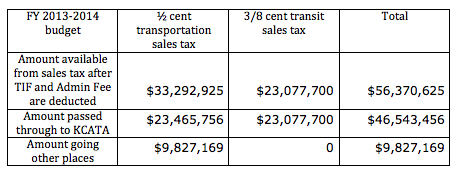
In the City’s proposed budget for FY 2013-2014, KCATA is getting less than 6/8 cents in sales tax. The city is diverting nearly $10 million away from KCATA even though they are violating Ordinance 100951 to do so.

For the proposed FY2013-2014 budget, 1/8-cent sales tax generates a little over $8 million.

$10_million_shortIf the city was obeying the ordinance and started incrementally increasing the KCATA share of the ½ cent transportation sales tax in May 2011, then KCATA would be getting about $6 million more in the FY 2013-2014 budget. If KCATA only got $5 million more in this budget, they would not have to bleed out the reserve account to maintain service.

Saturday is the last public budget hearing to comment on the city diverting money away from KCATA despite the clear intention of voters that the full 7/8 cent of sales tax should support the bus system.  However, continue to contact the mayor and your council members though March until the budget is adopted.

Where is nearly $10 million going in the proposed budget instead of to KCATA?

  • $6 million to non-transit projects in public works – 18% of the money
  • $2 million to the streetcar – 6.1%
  • Almost $2 million is held back by the city  – 5.4%
    • The previous two years, the city hoarded over $5 million in the fund rather than pass the money on to the KCATA.

    At this point, KCATA is not going to get one more dollar than it did this year.

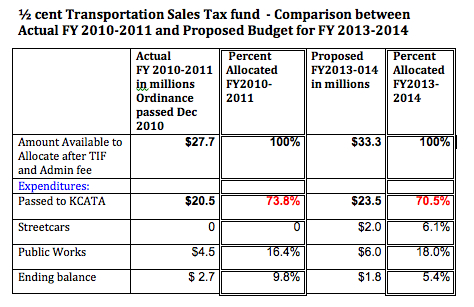
This diversion of tax money away from the KCATA is not new. This is why in 2010 we approached the city to pass an ordinance that required the city manager to give 95% of the ½ cent transportation sales tax to KCATA by May 2014, and to start incrementally increasing the KCATA share of the money in May 2011. This ordinance meant the city would comply with the promises made to voters in the two earlier elections. Instead the city has violated the ordinance every year. KCATA is getting a smaller share of the fund than it did in 2010. The KCATA share has gone from 74% down to 71%.

1_2_comparison_again

Voters should understand that legally the city could trash Ordinance 100951 and totally ignore the two elections and give all the ½-cent transportation fund to roads and streetcars. Voters never get to vote on this money since it is taxing authority given to the city from the State of Missouri. That is why we approached the council in 2010 and tried to protect the bus service from encroachments from other projects by passing the ordinance. Up to this point the city has chosen to flagrantly ignore that ordinance.

In fact, the city manager is already saying he wants the council to change the ordinance. One possibility for changing the ordinance being openly discussed is to allocate $2 million to the streetcar off the top and let KCATA have 95% (or less) of what is left.

No matter how great it is to have a streetcar and give more money to roads, the bus system still has to carry the heavy load of transporting nearly 55,000 people daily to work and home and all their other transit trips. And KCATA ridership is increasing. Kansas City is huge geographically and it takes a lot of money to transport people over all these miles.  Continue to shrink the money, expect to shrink the service area and service level.

For a change, we would prefer to see KCATA fully funded and get MAX systems added to Prospect and North Oak, instead of having to cut service in a couple of years. There are consequences to the city’s actions.

The city council still has time to fix all of this. Do they have the will? Some of the council members do, such as Ed Ford and John Sharp. Please contact the mayor and the city council and let them know what you think about taking all this money away from the Metro.

Previous posts:

Action Alert! KCMO City Manager’s Budget Is Failing The Transit System

Speak Up to Restore KCATA Funding and Listen to KKFI To Get the Scoop

Lynn Horsley’s column in the KC Star http://www.kansascity.com/2013/02/08/4056689/bus-backers-worry-about-funds.html

Listen to Janet Rogers, co-founder of Transit Action Network discuss this issue on KKFI radio’s TellSomebody, hosted by Tom Klammer on Feb 5, 2013

http://tellsomebody.libsyn.com/city-manager-schulte-reneges-on-transit-funding-obligation

Contact Kansas City Mayor and City Council

Mayor’s office 816-513-3500 email Mayor@kcmo.org

Council office 816-513-1368

Go to http://kcmo.org/CKCMO/CityOfficials/CityCouncilOffice/index.htm for phone numbers and emails for specific council members

Posted in Action, Events, Local Transit Issues | Tagged: , , | Leave a Comment »

KC Downtown Streetcar Open House – Feb 21 (To be re-scheduled due to snow)

Posted by Transit Action Network on February 20, 2013


Enjoy the first KC Downtown Streetcar Open House in Union Station’s Grand Hall. The event is hosted by the City of Kansas City.KC_streetcar

Detailed exhibits will be on display illustrating the two-mile route, including information about construction, station stops and the vehicle maintenance facility. No presentation will be made so visit anytime during meeting.

Construction is planned to start in late spring or early summer, so property owners, business owners and residents along the route are encouraged to attend the meeting and share their thoughts and concerns with representatives of the City and the consultant team.

Date and Time: Thursday, Feb 21 between 4 pm and 7 pm

Location:

Union Station,Grand Hall
30 W. Pershing Ave.
Kansas City, MO

For more information about the project, visit the Downtown Streetcar website at http://www.kcstreetcar.org for updates on the project and road closure and detour information.  You can also call the streetcar hotline at 816-822-3011.

Posted in Events, Local Transit Issues, Rail | Tagged: | Leave a Comment »

Online Transit Forum – Candidates for Mayor of WYCO/KCK

Posted by Transit Action Network on February 19, 2013


UG logoTAN asked all of the candidates for Mayor of the Unified Government of Wyandotte County/Kansas City, Kansas to answer questions about transit to help voters understand their positions on this critical issue. We appreciate candidates Janice Witt, Ann Murguia, Mark Holland and Nathan Barnes for talking the time to respond to our questionnaire and sharing their philosophy, vision and ideas on transit.

We have chosen questions on Transit Philosophy, Funding, Meeting Increased Transit Demand, KCATA, and Creating a Transit-Friendly Environment.

The whole document with all the responses can be downloaded at the end of the article. Be sure to send this article to citizens of Wyandotte County so they can be informed about the candidates’ positions.

Transit is a major issue in Wyandotte County since there is significant demand for a good transit system from the citizens.

The answers are given in the order TAN received them. We do not endorse a particular candidate but believe voters should be well-informed as to candidates’ knowledge of the subject and their positions. The responses are color coded in order to improve ease of reading and finding the response from a particular candidate. The candidates’ initials are used to identify their responses. JW=Janice Witt, AM=Ann Murguia, MH=Mark Holland, NB=Nathan Barnes

Section 1- Transit Philosophy

A. What do you see in the future for transit in Wyandotte County?

Janice Witt

Janice Witt
responses in black

JW – I see a beautiful transit system that is clean, efficient and respectful. One that is conducive for everyday riders to commute from and to any community or destination without trading their self- respect for a ride. I see beautiful, respectful and functional covered bus stops/landings with time and information accessible and powered by solar energy to maintain the positive green effects of the use of transit instead of personal transportation.

AM – We need to create the kind of public transportation system that incent ridership.   I think we are off to a good start with the $10 million grant we received to improve the State Avenue corridor, but we need to do more.

MH – I think we are going to have to be very creative in addressing the needs of our community.  State and Federal funding has been under attack, and these funds are essential to providing the level of service necessary to serve our community.  My hope is to improve access to transit.

I supported the “Complete Street” initiative that calls for more sidewalks.  Without access for people to walk to the bus from their neighborhoods, it becomes very challenging to increase ridership.

NB – Under my administration I see Wyandotte County a fully integrated system with more routes and bigger buses.

B.   Do you support continued county funding of public transit as an essential service throughout Wyandotte County? 

JW – Yes, without transit the small businesses in Wyco would have no means to acquire manpower other than personal transportation. Without transit the poor will remain in the cycle of poverty because of a lack of transportation. If they have no access to fresh groceries and further education, the cycle of poverty continues.  Without transit there will continue to be a drain on mental well-being, health outcomes and isolation issues that plaque Wyco.

Ann Murguia

Ann Murguia
responses in green

AM -Yes….many WYCO residents depend on public transportation to meet their daily needs.  The government needs to assist in developing a quality state of the art system that will create such demand, that over time, through ridership, will pay for itself.

MH – Yes.  I wish it were stronger, but I believe there will always be a need for a local match for State and Federal funds.

NB – Yes. It is a city and county issue and our city and county should address funding.

C.   Federal funding is dramatically decreasing for ALL transit. A decrease in State transit funding is also a possibility. Should Unified Government replace these lost funds, both capital and operating, in order to maintain the current level of transit service?

 JW – I believe that there should be a small percent sales tax added in KCK, so that we can build ourselves the transit system that we need to make our community mobile and viable to incoming business, homeowners and new adventures both into the Northeast and our entire community. Edwardsville, Turner, Bonner all of these surrounding communities that are considered any part of KCK should have access to the positive effects of mass transit. It helps us all in the long run. I also hold no aversion to a bi-state tax and joining the concept of a regional transportation authority to give smooth, efficient service to all of our communities. Why do I find this acceptable? Because right now as we speak, Schlitebahn has a proposal before our commission to tax an additional 2% sales tax to build on to their already subsidized private venture waterpark. This has ZERO benefit to the everyday citizen of Wyandotte County. It is a personal or Corporate business expense that is being added on the people who will then have to pay exorbitant fees to get into the water park even though they have paid for it twice now at the cost of our fair grounds which gave Free access to the people of this county to educational and social experiences. Unlike a bus system, which would give access for minimal fees to anyone who needed transportation hopefully anywhere in KCK, JOCO or KCMO.

AM –  I don’t think government is our only option when it comes to public transportation funding.  The philanthropic community has a lot of interest in seeing a more healthy Kansas City.  I have good relationships with this community and would hope to be able to work with them and private business to offset some of the costs associated with developing a quality transit system that over time could sustain itself.

Mark Holland

Mark Holland
responses in blue

MH – We are facing State and Federal funding cuts in numerous areas.  Transit is one that is heavily dependent on this funding.  It would be nice to say that we will not cut services, but the reality is that if this is not a national priority we will be hard pressed to replace the loss dollar for dollar.

NB – Yes.The transit system is currently under funded. The least we can do is to keep the funding going. I will take Wyandotte County from the welfare mentality to the understanding that it is our responsibility to fund basic transportation.

Section 2 – Funding

A.   Currently local transit funding in Wyandotte County comes out of General Revenue Funds.

1. What local transit funding mechanisms do you think are best for Wyandotte County?

JW – I believe that there should be a percent sales tax especially in the number one tourist destination in the state of Kansas. There must be some benefit to the citizens of this county.

AM – I think there needs to be new ideas in addressing funding for transit. This is a long-standing problem for governments across the metropolitan area and nationally.  As I said above, I don’t think government is our only option when it comes to public transportation funding.  The philanthropic community has a lot of interest in seeing a more healthy Kansas City.  Public transportation promotes a healthier lifestyle.  I would hope to be able to work with charitable organizations and private business to offset some of the costs associated with developing a quality transit system that over time could sustain itself.

MH – I think General Fund dollars are the best place for this fund.

Nathan Barnes

Nathan Barnes
responses in purple

NB – A dedicated sales tax.

2. Would you consider a small county-wide transit tax to help sustain the transit system Please explain your reasoning.

 JW – What I would consider is this, the bulk of the transit that is necessary at this moment involves the Legends area and transit for the dwindling population of the Northeast and other areas to get to the businesses in the West and the KU area. The specific serviced section of the community will bear the brunt of the cost over the long run every day by using the service and paying standard fees. It is my opinion that, the business districts that benefit are the areas that should bear the bulk of any percent of tax increase, as the citizens would also be included in the revenue from the increase in purchases made in that area. If a separate tax district could be utilized to ensure that the small businesses of our general community are not harmed by this increase I would not be against it. But my mind is open, this is an issue that needs to be at the forefront of conversation, but I need more information.

We are taxed to support abatements for corporations but never given the opportunity to support ourselves. I do not believe the people would have a problem with this if they could see and use the benefit.

AM – I think any time we talk about taxing the people in WYCO that needs to be placed on a voting ballot.

MH – That would not be my first choice.  When we unified the government 16 years ago, we brought a whole plethora of “special taxes” back into the General Budget.  I understand the thought that it looks like more of a priority if it stands alone, but I think it is unnecessarily cumbersome in annual budgeting process.

NB – Yes.With decreasing federal funds it is the only choice.

B.   Transit demand in Wyandotte County continues to increase.  How and where would you get additional local transit funding to meet the increasing demand?

 JW – Small percent tax approved by the citizenry.

 AM – I think it is simple supply and demand.  As transit demands increase our product will become better and ridership will increase and therefore revenue from riders will increase.

MH – I think this is where we need to be creative.  It is very difficult to put the cost on users, who in our particular community are often the least able to support it.  We need to continue tracking which lines are running at capacity and which ones are not.  Are there areas where we can expand call for service?  Are there areas where we can run smaller vehicles?  We need to keep in mind the goal of transit is to get people from point A to point B, not just to run buses.

NB – I will get additional local transit funding to meet the increasing demand from Sales Taxes.

C.   How will you work to increase Wyandotte County’s level of transit funding

1.    at the state level?

AM – On many occasions I have been successful in reaching across party lines and will use that experience to lobby for public transportation.

MH – We need to continue to lobby for State funding based on ridership and not on population.  This is one of the biggest challenges.  Transit money should follow the need, not the area.

2.    at the federal level?

AM – Again I have good relationships with our elected officials on the federal level that will allow my voice to be heard for the people of Wyandotte County.

MH – We need to continue to engage with regional lobbying efforts.  These collaborative conversations with the entire Metro area will yield far better results than if we go individually.  I think the ongoing success of KCATA is the best hope Wyandotte County has for more funding.

State and Federal

JW – The very best that I can! Those who know how this should be handled will give me guidance and I will follow their lead. I am not a micromanager. I believe that people gain the knowledge, skills and abilities to do the job that they are hired to do. As a manager I would ensure that we had the proper staffing with the proper tools to do the proper job and make the right decisions for the greater good of this community. It is my job to educate myself to their findings and support their position. In my opinion if I cannot trust them to do all of that, then I have failed as their leader. I would educate myself further, follow their lead since this would be their field and be support to good strong decisions on the local, state and federal levels.

NB – I plan to Lobby efforts at both state and federal.

Section 3 – Meeting increasing demand

A.   Areas such as Rosedale, with very limited transit service, are trying to get additional service to meet the needs of its residents, many of which are transit dependent.  What process should exist and/or what criteria should be met in order for residents to get new or expanded transit service?

JW – I would want more info and there is not enough time for me to make myself familiar enough to make a statement in section 3.

AM – I think we have many great opportunities in Rosedale specifically to improve transit in some very creative ways.  We already have a great relationship with University of Kansas and I definitely think involving them in discussions about public transportation can help improve services for that area of WYCO.  But do not forget that there are other areas that struggle to get their fair share of public transportation like the Turner area.  Those residents tax dollars pay for that service yet they receive nothing for it at this time.  This situation needs to be addressed as well.

MH – Again, creativity.  Is there a way to add call for service?  How can we partner through KCATA and the Jo, leveraging the proximity to KCMO and Johnson County?

NB – I must gain the true picture of the needs of the residents and then act on what is needed. Convene a meeting or meetings to address these individual concerns.

 B.   Route 101 will change to the Connex service later this year.  Will you make sure that the upgrade in service level is enough to alleviate the current overcrowded conditions, without negatively impacting other services?

JW – I would want more info and there is not enough time for me to make myself familiar enough to make a statement in section 3.

AM – As to the details of the routes, we hire professional transit staff that make those decisions.  These are not made at the Commission level.  I have confidence in our staff and their ability to manage over crowding without impacting other services they provide.

MH – Absolutely.  It looks like this improvement will make a huge difference.

NB – I pledge to aggressively pursue answers to address these concerns.

Section 4 – KCATA

A.   What characteristics would you look for in making appointments to the KCATA Board of Commissioners?

JW – I believe that anyone appointed to any commission should have a genuine interest in the community. Not just be there to fill a seat. I am looking for constant results from appointed commissions. If nothing is being changed. Nothing is being done, because no one is perfect and there is always room for improvement and we should be finding it by listening to the citizens. They will surely tell us the problems and maybe even how to fix it if we listen.

AM – I believe that the characteristics of the current Board members are what we need to maintain in the future.

MH – We need collaborative, regionally minded individuals who have a heart for all the benefits transit brings to the people and the environment.

NB – Knowledge of the needs and a passion for those that depend on public transportation

 B.   Unified Government currently contracts with KCATA for only 90 days at a time. This policy gives a negative impression regarding the stability of the transit system in the county.  What needs to happen to return to a full year contract like other municipalities?

JW – Committed long-term relationships based on honesty, respect and concern for the people, no exceptions. If we all care about the people that are riding on the transit including the drivers safety, comfort and health issues, there should be no room to have an issue. The bottom line is that as a business we all have to make money in order to maintain viability. But when the actual product is service and the people are the consumers of that product sometimes the measure for error and success becomes clouded by opinion, personality and politics-I think this is a mistake. I think we should set very specific service guidelines to service both the inside consumer and the outside consumer then let those perimeters establish a rock solid acceptable standard of service for us all. Including a long-term agreement with the KCATA so that the future and expectation for everyone is clear and the repercussions established, should those benchmarks not be met by either party. NO GAMES!

AM – This is a staff decision and I would need to consult with staff to better understand why we are contracting in this manner.

MH – This looks like a reasonable request.  I would need to speak with our team at the city to see why this policy is in place.

NB – An open discussion. Most commissioners are not aware of this.

 C.   Would you consider contracting with KCATA for all fixed route services? Please explain why or why not.

JW – I love the idea and we will have a Transit friendly environment and I believe that KCATA will be the organization to ensure that, that happens. However, I cannot say yes or no to this question at this time since there would have to be in my opinion an opportunity for local business to play a part…potentially managed by KCATA in the growth of transit in the area. It was the mini bus of my childhood that was a privately held company that actually brought transit back to the grasp of those of us country bumpkins that lived in the west in the early 80’s when there was no transit service available. I rode the minibus to and from school during a very specific period of my life. So…I cannot say that I would close small business access to All transit routes without looking further into what that would mean to this community and the potential of other small businesses relocating here to assist in transit service. My crystal ball is cloudy on that one, lol. Ask me again later after I do some research-my mind is always open to offer the best service possible to humanity.

AM – Again, this is a staff decision and I would need to consult with staff before making any changes.

MH – With the State and Federal spending cuts, I don’t think we can take anything off the table.  This would have serious considerations for our UG employees and I would not do anything without seeking assurances about their future.  Again, we need to be creative in how we serve the community.

NB – Once all of the information is presented to the Unified Government I would review the pros and cons of the issue and make a decision. I do believe that the current bus system in Wyandotte County should play some part in that system.

Section 5 – Creating a transit-friendly environment

What non-financial actions can be taken to create a more transit-friendly environment in

1.    Kansas City, Kansas?

MH – We are looking at residential developments in and around the new 7th street transit center downtown.  The more we can foster “transit friendly” development and encourage growth nearby, the better.  We are also looking for a major redevelopment at Indian Springs around the new transit center there.  I think the strategic location of this center automatically makes Indian Springs a new kind of destination.

NB – Regular updates to the powers that be.

 2.    Village West?

MH – Coordinating routes with businesses and restaurants to make sure the buses are running at the right times for opening and closing.  This makes the use of transit a more organic, and less onerous option for the employee.

NB-Make the case for why they should be a part of the discussions and the solution.

KCK and Village West

JW – Retraining in proper customer service and the emphasis on positive outcomes for the customers experience while in transit care. Service is a product. It must be fine tuned constantly to ensure good relationships and long-term viability of business ventures. Especially when the effects are of detriment to healthy lifestyles and a healthy planet. Many times the bus driver will be the only connection to the welfare of some riders. They need to be empowered to be safe consumers of their own product but have the authority to demand change to benefit the entire experience. I think answering the needs of the drivers, mechanics and service vendors of the buses will alleviate stressors that can cause frustration with a frustrated public.

AM – I currently use our transit system on occasion and I find it to be a very friendly environment.  However, I am sure there are always ways to improve and in order to know how to create a “more” friendly environment we need to ask the people using the current system on a regular basis.

Complete transcript:WYCOKCK transit forum for candidates 2013
Posted in Events, Local Transit Issues, Regional Transit Issue | Tagged: | Leave a Comment »

Rosedale Transit Meeting – Feb 19

Posted by Transit Action Network on February 18, 2013


Rosedale, a neighborhood in Kansas City, Kansas, is working to expand transit service on SW Boulevard in order to meet the needs of its community.

Feel free to come to the meeting and share information, make suggestions, or find out more about the project!

Rosedale Transit Meeting

Tuesday, February 19th from 5 pm – 6 pm

Rosedale Development Association • 1403 Southwest Blvd. Kansas City, KS 66103

Call (913) 677-5097 for more information

Posted in Events, Local Transit Issues | Tagged: | Leave a Comment »

Missouri May Put 1-cent Transportation Tax On The Ballot

Posted by Transit Action Network on February 18, 2013


Missouri recently introduced legislation, which would radically change the way the state collects and spends transportation funds. It could have a major impact on the prospects for transit, at least in the two major urban areas in the state.

The Proposal, Major Points:

  1. The legislation authorizes a state-wide 1-cent sales tax for ten years dedicated to transportation and subject to voter approval. [Polling indicated no support for an increase in the fuel tax. In fact the legislation and ballot measure would freeze the fuel tax at the present level for the ten-year period.]
  2. The sales tax will generate about $7.9 B over the ten-year period. 10% will be taken off the top and split evenly between cities (5%) and counties (5%) for new funds of about $79MM annually. This would represent about a 30% increase over current receipts from the fuel tax alone. $1.1B of the tax would be dedicated to rebuilding and adding a lane in each direction to I-70 between Independence and Wentzville.
  3. After funding Federal matches, MoDot would be left with about $5.5 B over the ten years. This would be distributed to each of the MoDot regions. The Kansas City Urban Region, essentially MARC’s boundaries, would be in line for $933MM over the period in NEW transportation funding.
  4. Cities, Counties and MoDot regions (MPO’s in urban areas) would have complete autonomy in how these funds are spent. There is no set aside for any particular mode (except for rebuilding I-70). In theory this is NOT a highway bill, but it will depend on the project selection process.

MOstateflagIs This for Real? How likely is it that the proposed legislation will get passed and approved by voters? We don’t know, but here is current data as of February 8. In the General Assembly the legislation had attracted 18 co-sponsors; a good indication of likely passage. Initial hearings are scheduled for the 19th and 20th of this month. The people we spoke to at MoDot were divided with one person calling passage a slam dunk and the other less sure. The legislation would simply allow a public vote on the proposal so how likely is the measure to win at the polls? Polling done in December of 2012 related to transportation needs showed that 52% of likely voters would approve the measure. This rises to 54% if MoDot proposes a specific list of projects – hence MoDot’s “listening sessions.” The legislature and Governor are constitutionally prohibited from using the funds for anything other than transportation. It is generally believed by professional campaign organizers that 54% is not a healthy margin of support, so a positive outcome at the polls is most certainly not assured; but, nevertheless possibly within reach. Some people feel these percentages are optimistic when general state needs are considered rather than just transportation needs.

Action Needed There are two ways transit advocates and organizations need to be involved over the coming months:MOTM

1. The legislation is by no means fully baked so there is an opportunity to shape it (maybe “tweak” is a better word) to transit constituents’ benefit.

There are still many issues yet to be determined by the legislation. These include, among others, whether these funds can cover operations or whether they are exclusively for infrastructure development and how decisions are to be made about projects, which run through multiple MoDot regions such as the Amtrak route.

A concern for transit advocates is that “tweaking” of the legislation over the next couple of months might result in restrictions on the use of funds for non-highway modes. It will be important for transit advocates to stay informed about the legislation as it makes its way through the legislative process.

2. MoDot will hold “listening sessions” around the state to update the “Missouri On The Move” (MOTM) long-range plan. The report from the listening sessions will not be done in time to inform the project listing for the general assembly. The listening sessions are for the MoDot’s long-range transportation plan, not necessarily for the project list related to this possible legislation. We expect MoDot districts will make up the lists for the legislation with MPO/RPC input if they assert themselves.

The Kansas City area listening sessions are scheduled for March 12-13-14, locations to be determined. Transit advocates, in concert with MARC, transit agencies, and local and county governments should set priorities and be at the table along with highway interests for these sessions. Getting projects on the list is crucial. In the event voters pass the proposal, however it’s prospects may seem today, that list will represent the State’s transportation plan for the next ten years and be difficult to amend.

Areas to ponder:

This proposal represents a shift in the state from user fees to dedicated sales tax revenue for new transportation funds.

At this point, there is no pot of money reserved for transit and passenger rail.

Gasoline is exempt from the sales tax, while current gas tax is among the lowest in the country – #45.

Sales tax is often used as a revenue stream for cities and counties and a state sales tax would impact the ability of local municipalities to pass local sales tax initiatives.

There is a prohibition against tolling.

Rural I-70 would be funded statewide but urban portions have to be funded from district allocations.

Upcoming meetings:

The first legislative committee hearings in Jefferson City on the 1-cent sales tax for transportation funding:

Tuesday, Feb. 19 at 12:00 pm to 2pm in House Hearing Room 7

Sen. Schatz (chair of the House Transportation Committee) scheduled a full committee hearing on HJR 23, sponsored by Rep. Dave Hinson.

Wednesday, Feb. 20 at 8:00 am to 10 am in Senate Hearing Room 1

Sen. Kehoe (chair of the Senate Transportation Committee) scheduled a full committee hearing on his bill, SJR 16.

Contact the offices of Rep. Dave Hinson (573) 751-0549, and/or Sen. Mike Kehoe (573) 751-2076 if you want to attend and/or testify on the bills

Transportation Funding Proposals can be found at the links below:

http://www.house.mo.gov/billsummary.aspx?bill=HJR23&year=2013&code=R
http://www.senate.mo.gov/13info/BTS_Web/Bill.aspx?SessionType=R&BillID=17866209

MOTM meetings:

Chief Engineer Dave Nichols (number 2 man at MoDOT) will make a presentation on MOTM at the Total Transportation Policy Committee (TTPC) Tuesday, February 19 at 9:30 at MARC.

Modot MOTM listening events – Per MoDot, Kansas City meetings are March 12-13-14, locations not determined yet

http://www.missourionthemove.org/community-engagement/schedule-of-events/

More information is available at: http://www.modot.org/documents/PROPOSALforTRANSPORTATIONFUTURE1-18-13.pdf

Posted in Action, Events, Regional Transit Issue | Tagged: | Leave a Comment »

KCK Mayoral Candidates Forum – Feb 13

Posted by Transit Action Network on February 12, 2013


armourdaleThe Armourdale Renewal Association is holding a political platform for the mayoral candidates of Unified Government of Wyandotte County/Kansas City, Kansas

Date and time: Feb 13, 5 pm – 7pm

Location:

Armourdale Community Center
730 Osage
Kansas City, KS
913-551-0408

Bus service: Route 107

The public is invited and encouraged to attend.  The venue holds 70 people. Transit advocates could ask candidates questions about making improvements to the transit system in Wyandotte County, plans to maintain or increase funding even if federal or state funds dry up, and how will they make Village West more transit-friendly.

TAN is having an online transit forum with the KCK mayoral candidates, similar to our 2011 mayoral forum for KCMO. We have already sent the questionnaire to the candidates and we will post their responses next week.

Posted in Events | Tagged: | Leave a Comment »

Public Hearings On JCT Fare Increase – Feb 12 and 14

Posted by Transit Action Network on February 11, 2013


Johnson County Transit is proposing a fare increase effective April 15, 2013. Public meetings are being held this week.

DATE and TIME:

Tuesday, February 12 from 7 am to 8 am 
Thursday, February 14  from 5: 30 pm  to 6:30 pm

LOCATION:

Sylvester Powell Community Center (meeting room C)
6200 Martway
Mission, KS 66202

Additional comments can be made through March 15 by:

Email: Comments@thejo.com
Phone: 913-715-8255 to leave a recorded message

Mail:

Proposed Fare increase Comments
Johnson County Transit
1701 West 56 Highway
Olathe, Kansas 66061

 Proposed Fare Increases

Click to enlarge

Click to enlarge

Proposed cash fares increases are 50 cents for K-10 and 25 cents for most other routes.

There is an anomaly though because the proposed cash fare increase for Route 812/Jo Flex is $1.25, which is significantly more than the other fare increases. Low-income people living in HUD section 8 housing in Overland Park mainly use this route to get groceries, medicines and other basic needs.  We discussed this route in our Title VI claim dealing with the service cuts. Johnson County does not classify this route as low-income but TAN disagrees. This fare increase appears to place a disproportionate burden on the low-income people who use this route.

Here are the percentage increases to the base cash fares.

K-10 has a 16.7% increase – JCT has identified the K-10 route as both a minority and low-income route

Most Jo routes have a 12.5% increase

Route 812/Jo Flex  has a 125% increase

Equity – Although it is obvious that JCT is proposing that all the non K-10 routes have the same base fare of $2.25, we are concerned that this could create an Environmental Justice issue. We will have to see if the FTA decides that Route 812/Jo Flex is indeed a low-income route.  Different modes of transit service may have different fares without being discriminatory.  Route 812/Jo Flex mainly serves low-income people two days a week for 4 hours, so it hardly seems fair to increase their base fare 125% just to make it the same as the standard and commuter express routes for daily commuters. For riders of Route 812/Jo Flex over 60 years old, they can get relief from the high increase if they purchase a 10 ride reduced fare pass. However, younger low-income people will feel the full brunt of this increase.

Process – We wonder when public meetings will be held in the KCK or KCMO areas that JCT serves?  How do riders or potential riders using a reverse commute and needing a northbound bus after 6:30 pm, when this meeting ends, get to KCK or KCMO using transit? We hope there was a public meeting in Lawrence. Inadequate public participation was the basis of our Title VI claim for the service cuts and we see similar problems with the process for the fare increase.

Fare Structure – We question the wisdom of continuing a fare structure under which very long morning / evening commuter trips from Gardner or Olathe via I-35 have the same fare as much shorter “errand” trips on local streets, such as the 75th Street – Quivira and Metcalf – Shawnee Mission Parkway routes.  KCATA has two categories of routes — regular ($1.50 fare) and commuter (generally $3.00).

Posted in Events, Local Transit Issues | Tagged: , | Leave a Comment »

KKFI EcoRadio Discusses KC Transit Issues with TAN on Feb 11

Posted by Transit Action Network on February 10, 2013


KKFI 90.1 FMEcoRadio on KKFI Community Radio, 90.1 FM,  discusses transit issues in the Kansas City region on Monday, Feb 11 at 6 pm with TAN co-founder, Ron McLinden.

From EcoRadio, “America’s car culture must end soon if we’re going to avoid catastrophic climate disruption, and it will be forced to end over time as global oil production peaks and begins to decline, driving up fuel prices. We can’t expect Kansas Citians to drive a lot less until we give them safe and comfortable alternatives, though. Host John Kurmann will talk with Ron McLinden of the KC Transit Action Network about plans for streetcars running between the City Market and Crown Center, commuter rail in Jackson County, the City of Kansas City, MO’s failure to fully fund bus service, and how we can make our regional transit system easier to use.”


Posted in Events, Local Transit Issues, Rail, Seamless Transit | Tagged: , | Leave a Comment »

Speak Up to Restore KCATA Funding and Listen to KKFI To Get the Scoop

Posted by Transit Action Network on February 1, 2013


This Saturday tell your Council Members and the Mayor to restore funding to KCATA as intended by Ordinance 100951.METRO logo (Read our previous article for Ordinance details-see link below)

Saturday, February 2
9am to 11am
Robert J. Mohart Multi-Purpose Center (auditorium)
3200 Wayne, KCMO 64109

kcmo_big_logoThere are only three public budget hearings about the city manager’s proposed budget. Tell your Council Members and the Mayor that the failure to “incrementally increase” the KCATA budget toward 95% of the available money is unacceptable and against the wishes of the voters.

People depend on this service for all aspects of their lives including getting to work and school, buying groceries and medicines, and going to the doctor. The Kansas City Area Transportation Authority (KCATA) announced that 2012 Metro ridership exceeded 16.1 million trips, the second highest annual ridership in nearly two decades. The Metro is an essential service.

The city has not “incrementally increased” the percentage that KCATA is receiving despite what the ordinance instructs the city manager to do.  KCATA received 74% when the ordinance was passed in 2010. Funding for KCATA has to be at 95% by May 2014.  The city manager’s budget is only proposing 71% for KCATA, which is less than when the ordinance was passed. If the KCATA budget was “incrementally increased” after the ordinance, then it should receive close to 88% in this budget.

The beginning of 2011, right after the ordinance was passed, TAN held an on-line forum for the mayoral election. Before the ordinance was passed the city was diverting over $5 million to non-transit uses.  Here is Candidate Sly James’ comment about that situation:

“I’ve been a strong advocate for public transit and will continue to be as mayor.  However, we need to restore the public’s trust in City Hall before we ask for additional tax dollars.  The city’s plan to withhold $5.4 million in tax revenue intended for KCATA is simply unacceptable and represents a systemic problem with the way our city conducts business.  Withholding funds that have been allocated by voters for a specific purpose continues to breed the type of widespread distrust of City Hall that must be fixed.  Our budget must always reflect the priorities of the citizens of Kansas City, not simply the priorities of our bureaucracy.”

 Message to Mayor James – This proposed budget has increased the amount being diverted to non-transit uses to $6 million. KKFI 90.1 FM

If the city doesn’t follow the ordinance, KCATA will need to subsidize the city’s bus service $5 million this year to maintain this service level.  KCATA continues to provide more transit service than the city is paying for. KCATA is using up its emergency reserve account to pick up the difference. KCMO should stop dragging its feet and use the taxes the way the voters intended.

Listen to KKFI Community Radio 90.1 FM

To hear more about this issue, TAN advocate Janet Rogers will be a guest on two KKFI radio shows to talk about what is happening to KCATA funding and why the proposed budget needs to be changed.

Saturday February 2 – Sharon Lockhart’s Every Woman between 3-4 pm

Tuesday, February 5 – Tom Klammer’s Tell Somebody between 6-7 pm

Previous TAN article: Action Alert! KCMO City Manager’s Budget Is Failing The Transit System

Opportunities to speak up at 2013-14 Public Budget Hearings

Saturday, February 2
9am to 11am
Robert J. Mohart Multi-Purpose Center (auditorium)
3200 Wayne, KCMO 64109

Saturday, February 9
9am to 11am
Northland Neighborhoods Inc.
4420 NE Chouteau Trafficway, KCMO 64117

Saturday, February 23
9am to 11am
KCPD South Patrol Division (main entrance)
9701 Marion Park Drive , KCMO 64137

Posted in Action, Events, Local Transit Issues | Tagged: , , | Leave a Comment »

Action Alert! KCMO City Manager’s Budget Is Failing The Transit System

Posted by Transit Action Network on January 25, 2013


kcmo_big_logoIn December of 2010, Transit Action Network lead an effort to get Ordinance 100951 passed to restore funding to KCATA  from the 1/2 cent transportation sales tax (officially the “Public Mass Transportation Fund”). Groups representing over 160,000 people, in addition to bus riders, spoke up in support of this ordinance.

Now the City Manger’s submitted budget for FY 2013-14 doesn’t abide by this Ordinance to restore funding to the Metro.

KCATA averages nearly 55,000 daily riders and 2012 ridership was the second highest in 20 years. The transit system is vital to people getting to work and looking for work, yet the City Manager’s budget appears to be ignoring this simple instruction regarding KCATA funding based on the ordinance:

Section 2. That the City Manager is directed to incrementally increase the current appropriation to 95%, beginning with the budget taking effect on May 1, 2011.

The 95% requirement to restore funding to KCATA has to be met by May 2014, yet KCATA is budgeted a smaller percentage (70.5%) in the proposed FY 2013-14 budget than when the ordinance was passed in December 2010 (73.8%).  The dollar amount budgeted for KCATA is the same for FY 2013-14 as FY 2012-13. The City Manager’s KCATA budget is going in the wrong direction! It isn’t fair and it doesn’t match the wishes of the voters or the ordinance passed by the City Council. Why do people have to fight the same battles with public officials over and over again?

1.   Call your council member or Mayor James to insist that Ordinance 100951 be followed and not ignored. Ask that the KCATA funding be moved close to  $29 million (88%) from the Public Mass Transportation Fund, which is appropriate for this step in implementation of the Ordinance, instead of the $23.5 million (70.5%) the City Manager has proposed.

Mayor’s office 816-513-3500 email Mayor@kcmo.org

Council office 816-513-1368

Go to http://kcmo.org/CKCMO/CityOfficials/CityCouncilOffice/index.htm

For phone numbers and emails for specific council members

Where is the incremental increase for KCATA?

Where is the incremental increase for KCATA?

2. Attend the budget hearings and insist that the ordinance be implemented correctly.

2013-14 Public Budget Hearings Currently Announced

Saturday, February 2
9am to 11am
Robert J. Mohart Multi-Purpose Center (auditorium)
3200 Wayne, KCMO 64109

Saturday, February 9
9am to 11am
Northland Neighborhoods Inc.
4420 NE Chouteau Trafficway, KCMO 64117

Saturday, February 23
9am to 11am
KCPD South Patrol Division (main entrance)
9701 Marion Park Drive, KCMO 64137

The non-transit uses were supposed to be reduced to allow the KCATA budget to increase. The 1/2 cent transportation sales tax was not supposed to be diverted to non-transit uses when the 3/8 cent transit sales tax was voted in. In fact, the non-transit uses have gone from $4.6 million in the year the ordinance was passed to $6 million for the proposed budget.

KCATA is providing more transit service than the city is paying for by using up its reserve account. Their other choice is to significantly cut service again and no one wants that. The reserve account was used to help out in the recent financial crisis, but this shouldn’t still be happening. There is a serious need for the Ordinance to be implemented and the city should stop dragging its feet, pay its bills and provide the essential transit service the voters want.

In addition, the city has taken the $2 million it committed for the streetcar from this fund. The $2 million for the streetcar is a long-term yearly commitment for the city.

TAN has alerted the City Auditor, Gary White, to this situation. Part of his job is to alert city officials to potential problems that could undermine the public’s trust in City government.” Not abiding by this ordinance certainly falls into that category.

==============================================================================

See our recent article. Our Request to KCMO: Move Transit Funding Closer to Goal in Next Budget  (This article was written using the previous budget numbers)

Links to two 2010 blog posts  A Great Victory For Transit and The Scoop on Kansas City Transit Funding

Public Mass Transportation Fund-Submitted FY 2013-14 Budget from the City Manager’s budget

The full Manager’s Budget can be found online in the City’s Open Data Catalog at http://data.kcmo.org.

Ordinance 100951

Posted in Action, Local Transit Issues | Tagged: , , | Leave a Comment »

Title VI Claim Filed Against Johnson County Transit

Posted by Transit Action Network on January 9, 2013


bnr_rotate_2Transit Action Network filed a Title VI* claim with the Federal Transit Administration Civil Rights Division against Johnson County Transit (JCT) on December 14, 2012 in response to service cuts effective January 2, 2013. Additional signatories to the complaint are The Whole Person, Metro Organization for Racial and Economic Equity, and Westwood Christian Church.The Federal Transit Administration

The FTA Civil Rights Division is reviewing the service cuts for compliance with Title VI of the Federal Civil Rights Act of 1964, conformance with FTA Circulars 4702.1A and 4702.1B, and Environmental Justice issues under Executive Order 128998, “Federal Actions to Address Environmental Justice in Minority Populations and Low-income Populations.”

Johnson County failed to get the FTA Civil Rights Division to review and approve the service cuts before the Johnson County Board of Commissioners approved the plan. The only way to get the service cuts reviewed now was to file a formal complaint.

The basis of our disparate impact claim (see FTA Powerpoint presentation)  is that riders and potential riders were harmed by Johnson County Transit’s inadequate and exclusionary public participation process, which did not conform with Title VI requirements of the Federal Civil Rights Act of 1964, therefore denying Minority and Low-Income Populations an opportunity for their issues to be considered as part of the decision-making process.

Johnson County Poverty

Data provided by United Community Services of Johnson County

In addition to the deficiencies in the public participation process, TAN raised numerous other areas of concern about the service cuts:

  • The Title VI analysis prepared by Johnson County Transit appears to be missing required data.
  • The inferior service levels provided to Minority and Low-Income Populations throughout the JCT service area
  • Segmenting-chipping away at minority routes to eliminate them while avoiding Title VI requirements
  • The impact to Minorities with Disabilities
  • The 33% service cut on Route 812/J may place a disproportionate burden on the Low-Income Population that uses this route, which causes an Environmental Justice issue.
    • This route serves numerous elderly transit dependent people living in Section 8 HUD housing who depend on this route to acquire basic needs such as fresh food, medicines and clothing.
  • The Johnson County Board of County Commissioners priority list for retaining service, which JCT was directed to use, appears to be discriminatory.
  • JCT does not comply with its own Title VI program to put bus stop signs at every time point and/or every half-mile, therefore making the transit service virtually invisible in minority areas, such as around the University of Kansas Medical School in Kansas City, Kansas.  This lack of public information contributes to their low ridership numbers.

Johnson County does a great job attracting economic development and creating jobs, yet a very small percentage of those jobs are accessible by transit. This situation is reflected in both the 2011 and 2012 Brookings Institution reports on job access by transit. In 2011 the Kansas City region was 90th of 100 and in 2012 it was 94th of 100 in its ability to provide access to jobs by transit. Johnson County is the main reason for the low ranking since it has a large portion of the jobs yet the commuter service has not adjusted to the new realities of suburban job location. Most of the transit is still focused on moving non-minority, middle and upper-income individuals into Downtown Kansas City, MO where only 14% of the region’s jobs exist.

In addition, even though Johnson County’s Minority and Low-Income Populations have increased significantly, the commuter service has not adjusted to address the needs of these residents, let alone needs of people in their greater service area.

TAN will gladly work with Johnson County Transit, the Johnson County BOCC and the FTA to resolve or mitigate the issues in any way we can.

For more information about the claim see the supplemental documentation we provided the FTA.

Title VI Claim-JCT DEC 2102 And Attachments  Title VI claim-JCT Dec2012, A1Jan 2013 route changes-eliminations, A2BoCC priorities matched with routes, A3Save The Jo handout

*FTA Powerpoint presentation explaining Title VI of the Federal Civil Rights Act of 1964 Title_VI_of_the_Civil_RIghts_Act_of_1964

Posted in Local Transit Issues, National Transit Issues | Tagged: , | 1 Comment »

Time To Sign Up – National Smart Growth Conference with a Kansas City Flavor – Feb 7-9

Posted by Transit Action Network on January 2, 2013


NPSG logo

 New Partners Conference

This year, the New Partners Conference makes its way to America’s heartland—Kansas City, Missouri.

New Partners says “Smart-growth development – compact, walkable, and diverse – is attractive to developers, investors, local governments and communities because it offers new opportunities for economic growth that’s also environmentally sustainable. The 2013 New Partners for Smart Growth Conference offers lots of opportunities to learn about smart growth and economic success.”

The 12th annual New Partners conference will explore practical strategies for identifying and overcoming barriers to more sustainable development in the Midwest and the rest of the nation.

The three-day conference program will include more than 90 sessions and close to 400 speakers. The multidisciplinary program includes breakout sessions, workshops and training sessions.  It  features cutting-edge policies and programs, projects, and best practices, as well as strategies and implementation tools that address the challenges of implementing smart growth development principles.

15 optional tours of local model projects

Don’t just talk about smart growth – come to the conference and see it! Beyond the great sessions, New Partners also offers 15 optional tours of local model projects on Thursday morning and afternoon and Sunday morning (Feb 10th) .

On Thursday morning, Feb 7th, KCATA, the FTA, and Transit Action Network present:

Tour 3–Kansas City’s Low-Cost/ High-Benefit BRT – The MAX

MAX brt

Full  Tour List
  • Tour1–Kansas City, Kansas:Melting Pot in“The Dotte”
  • Tour2–What 1893 KC Can Tell Us about Our American Cities Today
  • Tour3–Kansas City’s Low-Cost/ High-Benefit BRT – The MAX
  • Tour4–A Look at Marlborough: A Community Focused on Holistic Solutions
  • Tour5–Green Impact Zone:A Model of  Concentrated Capacity Building
  • Tour6–Global Trade and Local Community: A Tour of Argentine Neighborhoods
  • Tour 7–First Suburban Redevelopment Strategies in the Kansas City Metro
  • Tour8–Development Tools…Historic Preservation, the Arts and Infrastructure
  • Tour9–18th & Vine Jazz District:A Walk through the Past into the Future
  • Tour10–Rain to Recreation:Lenexa’s Strategy for Stormwater Management
  • Tour11–Kansas City Municipal Farm:Urban Agriculture and Sustainable Transformation
  • Tour12–KC Regional Solar Installations
  • Tour13–Kansas City Walk Audit with Walkability Guru Dan Burden
  • Tour14–Smart Growth Can Be Fun:City Market, Food Trucks, Power & Light District, Crossroads
  • Tour15–Distributing Local, Good Food: The Good Natured Family Farms Experience

Local Sessions

­   Regional Equity Network
   Scenario Planning Tools (combines local Envision Tomorrow examples with examples from other regions)
­   How Midwest Cities Use EECBG (includes Dennis Murphy of KCMO)
­   Good Movement (includes KC examples as well as examples from other parts of the country)
­   Managing school closings (includes KCMO as well as other communities outside the metro area)

There are also a number of Midwest sessions that do not necessarily involve the KC region.

Special Features of the Conference

  • Technology Fair: An Interactive Demonstration of Public Engagement Tools for Smart Planning
  • New Partners Takes the “Parklet” Indoors!
  • The Doctor Is In – the Midwest: EPA’s Smart Growth Prescriptions to Create Sustainable Communities

Sessions will be at the Kansas City Convention Center, with guest rooms across the street at the Marriott Kansas City Downtown Hotel.

Come join us in this process by making your reservation to attend, today!

Conference Brochure

Conference Website & Registration

Registration Deadline: The registration deadline is Friday, January 18, 2013. Registrations will be accepted after this date if space is available, and a $50 late fee will apply. All walk-ins will also include a $35 “walk in” fee (in addition to the late fee).

The official hotel room rate for the group is $119 (single/double) until January 14, 2013 at 5:00pm CDT. After that date, the group rate is subject to availability and is not guaranteed.

PRE-CONFERENCE Wednesday Workshop

Sustainable Neighborhoods, Thriving Residents: Strategies for Building Equitable Communities
■ February 6 • 1:00-6:30 p.m.

Posted in Action, Events, Regional Transit Issue | Tagged: | Leave a Comment »

The JO Route 556 Service Upgrade Coming in January

Posted by Transit Action Network on December 19, 2012


Route 556 service upgrade

The JO bus Route 556 at “Universities” MAX stop

bnr_rotate_2Do you know that The JO serves the “Universities” MAX stop on Troost? Yes, and it has for a couple of years.

What’s more, service on The JO’s Route 556/856 will be upgraded beginning January 2, 2013. The new schedule will have 17 round trips per day compared to 13 at present.

Route 556/856 is precursor to the CONNEX “pre-BRT” service that The JO expects to launch as early as April of next year. The route travels the Metcalf / Shawnee Mission Parkway corridor, connecting UMKC and Rockhurst University on the north with 135th and Metcalf on the south, and traveling via the Plaza and the new Transit Hub being constructed at 5621 Johnson Drive in Mission. Beginning in January, most trips will go only as far south as Rosana Square, 119th and Metcalf.

Metcalf / Shawnee Mission Parkway is one of five major corridors in the region that received federal funding in 2010 under the TIGER (Transportation Investment Generating Economic Recovery) program. $10.7 of the $50 million grant to the Kansas City region is being used to provide transit stops and other passenger amenities, real-time arrival signs (comparable to what we see along KCATA’s MAX routes), sidewalks, and upgraded park-and-ride lots.

We have previously posted several progress reports on this corridor, including:
95th and Metcalf:
www.flickr.com/photos/58867268@N03/8024930588/
110th and Metcalf:
www.flickr.com/photos/58867268@N03/8010267924/
Mission Transit Center:
www.flickr.com/photos/58867268@N03/8167640985/

In addition, a recent video by MARC touches on several transit improvements along the route — see “TIGER Episode 6” at this webpage:
www.marc.org/tiger/

For a preview of the new 556/856 schedule see page 5 of 22 in the following document:
www.thejo.com/pdf/Rider/2013RouteSchedules.pdf

Unfortunately, ridership on Route 556/856 is still pretty low considering the level of investment being made — probably fewer than 400 riders per day. The JO needs more riders on this route.

Meanwhile, we’ll be pressing both The JO and The Metro to post Route 556/856 schedule information at key stops in Kansas City. (In response to our request, they recently posted such information at five locations in the Downtown / Crown Center Corridor:)
www.flickr.com/photos/58867268@N03/8067854354/

Posted in Local Transit Issues, Regional Transit Issue | Tagged: | Leave a Comment »

KC Streetcar Party Video

Posted by Transit Action Network on December 14, 2012


Transit Action Network shares Kansas City’s excitement over the success of the streetcar election. It has taken a long time and a lot of work but Kansas City will finally get rail and the return of streetcars. Receiving 63% of the vote for the sales tax and 62% for the property tax is a huge victory. This election is a major historic event for Kansas City. Congratulations to everyone who worked on this project and voted for the streetcar!

Watch the election party video and hear the full presentations by Mayor James and Councilmen Russ Johnson and Jim Glover. There is a lot of excitement about the direction of the city.

P1020848

Matt and David in St. Louis learning how to pass a transit ballot initiative, June 2011

P1020858_2

Matt, Janet and David at the CFTE conference, June 2011

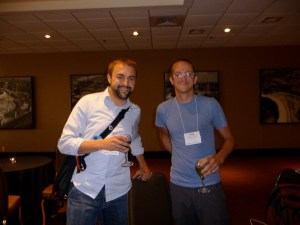
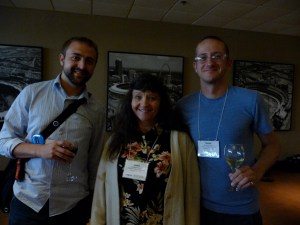
Nearly two  years ago we went to lunch with David Johnson and Matthew Staub and suggested they start a dedicated downtown advocacy group to fight for creating a Transportation Development District, TDD, and funding the streetcar. In April 2011, we went with David to the Downtown Neighborhood Association to talk about the streetcar and using the TDD legislation. In June 2011, David,  Matt, TAN advocate Janet Rogers and other Kansas City transit advocates all went to St. Louis for a conference on “How to Pass a Transit Ballot Initiative” hosted by the Center for Transportation Excellence. After that David and Matt were up and running with Streetcar Neighbors.  Little did we know they would do such a great job to make the streetcar a reality, but we certainly believed they were the right people for the job.

Other transit advocates wanting to expand the streetcar into their neighborhoods are already learning from the Streetcar Neighbors model – start early, identify the potential YES voters and get out the vote.

If you missed the Election Watch Party, you can watch it here!

Posted in Events, Rail, Videos-Transit | Tagged: | 1 Comment »

Attend the Streetcar Election Watch Party Today

Posted by Transit Action Network on December 12, 2012


kcmo_big_logoThe Kansas City Streetcar election ended last night at 5:00 pm.  565 ballots were received. The Election Board counts and certifies the ballots today.DTSC
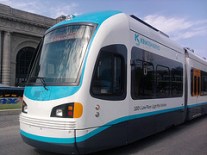
Streetcar Neighbors, in collaboration with the Downtown Council,  are hosting an Election Watch Party today.

Where: 1617 Event Space at Nara  1617 Main Street, Kansas City, Missouri 64108

When: 4 pm to 8 pm

At 4:30 pm Mayor Sly James is scheduled to announce the results of the election.

We expect this announcement to be a major event in the history of Kansas City . Be there!

Facebook event page: Streetcar Election Watch Party

Posted in Events, Local Transit Issues, Rail | Tagged: | Leave a Comment »

MAP-21 Webinar Tuesday Dec 4

Posted by Transit Action Network on December 3, 2012


MAP-21, the Moving Ahead for Progress in the 21st Century Act, was signed into law by President Obama on July 6, 2012.  MAP-21 is the first long-term highway authorization enacted since 2005 and it funds surface transportation programs at over $105 billion for fiscal years (FY) 2013 and 2014. It expires September 30, 2014. The new law is having a huge impact on transit programs. The FTA is holding a webinar tomorrow and recommends it to transit advocates. The following is their invitation.The Federal Transit Administration

MAP-21 Stakeholder Outreach

The Federal Transit Administration Invites You to Participate in

A LIVE PUBLIC WEBCAST

“OVERVIEW OF MAP-21 APPORTIONMENT NOTICE AND GUIDANCE:
WHAT DOES IT MEAN?”

Tuesday, December 4, 2012

1:30pm-3:00pm (Eastern)

View the Live Webcast on Dec. 4:

http://mediasite.yorkcast.com/webcast/Viewer/?peid=1031e0b9e5e941428bc91917b546fa891d

What’s Covered

  • MAP-21 Overview
  • Outline of the FY 2013 Apportionment Notice
  • Key Provisions and Interim Guidance
  • FY 2013 Apportionment Tables
  • Next Steps – Future Implementation

Who Should Participate

  • FTA Grantees and Subrecipients
  • Metropolitan Planning Organizations
  • Public Transportation Advocates

No RSVP necessary. Please review the Webcast Testing Instructions provided.

Posted in Events, National Transit Issues | Leave a Comment »

Jackson County AA Study Team Will Reveal Recommendations Tomorrow

Posted by Transit Action Network on November 26, 2012


Tomorrow, November 27, consultant recommendations from the Jackson County Commuter Corridors Alternatives Analysis will be presented to stakeholders in the morning, and to the public that afternoon.

 Transit consultant Parsons Brinckerhoff (PB), guided by Mid-America Regional Council, Jackson County, Kansas City, and Kansas City Area Transportation Authority, has been studying commuter needs in three corridors for nearly three years.  Work on the I-70 and Rock Island corridors is about complete, while work on the third corridor, US-71, got started late and is farther behind.

Here’s what we expect tomorrow:

[1] – Commuter rail is in.  Commuter rail will be recommended in the I-70 corridor since the underlying motivation for the AA was to find a way to make commuter rail workable.

[2] – Union Station is out.  Union Station is out and Third and Grand is back in as the western terminus for commuter rail from eastern Jackson County. This is the site of the current KCATA park-and-ride lot and the end of the MAX and future Downtown Streetcar lines.  Jackson County tried to work with Kansas City Terminal Railway to get access to Union Station, but latest indications are that KCT has not been interested in a capacity analysis on their tracks to see if it could be made to work — not even if Jackson County pays for the study.  Union Station has been the preferred terminus from the beginning, so we expect to hear that some day commuter rail might go there.  Realistically, that isn’t likely if hundreds of millions of dollars are spent going to Third and Grand.

 [3] – No CEI.  We had anticipated that the study would include a Cost-Effectiveness Index (CEI) for each rail corridor.  However, indications are that it won’t.  The CEI is a standard measure of costs and benefits (and thus of relative merit) used by the Federal Transit Administration in evaluating projects that compete for federal funding.  Omission of this measure is disappointing in light of the emphasis PB’s Shawn Dikes put on it at the first stakeholder meeting.  A rule of thumb in transit studies is that following FTA procedures is a good indication of whether a project makes sense – whether FTA funding is to be sought or not.

We suspect the Study Team knows without doing the calculations that commuter rail in this corridor isn’t cost-effective by FTA standards, and just doesn’t want to release unfavorable information – even though more than $1.2 million has been spent on the study.  Our preference is to have the CEI as an objective comparison to recent commuter rail projects in other cities, and to thus have a better-informed electorate.  Thus, we’re disappointed that PB hasn’t stayed true to its original focus on the importance of the CEI number.

 [4] – There is political and popular support for transit.  Unlike in 2007, there is political will to take a transit and trails package to the voters, even if we have to pay locally for most of any rail proposal.  The AA might not support federal funding for rail, but people do a lot of things subjectively, and there’s a widely held perception that the Kansas City Region should have rail.  Commuter rail might still be five years or more away – detailed environmental studies related to impacts on Kessler Park plus construction will take time.

 [5] – The Package.  We don’t expect to find out much tomorrow about the comprehensive package Jackson County will ultimately take to the voters late next year, but it’s safe to say it will include something for everyone:

  • One line for commuter rail.
  • A hefty trails plan that includes the old Rock Island right-of-way as a connection to the cross-state Katy Trail.
  • Upgraded express bus service with more frequent peak hour trips, plus at least a few midday trips.
  • New transit routes to connect the various cities, especially in Eastern Jackson County.
  • Something significant for Kansas City.  The city already pays for the region’s highest level of transit service, including two popular BRT routes, a Downtown Streetcar line expected to begin construction in 2013, and more than a dozen routes that operate 7 days a week.  Jackson County has been talking about BRT on Prospect, and we’re interested to see what else the County has planned to entice KCMO residents.

Tuesday is the day to watch.  The Stakeholder Advisory Panel will meet at MARC at 8:00 am to hear and respond to the recommendations for the corridors, followed by the Open House for the public at 140 Walnut in River Market between 4:00 and 6:00 pm.

So there you have it – what we think we know.  We’re willing to be proven wrong, of course.  But we can promise you one thing:  It’s going to be One Interesting Tuesday.

Posted in Events, Local Transit Issues, Regional Transit Issue, Transit Studies | Tagged: , , , | Leave a Comment »